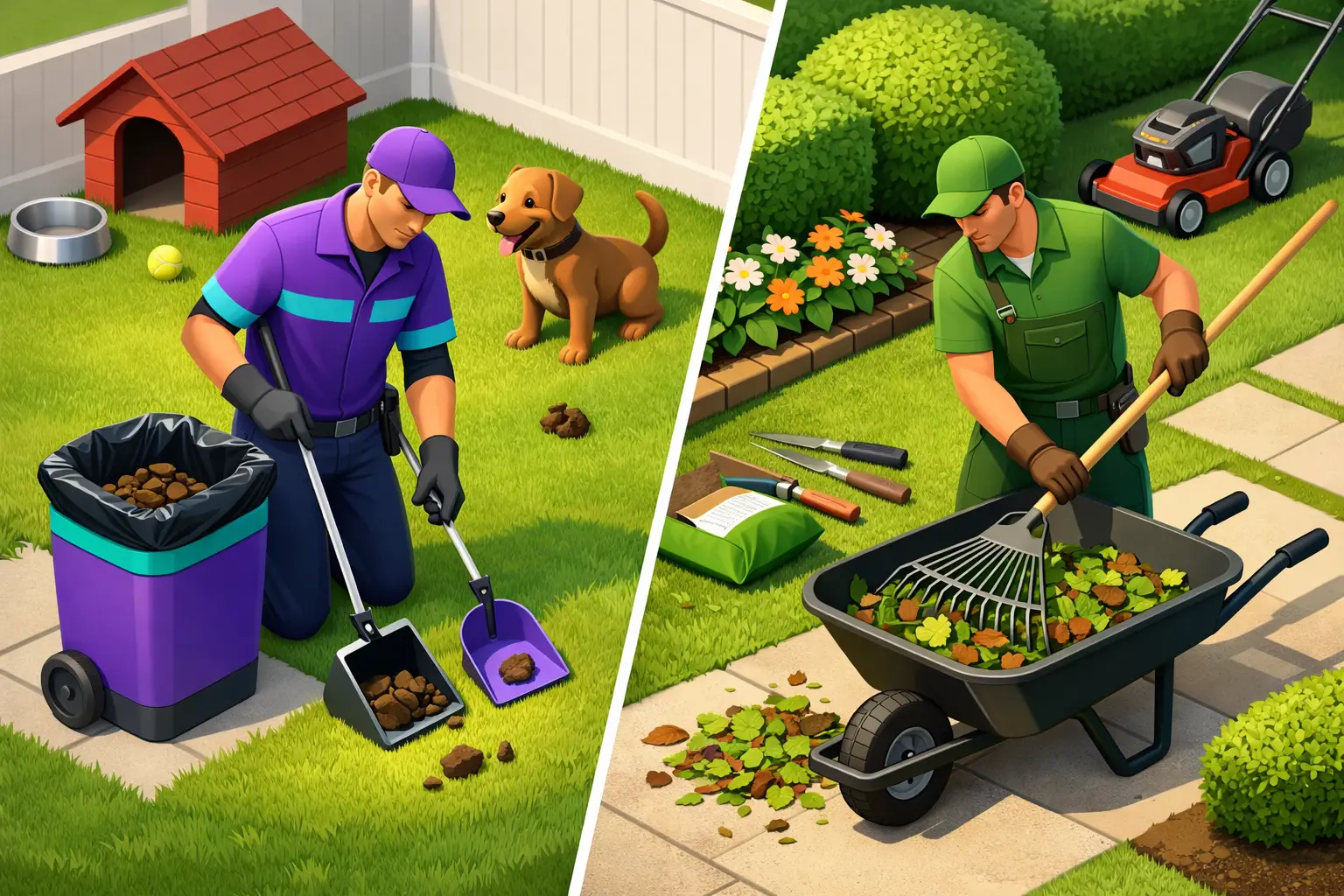
A landscaper leaves your grass freshly cut, then your dog steps outside and finds the same old mess in the yard. That is where the pet waste service vs landscaper question becomes practical: these services can both improve your property, but they solve very different problems.
For a busy dog owner, the goal is not simply a yard that looks good from the curb. It is a lawn where kids can play, dogs can run, guests can relax, and no one has to watch every step. Knowing who handles what helps you spend your maintenance budget wisely and avoid assumptions that leave an important chore undone.
Pet Waste Service vs Landscaper: The Core Difference
A pet waste service is built around one recurring job: finding, removing, and properly disposing of dog waste from your property. A trained technician visits on a set schedule, walks the accessible areas of the yard, removes the waste, and leaves your outdoor space cleaner and easier to use.
A landscaper focuses on the condition and appearance of the property itself. Depending on the company and package, that may include mowing, edging, trimming, mulching, leaf cleanup, planting, fertilizing, irrigation work, or seasonal yard cleanup.
There can be overlap, but it should never be assumed. Some landscapers may pick up visible waste before mowing or charge an added fee to do so. Others ask homeowners to clean the lawn before the crew arrives. Even when a landscaping crew removes waste occasionally, it is usually not the detailed, recurring service that a dedicated pet waste provider offers.
That distinction matters most in homes with multiple dogs, larger yards, mobility limitations, or busy family schedules. A lawn can be professionally mowed every week and still be unpleasant to use if dog waste is left behind between visits.
What a Dedicated Pet Waste Service Handles
Pet waste removal is not just a quick pass through the grass. Reliable service depends on consistency, attention to detail, and a schedule that matches how quickly waste accumulates.
A dedicated provider typically offers recurring visits, often weekly or more frequently for multi-dog households. The technician checks the agreed-upon areas, removes waste, and takes it away for disposal. Many providers also offer useful add-ons, such as yard deodorizing, sanitizing, pet waste bin cleaning, and power washing for patios or walkways.
This focused approach helps with the things dog owners notice every day: the smell near the patio, the surprise piles hidden in tall grass, the mess tracked indoors, and the stress of trying to clean up before company comes over. It also keeps the job from turning into a weekend task that gets pushed back again and again.
For apartment communities, parks, and shared properties, the value is even clearer. Pet waste stations need regular attention, common areas need consistent cleanup, and property managers need a service partner who shows up on schedule. A mower cannot replace that ongoing responsibility.
Safety is part of the job
Dog waste is more than an eyesore. It can contain bacteria and parasites that do not belong in a child’s play area, near a vegetable garden, or on the soles of shoes headed into the house. Rain can also carry waste and its contaminants toward drains and waterways.
Regular removal lowers the chance that waste sits in the yard long enough to become a bigger hygiene issue. It also makes routine lawn care safer and more pleasant. No one wants to mow over piles, spread them across the grass, or clean contaminated clippings out of equipment afterward.
What a Landscaper Handles Best
Landscapers bring a different kind of expertise. They help control grass growth, improve curb appeal, manage weeds, shape shrubs, and keep seasonal debris from taking over the property. If your lawn is patchy, your beds are overgrown, or your fall leaves have buried the walkway, landscaping is the right call.
For many homeowners, regular mowing is essential. It keeps the yard manageable and can make a property feel cared for even during a hectic season. Landscapers may also spot drainage concerns, damaged turf, or tree and shrub issues that a pet waste technician is not hired to diagnose.
The trade-off is that landscape visits are generally centered on plant and turf maintenance, not daily pet hygiene. A crew may not inspect every corner of a fenced yard, behind play equipment, or along the edges where dogs tend to go. Their visit frequency may also be weekly, biweekly, or seasonal, while a household with several dogs may need waste removal more often.
When You Need Both Services
For many Greater Philadelphia households, the best answer is not choosing one service over the other. It is assigning each job to the team built to do it.
A pet waste service keeps the lawn usable between cuts. A landscaper keeps the grass, plants, edges, and overall property looking maintained. Together, they prevent one chore from undermining the other.
Think about a spring cleanup. Your landscaper can refresh beds, remove branches, trim shrubs, and prepare the lawn for the growing season. Meanwhile, a recurring poop-scooping service prevents fresh waste from building up as everyone starts spending more time outside. The same combination is useful in fall, when leaves can hide dog waste and make a backyard cleanup especially frustrating.
This setup also makes sense for landlords and property managers. Landscaping keeps a property presentable, while dedicated pet waste removal helps protect shared green space, support resident satisfaction, and reduce complaints about odors or unclean common areas.
Questions to Ask Before You Hire
Before booking any outdoor service, ask direct questions about scope. If you are speaking with a landscaper, ask whether pet waste removal is included, how thoroughly it is performed, whether there is an extra charge, and what happens if the yard is not cleaned before mowing.
If you are hiring a pet waste provider, ask about visit frequency, disposal practices, weather policies, access requirements, and whether the company offers deodorizing or sanitizing. You should also know whether staff are trained, vetted, and able to work around dogs safely.
Price matters, but it is not the only consideration. A low-cost mowing package may become less convenient if you still have to clean the yard before every visit. On the other hand, a pet waste plan will not replace the seasonal lawn care that keeps your property looking its best. Compare the complete workload, not just the line-item price.
Your schedule should drive the decision
A single dog in a small yard may create a manageable cleanup task for someone who enjoys being outside and has time every few days. A household with two or three dogs, young children, a demanding job, or limited mobility has a very different need.
The same is true for commercial properties. A small private courtyard may need weekly service, while a busy apartment dog area may need multiple visits each week and ongoing pet station maintenance. The right schedule is the one that prevents buildup, not the one that sounds good on paper.
A Cleaner Yard Starts With Clear Expectations
When the pet waste service vs landscaper decision comes up, start with the result you want. If you need healthier-looking turf, trimmed edges, and seasonal property care, hire landscaping help. If you need the dog waste gone reliably so your yard is clean, safe, and ready to enjoy, choose a dedicated pet waste service.
Poop Scoop Protocol helps dog owners and property managers take the hard part off their to-do list with recurring cleanup and outdoor care options designed around real life. The best yard routine is the one you do not have to chase after every week: clear responsibilities, dependable service, and a lawn that is ready whenever your family is.