That moment when you open the back door and catch a whiff before you even step outside is usually your first sign the yard needs attention. If you’re wondering how to reduce yard pet odors, the good news is that the fix is usually more about consistency than heavy-duty products. Most bad smells come from a short list of causes, and once you deal with those, the yard gets easier to manage.
For busy dog owners, families with kids, landlords, and property managers, odor is not just an annoyance. It changes how the space gets used. Dogs avoid certain spots, kids stop playing outside, and tenants notice right away. A cleaner yard smells better, feels better, and is safer to spend time in.
Why yard pet odors build up so quickly
Pet odor in a yard usually comes from two sources – solid waste left too long and urine soaking into the same areas over and over. Dog poop has an obvious smell on its own, but the bigger issue is what happens after it sits in the heat, rain, or humidity. It starts to break down, bacteria multiply, and that odor settles into the grass and soil.
Urine is a little trickier because it spreads. If your dog uses the same corner of the yard every day, that spot can develop a strong ammonia-like smell, especially during warm weather. In small yards or multi-dog homes, the problem shows up even faster because there is less space for waste to disperse.
Drainage also matters. A yard that stays damp can hold odor longer than one that dries out quickly. Shade, patchy grass, compacted soil, and worn-out dog runs all make smells linger.
How to reduce yard pet odors at the source
The fastest way to improve odor is to stop it before it has time to settle in. That starts with waste removal. If poop stays in the yard for days, every other deodorizing step becomes less effective. Scooping once a week may be enough for one dog in a large yard, but smaller spaces, multiple dogs, or heavy use often need more frequent cleanup.
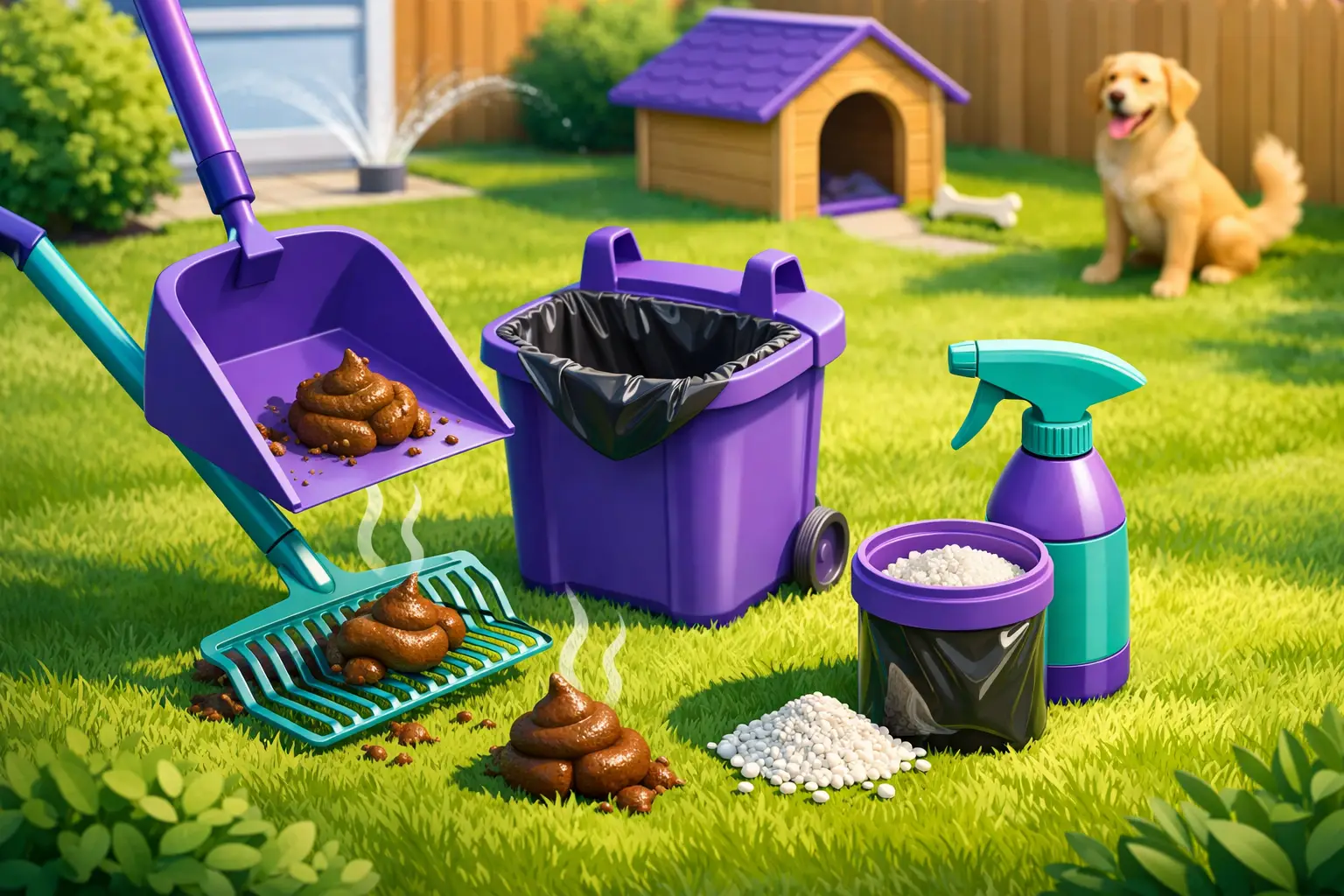
If the smell is already noticeable, step one is a full pickup of every visible pile. Be thorough. Old waste hidden along fences, behind sheds, or near landscaping is often the reason a yard still smells bad after a quick cleanup.
After cleanup, rinse the problem areas. A simple spray with water helps dilute leftover residue, especially in places where dogs repeatedly urinate. This is not a magic fix, but it does lower odor intensity and helps prevent buildup. The key is regular rinsing, not one big wash once the smell gets out of hand.
For especially stubborn spots, an outdoor pet-safe deodorizer or enzyme treatment can help break down odor-causing material. These work best after waste is removed, not before. If you apply them on top of old buildup, you’re asking the product to do too much.
Focus on the urine zones
Most people think poop is the main odor issue, but urine is often the bigger long-term problem. Dogs are creatures of habit. If they pick one area and keep returning to it, that patch can become the smell center of the whole yard.
The practical fix is to spread out use. Encourage your dog to go in different parts of the yard instead of one worn spot. Some pet owners do this by walking the dog to different areas on leash for a week or two until the habit changes. It takes a little effort upfront, but it can make a major difference.
If one area is already saturated, flush it with water more often than the rest of the yard. This works especially well during hot, dry stretches when urine concentration gets stronger. If the grass is damaged or the soil is holding odor, you may need to treat that zone repeatedly instead of expecting one rinse to reset it.
Gravel runs and bare dirt deserve extra attention. They can be practical for dogs, but they often hold smell more than healthy grass does. If that part of the yard is a regular bathroom spot, cleaning and deodorizing need to happen on a schedule.
Lawn care makes a bigger difference than people expect
A stressed lawn traps pet problems. Thin grass, muddy patches, and compacted soil give odor more places to stick around. Healthier turf helps absorb and disperse waste more naturally, which means the yard bounces back faster between cleanings.
That does not mean you need a perfect lawn. It means basic maintenance matters. Keep grass at a reasonable height, water when needed, and address dead patches before they turn into repeat-use bathroom zones. If your yard drains poorly, correcting that can improve odor as much as any deodorizer.
Overwatering can create its own problem, though. Constantly soggy ground mixed with pet traffic leads to a stale smell that is different from waste odor but just as unpleasant. A yard should be rinsed strategically, not left swampy.
The mistake people make with fragrance products
A lot of store-bought yard treatments promise a fresh outdoor scent. Some help, but many only cover the smell for a short time. If the waste is still there, or the urine-heavy area has not been flushed and treated properly, fragrance just mixes with the odor and creates a new problem.
That is why enzyme-based products usually do better than perfume-style sprays. They are designed to break down what is causing the smell instead of trying to out-smell it. Even then, they are still part of a system. Cleanup first, rinse second, treatment third.
If you have dogs, kids, or both using the same outdoor space, always check that any product is meant for pet areas and used exactly as directed. Stronger is not always better.
When recurring service is the easiest answer
Some yards smell bad because no one knows what to do. More often, they smell bad because everyone knows what to do and no one has time to keep doing it. That is especially true for working households, seniors, people with mobility limits, and commercial properties where waste piles up fast.
Recurring poop removal changes the equation because it prevents buildup before odor becomes a yard-wide issue. Instead of trying to recover the space after a bad week, you keep it under control all month. That is a very different result from occasional cleanup.
For some properties, deodorization and sanitizing add another layer of help. Apartment dog areas, shared green spaces, and small urban yards tend to need more than basic pickup because the same ground gets used over and over. In those cases, routine service is less about appearances and more about keeping the area functional.
Poop Scoop Protocol works with homes and properties across Greater Philadelphia that want that kind of consistency. For many customers, the biggest benefit is simple – the yard stops being another chore that never stays done.
Seasonal changes can make odor worse
Warm weather usually makes pet odor stronger. Heat speeds up breakdown, strengthens urine smell, and makes neglected areas obvious fast. Summer is when many people suddenly notice a problem that was building for weeks.
Rain can go either way. A light rinse may help dilute odor for a day, but repeated wet weather can also reactivate smells in soil and grass. If waste is not removed regularly, rainy periods often make a yard smell worse, not better.
Winter tends to hide odor rather than solve it. Once temperatures rise, everything left behind becomes noticeable again. That is why year-round cleanup matters, even when the yard is used less.
A cleaner yard is easier to keep clean
Once the odor is under control, maintenance gets simpler. Waste is easier to spot. Problem areas are easier to treat. The yard feels usable again, which makes it more likely you will stay on top of it.
If you want the biggest payoff, focus on a simple rhythm: remove waste consistently, rinse high-use spots, treat stubborn odor zones, and keep the lawn in decent shape. You do not need a complicated system. You need one that actually happens every week.
A yard should smell like the outdoors, not like a reminder of a task you have been meaning to get to. When cleanup becomes routine, the whole space changes – and so does how much you enjoy it.