A missed waste bag near the sidewalk can seem minor. At an apartment community, though, small maintenance misses add up fast: unpleasant odors, stained grass, tenant complaints, pests, and outdoor spaces people stop enjoying. Dog friendly apartment maintenance is about preventing those problems before they become part of the property’s reputation.
For property managers, landlords, and maintenance teams, the goal is not to make every inch of the community look pet-proof. It is to create a clean, practical routine that welcomes responsible dog owners while protecting shared spaces for everyone else.
Start With the Areas Dogs Actually Use
The most effective maintenance plans follow dog traffic instead of treating every outdoor area the same. Walk the property at the times residents are most likely to be outside, such as early morning and after work. Look for the routes dogs naturally take from building entrances to grass, sidewalks, relief areas, and waste stations.
Pay close attention to narrow strips of grass beside parking lots, corners behind buildings, landscaped edges, entrances, and the space around mailboxes. These are often the spots where pet waste accumulates because they are convenient, tucked away, or poorly supplied with bags.
Once you know where the activity is, put service time where it matters. A beautiful lawn at the front entrance does not solve a problem if the dog run or back walking path is being neglected. Some communities need daily attention in high-use areas. Smaller properties with fewer dogs may be fine with several scheduled visits each week. It depends on the number of pets, the size of the grounds, weather, and how consistently residents pick up after their dogs.
Make Pet Waste Removal Consistent
Pet waste is the maintenance issue residents notice most quickly, and for good reason. Beyond the smell and appearance, dog waste can carry bacteria and parasites that should not be left where children play or dogs walk. Rain can also move waste into drains, low spots, and common areas.
A reliable removal schedule is better than occasional catch-up cleanups. When waste sits for days, the job becomes harder, the grass can suffer, and residents lose confidence that the property is being cared for. Regular service keeps the grounds usable and makes it easier to spot repeat trouble areas before they get out of hand.
Maintenance teams should also have a clear system for reporting unusually heavy buildup, overflowing stations, damaged fixtures, or off-leash activity in areas where it creates a safety issue. The point is not to police every resident. It is to give management useful information early enough to respond.
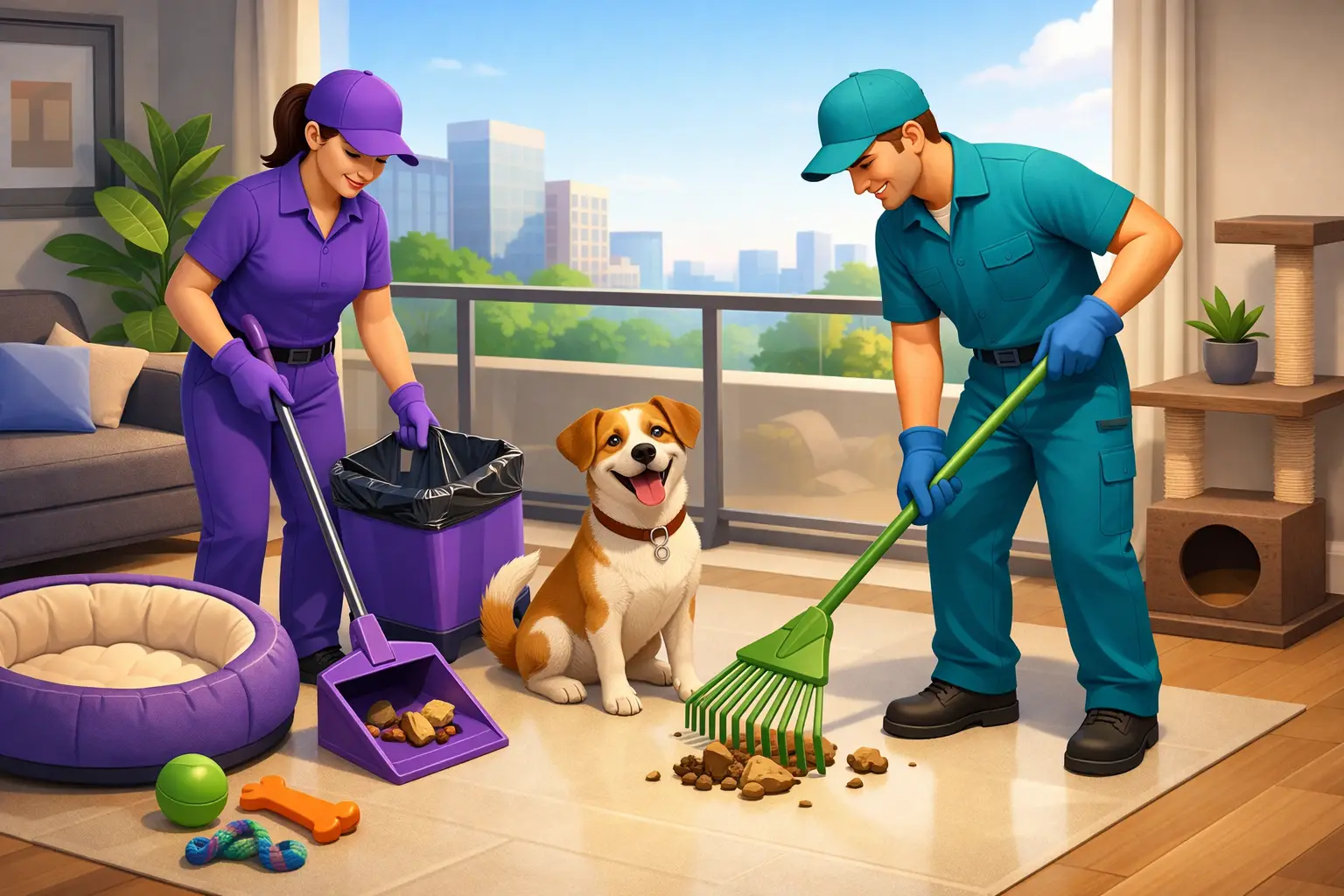
For busy apartment teams in Greater Philadelphia, bringing in a recurring local pet waste service can take this task off an already crowded maintenance list. A professional crew can keep common dog areas on schedule while onsite staff focus on repairs, resident requests, turns, and the work only they can handle.
Place Stations Where They Remove Excuses
A pet waste station only works when residents encounter it at the moment they need it. One station tucked near a maintenance shed is rarely enough for a large community. Place stations along common dog-walking routes, near entrances, at the edge of relief areas, and near dog parks or runs.
Visibility matters. Residents are more likely to use a station that is easy to see and reach than one hidden behind shrubs or placed far from the sidewalk. At the same time, do not put stations so close to patios, benches, or front doors that they become an odor concern.
A complete station needs bags, a covered receptacle, and regular service. Empty dispensers send the wrong message, even when the rest of the property is clean. Overflowing cans do the same. Check bag supply and bin capacity based on actual usage, not guesswork. A station beside a busy building may need attention much more often than one at the far edge of the property.
Simple, respectful signage can help. A direct reminder such as “Please pick up after your dog” is usually more effective than a long list of rules. If the property has designated pet areas, make the directions clear without making dog owners feel unwelcome.
Protect Grass, Landscaping, and Hard Surfaces
Dog urine and repeated foot traffic can stress grass, especially in small relief areas. Brown spots, muddy patches, and worn paths are common where many dogs use the same few sections of lawn. This does not mean a property should eliminate grass. It means the landscaping plan should match the way residents and pets use the space.
Rotating relief areas, reseeding damaged turf, improving drainage, and using durable ground cover in heavy-traffic zones can make a noticeable difference. In some locations, mulch, stone, or pet-safe artificial turf may be a more practical choice than repeatedly trying to restore thin grass. Each option has trade-offs. Natural grass feels familiar and can be easier to cool in summer, while hardier surfaces may reduce mud but need regular cleaning and odor control.
Sidewalks, patios, breezeways, and dog run surfaces deserve attention too. Waste residue, urine, spilled water, and mud can leave stains and odors if ignored. Routine sweeping and targeted power washing help keep these areas presentable. For spaces with persistent odor, deodorizing and sanitizing treatments may be worth adding, particularly around pet stations, enclosed runs, and building-adjacent relief areas.
Always use products appropriate for pet areas and follow label directions. Strong chemicals may seem like a quick fix, but they can create new problems if dogs walk through treated surfaces before they are safe.
Keep Dog Amenities Safe and Usable
A dog run or pet relief area can be a real amenity, but only if residents trust it. Gates should latch securely, fencing should be inspected for gaps, and surfaces should not have sharp edges, standing water, or broken equipment. Waste bins and bag dispensers should be part of the routine inspection, not an afterthought.
If your community provides benches, water bowls, agility features, or shade structures, assign responsibility for checking them. Standing water in communal bowls can get dirty quickly, and damaged equipment creates a liability issue. Amenities do not need to be elaborate. A clean, well-maintained area with shade and a working waste station is often more valuable than a fancy space that is rarely serviced.
Seasonal planning matters in Pennsylvania. Spring rain can turn popular dog areas into mud, summer heat can make artificial surfaces uncomfortable, and winter snow piles may block access to stations or leave waste hidden until a thaw. Adjust service routes and inspection schedules as conditions change.
Communicate Expectations Without Creating Friction
Even the best maintenance plan needs resident participation. Include pet waste expectations in lease materials, move-in information, and occasional community reminders. Keep the message practical: pick up waste, use the stations, keep dogs leashed in common areas, and report damaged equipment or full bins.
When an issue comes up, address the behavior without blaming the entire pet-owning community. Broad, frustrated notices can make responsible residents feel targeted. Specific reminders tied to a location or concern are more useful, especially when they explain how the issue affects neighbors, children, landscaping, and other dogs.
It also helps to make reporting easy. Residents are often willing to flag an empty bag dispenser or overflowing receptacle if they know where to send the information. Quick action builds trust and encourages residents to keep speaking up before a minor issue becomes a recurring complaint.
Build Dog Friendly Apartment Maintenance Into the Budget
Waiting for resident complaints is usually the expensive route. Emergency cleanups, damaged landscaping, repeated pressure washing, and staff time spent responding to preventable problems can cost more than a regular maintenance plan.
Build recurring pet waste removal, station service, cleaning, and seasonal landscape touch-ups into the property budget. Review the plan after a few months and adjust based on the actual number of dogs, resident feedback, and the areas that require the most attention. A smaller community may need a simple service schedule, while a large apartment complex may need multiple stations, frequent visits, and separate care for a dog run.
Clean common areas tell residents that management pays attention to daily details. That makes a difference when a prospective renter is walking the grounds, a current resident is taking their dog out after a long day, or a maintenance team needs one less recurring problem on its plate. A good pet maintenance routine lets dogs be part of apartment life without letting pet waste take over the property.