A missed poop bag near the front walk can turn a quick morning dog break into a problem with neighbors, property staff, and your own peace of mind. Learning how to keep apartment dog area clean is less about constant scrubbing and more about building a simple routine that handles waste quickly, controls odor, and respects the people sharing the property.
Whether your dog uses a balcony potty setup, a private patio, a designated relief area, or a community dog run, consistency does most of the work. A clean space is safer for paws, more pleasant for residents, and far easier to maintain than a neglected one.
Start With Fast, Reliable Waste Pickup
The biggest rule is also the simplest: pick up solid waste immediately. In an apartment community, waste does not stay private for long. Dogs step in it, rain carries residue toward walkways and drains, and odors build up quickly in small outdoor spaces.
Keep bags where you actually need them. Store a roll by the door, attach one to every leash, and keep an extra supply in the car if you drive to a dog area. When bags are always within reach, there is no reason to put cleanup off until later.
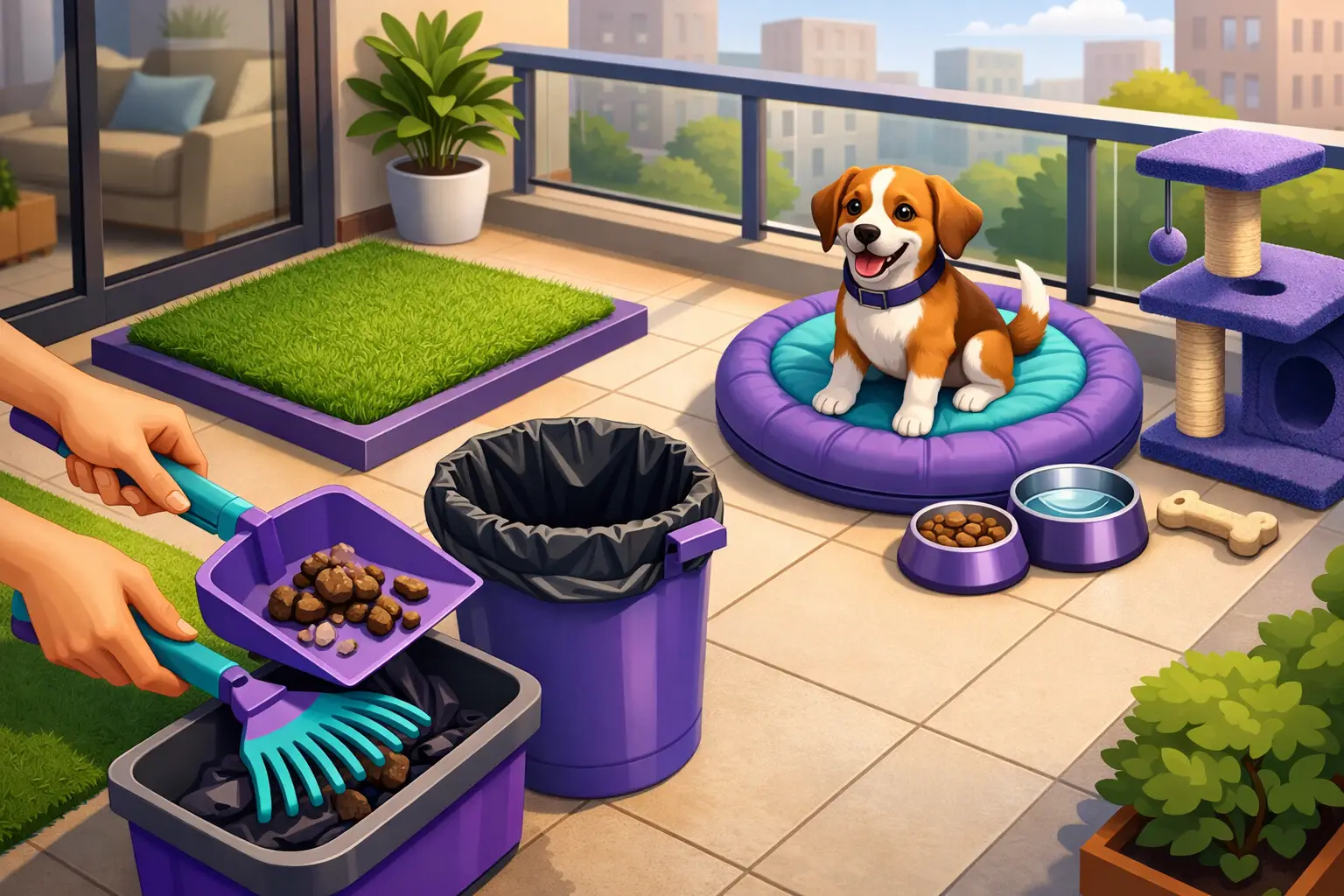
For a balcony or patio, scoop at least once a day even if your dog uses a grass pad, tray, or turf system. For shared relief areas, every visit should end with pickup. If you manage an apartment property, make sure waste stations are placed near the entrance and exit of dog areas, not tucked away where residents will not see them.
Bagging waste is only half the job. Use a covered trash can designed for pet waste, and empty it regularly. An overflowing or uncovered bin creates the same odor and pest issues as waste left on the ground.
How to Keep Apartment Dog Area Clean Without Chasing Odors
Odor usually means urine residue, lingering waste, poor drainage, or all three. Air fresheners might cover the smell for an hour, but they do not solve the source. The right cleaning method depends on the surface your dog uses.
Balconies, patios, and concrete pads
Remove solid waste first, then rinse the area when your building rules allow it. Do not send heavily soiled water toward shared walkways, neighboring balconies, or storm drains. A pet-safe enzymatic cleaner is usually the better choice for breaking down urine residue on concrete, sealed tile, and many hard surfaces.
Follow the product directions and allow enough contact time before rinsing or wiping. If the spot gets daily use, clean it two or three times a week instead of waiting for an odor to appear. In warm, humid Philadelphia-area weather, more frequent cleaning may be necessary because heat amplifies smells fast.
Artificial turf and grass pads
Turf and reusable grass systems need more than poop pickup. Urine can settle into the backing, infill, tray, or drainage layer. Rinse according to the product instructions, use an enzyme treatment when needed, and check beneath the turf for trapped hair, waste, and standing water.
Natural grass pads often need replacement before they look completely worn out. Once the grass is muddy, flattened, or permanently smelly, cleaning products will only do so much. Replacement is part of the maintenance cost, especially for larger dogs or multi-dog households.
Indoor potty stations
If your dog uses pee pads, a tray, or an indoor grass patch, change or rinse it on a predictable schedule. Leaving a saturated pad down too long encourages odors and can make house-training harder for some dogs. Wash the tray, floor beneath it, and nearby wall or baseboard regularly because splatter is easy to miss.
Avoid using harsh cleaners with a strong ammonia smell around urine areas. To a dog, ammonia can resemble the scent of urine and may encourage repeat marking. Choose pet-safe enzymatic products instead, and keep your dog away until the surface is fully dry.
Make the Dog Area Easy to Clean
A complicated setup is a setup people avoid maintaining. Keep the dog area simple, with as few fabric items, loose mats, and hard-to-reach corners as possible. Every extra object can hold odor, fur, mud, or moisture.
Use a washable mat at the door to catch wet paws before your dog comes inside. A small towel or paw wipes beside the entrance can prevent a lot of dirt from reaching apartment floors and furniture. If your dog returns from a muddy run, clean paws right away rather than waiting for the mess to dry.
For a balcony or patio, make sure the drainage path stays clear. Leaves, fur, toys, and turf debris can block drains and create standing water. That standing water becomes a smell problem, a mosquito problem, and potentially a property maintenance issue.
If you use a turf potty station, choose a tray or base with drainage that is easy to lift and rinse. The cheapest option is not always the easiest to live with. A system that takes ten minutes to clean is far more likely to stay clean than one that requires taking apart several layers every day.
Build a Routine That Fits Real Apartment Life
Most dog owners do not need an elaborate cleaning schedule. They need a realistic one. A few minutes each day prevents the weekend cleanup session nobody wants.
A practical routine can look like this:
- Pick up solid waste after every potty break.
- Check the dog area each evening for urine odor, debris, and full trash bags.
- Wipe or rinse high-use surfaces two to three times per week.
- Deep-clean turf, trays, bins, and surrounding hard surfaces once a week.
- Wash dog blankets, outdoor mats, and washable toys as needed.
Multi-dog homes may need daily surface cleaning, especially when several dogs share a small balcony or relief area. Puppies, senior dogs, and dogs with stomach issues can also require a more flexible schedule. The goal is not perfection. It is keeping mess from becoming a larger, smellier job.
Keep Shared Spaces Comfortable for Everyone
Apartment dog areas are community spaces, even when they are technically set aside for pets. Parents with strollers, residents walking to their cars, maintenance crews, and neighbors without dogs all move through the same property. Cleaning up promptly is basic courtesy, but it also helps prevent complaints and protects access to pet-friendly amenities.
Do not leave tied bags beside a trash can, on a fence, or near a dog station. Put them inside the designated bin. If the bin is full, report it to management or use another approved disposal point rather than adding to the pile.
Property managers can make good behavior easier with visible signage, stocked bag dispensers, covered waste bins, and a maintenance schedule that residents can trust. Regular pickup matters more than a polished-looking dog area that is only serviced after someone complains.
For busy apartment communities in Greater Philadelphia, recurring pet waste removal and bin maintenance can take this task off the maintenance team’s list while keeping common areas ready for residents and their dogs. Poop Scoop Protocol provides local, reliable support for properties and households that need help staying ahead of the mess.
Prevent Mud, Pests, and Germs From Moving Indoors
Clean dog areas are not only about looks and smell. Pet waste can carry parasites and bacteria, while muddy paws spread whatever is outside across your apartment. Young children, older adults, and dogs with weaker immune systems have even more reason to avoid contact with contaminated surfaces.
Wash your hands after cleanup, even when you use a bag. Keep your dog current on veterinary care and parasite prevention, then clean up quickly to reduce exposure for other pets. If your dog has diarrhea or visible worms, avoid shared dog runs until you have spoken with your veterinarian and the issue is resolved.
Watch for flies, ants, and gnats around waste bins and potty stations. These pests usually point to a cleanup or moisture problem. Empty the bin more often, clean residue around the lid, and make sure the surrounding area can dry completely.
When a Professional Cleaning Service Makes Sense
Some cleanup jobs are manageable until they are not. A missed week during a busy work stretch, a multi-dog household, a neglected dog run, or a bin that has absorbed months of odor can all need more than a quick rinse.
Professional pet waste removal is especially useful for property managers who need dependable service records and residents who cannot comfortably handle regular scooping. Add-on sanitizing, deodorizing, power washing, and pet waste bin maintenance can help restore an area that has gotten away from you.
The best approach is still preventive. Regular service and a simple daily routine cost less effort than waiting until odors, stains, or resident complaints force a larger cleanup.
A clean apartment dog area gives your dog a better place to take care of business and gives everyone else one less thing to worry about. Put the bags by the door, make cleanup part of every walk, and keep the system simple enough to use on your busiest day.