A clean yard should not depend on whether you found 20 spare minutes after work, before the kids need dinner, or between rainstorms. Monthly poop scooping plans explained simply means putting dog waste removal on a reliable recurring schedule, with billing handled once a month instead of chasing a one-time cleanup every few weeks.
For busy dog owners, that consistency is the real benefit. Your lawn stays usable, your shoes stay cleaner, and one unpleasant chore comes off the household list. For landlords, property managers, and shared outdoor spaces, recurring service helps keep common areas more welcoming without waiting for complaints to pile up.
What a monthly poop scooping plan actually is
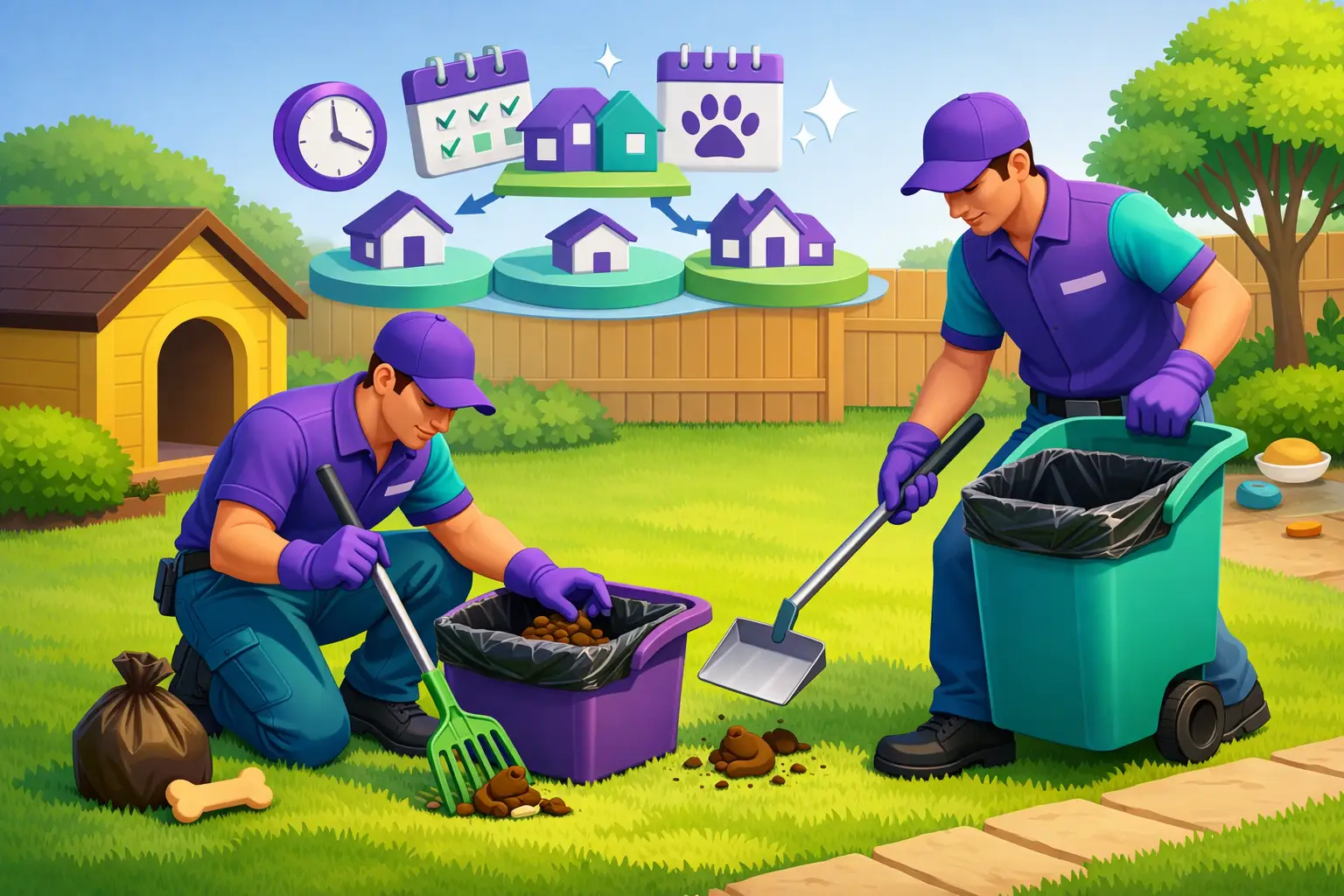
A monthly plan is a recurring service agreement. You choose how often you need pet waste removed, a trained technician visits on that schedule, and your service is billed monthly. The billing cycle and the visit frequency are related, but they are not the same thing.
For example, a household may be billed monthly while receiving weekly cleanups. A property with several dogs or heavy outdoor use may need twice-weekly visits. Another customer may prefer every-other-week service because their yard is lightly used and they pick up in between visits.
That distinction matters because “monthly” does not usually mean someone visits only once per month. In most cases, it means your recurring service is managed and paid for monthly, making it easier to budget and easier to keep the yard under control.
Monthly poop scooping plans explained by visit frequency
The right schedule depends less on a generic plan name and more on what happens in your yard between visits. Dog count, yard size, how often the dogs go outside, and whether children use the lawn all affect the answer.
Weekly service
Weekly service is a practical fit for many homes with one or two dogs. Waste has less time to build up, the lawn is easier to enjoy, and the technician can keep up with the job without turning each visit into a major cleanup.
It is also a good choice for families who want their kids to play outside without a regular pre-game search of the grass. Weekly removal does not make a yard sterile, but it greatly reduces the mess and helps create a more comfortable outdoor routine.
Twice-weekly service
Twice-weekly visits make sense for multi-dog homes, small yards, puppy households, or properties where the backyard gets used constantly. More frequent cleanup can be especially helpful when dogs share a compact space and there is little room for waste to stay out of the way.
This schedule is also common for apartment dog areas, HOA common spaces, and other properties where different people and pets use the same grounds. In those settings, consistency protects the experience for everyone, not just one household.
Every-other-week service
Every-other-week service can work well for a single dog with a larger yard, particularly when the household does some light pickup between professional visits. It is often a more budget-conscious option, but it comes with a trade-off: there will naturally be more waste present before each scheduled visit.
If your dog uses only one part of the yard and no children play outside, this may be a reasonable middle ground. If the entire lawn is active living space, weekly service is often the more comfortable choice.
One-time cleanup before recurring service
Some yards need a reset before a recurring plan begins. A one-time initial cleanup handles accumulated waste so future visits can focus on maintenance rather than catching up.
This is particularly helpful after winter, a vacation, an illness, or a stretch of bad weather. It is also a smart option for a newly purchased home, a rental turnover, or a property where the previous routine was inconsistent.
What affects the cost of a recurring plan?
Straightforward pricing starts with a few practical details. The goal is not to make the process complicated. It is to match the service level to the actual work required and avoid surprises later.
The biggest factors usually include:
- The number of dogs using the property
- The frequency of scheduled visits
- The size and condition of the service area
- Whether an initial cleanup is needed before routine service begins
- Add-on services such as deodorizing, sanitizing, bin maintenance, or power washing
More dogs generally mean more waste. More frequent visits mean less buildup at each visit, but a greater number of service stops over the month. A large, open lawn may be simple to clean, while a yard with dense landscaping, poor lighting, locked gates, or multiple fenced sections can take more time.
The best quote is one that accounts for your real situation. A tiny yard with four dogs may need more attention than a large yard with one dog. That is why dog count and visit frequency are often more useful than square footage alone.
What happens during a scheduled visit?
A professional visit should feel simple from the customer’s side. The technician arrives during the service window, checks the designated yard or pet area, removes visible pet waste, and takes it away for proper disposal according to the company’s process.
You do not need to be home for most recurring visits as long as there is safe access to the area. A clear gate, an unlocked access point, and dogs secured indoors or away from the service zone help the visit go smoothly.
Communication matters here. If a gate code changes, construction blocks access, or your dog has a new routine, updating the service provider prevents missed cleanups. A good recurring plan is built around predictable service, and predictable access is part of that equation.
Weather, holidays, and the real-world schedule
Greater Philadelphia weather does not always cooperate. Heavy rain, snow, icy conditions, extreme heat, and severe storms can affect the timing of a visit. A reputable service provider puts staff safety first and works to reschedule when conditions make service unsafe or impractical.
That does not mean your plan disappears because of one bad weather day. It means the provider communicates clearly and returns service to schedule as quickly as conditions allow. If a yard is muddy or snow-covered, complete waste removal may be harder than usual, so setting realistic expectations is part of reliable service.
Holidays can also shift a route. The key is knowing what to expect. Monthly plans are valuable because they create an ongoing relationship, not a series of disconnected appointments. When something changes, there is an established schedule and a clear way to make it right.
Add-ons that can make the plan work harder
Poop scooping solves the core problem, but some properties benefit from additional outdoor care. Deodorizing can help with persistent odors in dog runs or small yards. Sanitizing may be useful in high-traffic pet areas. Pet waste bin maintenance keeps shared disposal stations cleaner and more pleasant to use.
For commercial clients, park maintenance and pet station service can support a better experience for residents, visitors, and maintenance teams. These services are not necessary for every property, but they can be a practical extension of recurring waste removal when the space sees heavy use.
The right approach is to start with the essential schedule, then add services only when they solve a problem you actually have. A family with one dog may only need weekly cleanup. A busy apartment community may need frequent waste removal, maintained stations, and odor control to keep the property looking cared for.
How to choose a plan you will actually keep
Choose based on how you want your outdoor space to feel, not just the lowest possible visit count. If you avoid the backyard because you are tired of watching every step, a more frequent schedule may be worth it. If you have a large yard, one dog, and a consistent pickup habit, less frequent service may fit perfectly.
Think about the seasons, too. Spring and summer usually bring more time outdoors, more backyard gatherings, and more reasons to keep the lawn clean. Many customers find that a recurring plan removes the constant decision-making. There is no need to remember the chore, buy more bags, or negotiate whose turn it is.
Poop Scoop Protocol makes recurring pet waste removal easier for households and properties that want a clean lawn without another task to manage. Pick the schedule that fits your dogs, your yard, and your routine, then let the service do what it is supposed to do: give you back an outdoor space you can enjoy.