A dog run can look clean and still hold the mess you do not want on paws, shoes, or kids’ hands. Learning how to sanitize dog run safely starts with one rule: remove every bit of solid waste first. Sanitizer works on clean surfaces, not piles of poop, mud, and matted debris.
For busy households and multi-dog yards, a simple routine makes the space easier to enjoy without turning Saturday morning into a major cleaning project. The goal is not to make an outdoor run sterile. It is to reduce odor, bacteria, parasites, and buildup while using methods that are safe for dogs, people, grass, and nearby plants.
Start With a Clean, Dry-Enough Run
Pick up waste before you spray, scrub, or rinse anything. Scoop carefully, including small pieces hidden in gravel, turf fibers, corners, and along fence lines. Bag the waste and place it in the trash according to local rules. If the dog run has a dedicated waste bin, clean the lid and exterior as part of the job, since those high-touch areas can hold odors and residue.
Next, clear out toys, water bowls, beds, and movable agility equipment. Wash bowls separately with hot, soapy water and rinse them well. Do not sanitize around items that will later go straight into your dog’s mouth.
If the surface is very muddy, wait until it dries enough to remove caked-on material. Spraying sanitizer over mud usually spreads the problem and wastes product. A broom, rake, stiff brush, or leaf blower can help remove leaves, loose hair, and debris from hard surfaces, artificial turf, pea gravel, or kennel mats.
Choose a Pet-Safe Sanitizer for the Surface
The safest product depends on what your dog run is made of. Concrete, pavers, sealed surfaces, artificial turf, gravel, mulch, and natural grass each handle moisture and cleaning solutions differently. Always read the product label for dilution, surface compatibility, contact time, and directions about animals.
A pet-safe outdoor disinfectant or enzymatic cleaner is often a practical choice for routine dog run care. Enzymatic cleaners are especially helpful for urine odors because they break down odor-causing organic material rather than simply covering it up. A disinfectant may be appropriate after a stomach bug, parasite concern, or heavy contamination, but it should be used exactly as directed.
Avoid assuming that stronger means cleaner. Bleach, ammonia, and heavily fragranced household cleaners can irritate paws, skin, eyes, and lungs. Never mix cleaners. In particular, bleach and ammonia can create dangerous fumes when combined. If you are unsure whether a product is safe around pets, choose another option or ask your veterinarian for guidance.
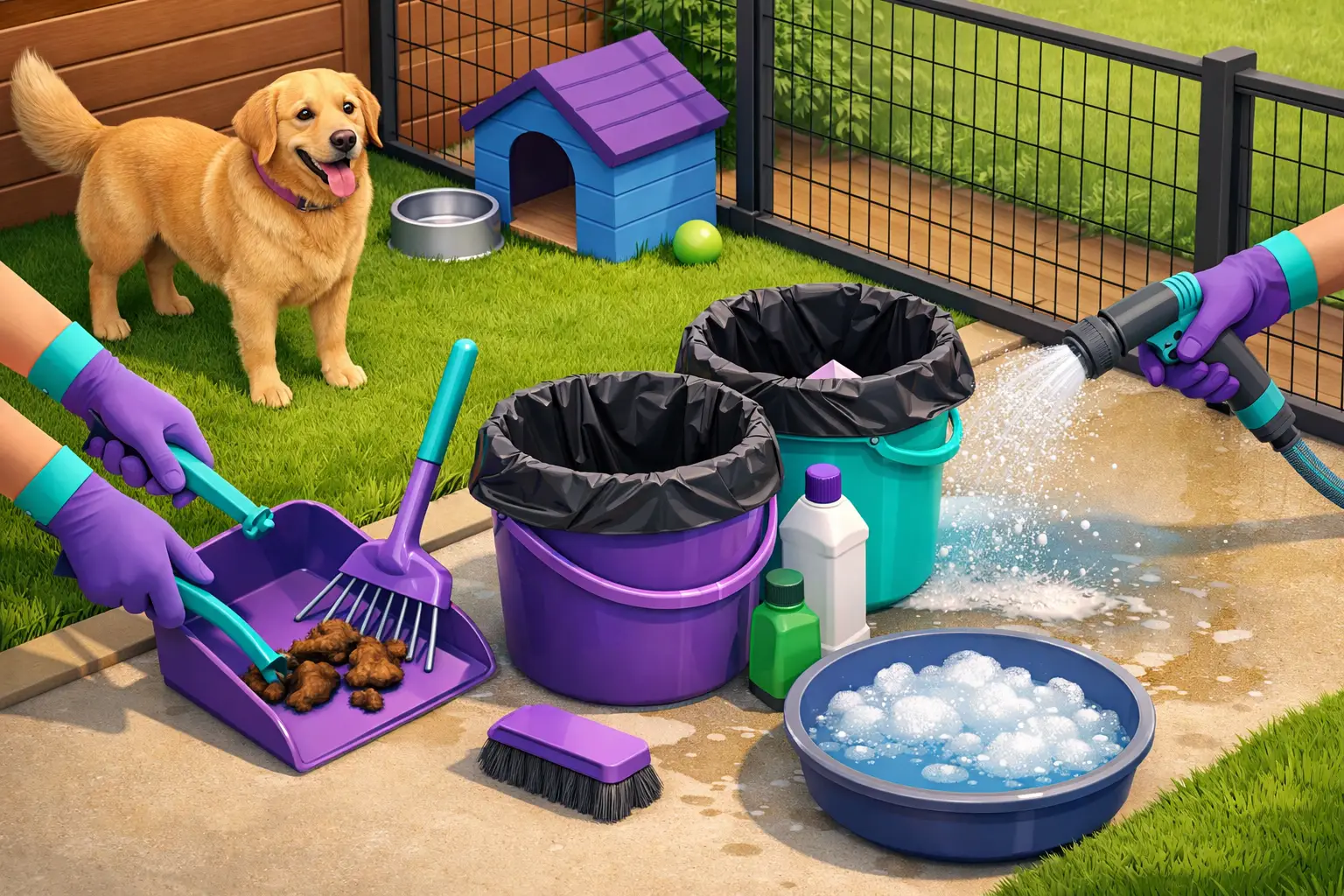
For a basic setup, keep these supplies on hand:
- Poop bags, a scoop, and a covered waste container
- A stiff brush or push broom for hard surfaces and turf
- A hose with an adjustable spray nozzle
- A pet-safe cleaner or sanitizer labeled for outdoor pet areas
- Gloves and a separate bucket or sprayer used only for the dog run
How to Sanitize a Dog Run Safely, Step by Step
Once the waste and loose debris are gone, pre-rinse hard surfaces with plain water. Use a moderate spray, not a high-pressure blast that sends dirty water toward doors, patios, vegetable gardens, or neighboring yards. On artificial turf, rinse in the direction of the drainage system. On gravel, use enough water to move surface residue downward without flooding the base.
Apply the cleaner according to its label. This part matters more than most people realize. Products need a specific amount of time on the surface to work. If you rinse immediately, the cleaner may not have enough contact time to reduce germs or break down odor. If you leave it too long, you may create residue that needs extra rinsing.
Use a brush on concrete, pavers, kennel flooring, and turf areas with visible buildup. Pay close attention to the places dogs use most: fence edges, gate areas, favorite marking spots, shady corners, and the space around water bowls. These areas tend to hold more urine residue and smell stronger when temperatures rise.
After the required contact time, rinse thoroughly if the label calls for it. Let the run dry before allowing dogs back in. This is especially helpful for puppies, dogs that lick their paws, and dogs with sensitive skin. Fresh air and sunlight can also help dry surfaces and reduce lingering odors.
Adjust the Method for Your Dog Run Surface
Concrete, pavers, and sealed kennel floors
Hard surfaces are the easiest to sanitize because they can be swept, scrubbed, and rinsed. They can also become slippery. Use a controlled amount of water and keep runoff away from storm drains when possible. Power washing may help with stubborn buildup, but it is not a substitute for picking up waste first or using a suitable cleaner afterward.
Artificial turf
Turf needs regular waste removal, a rinse for urine-heavy areas, and occasional odor treatment. Avoid harsh chemicals that can damage backing, infill, or drainage. If the turf continues to smell after cleaning, the issue may be trapped waste, poor drainage, or saturated infill rather than a lack of fragrance. A deeper turf service may be worth considering in that case.
Gravel, mulch, and dirt
Loose surfaces are harder to fully sanitize because organic matter and moisture can settle below the top layer. Scoop frequently and rake the area to expose hidden waste. Replace heavily soiled mulch or gravel when odors persist. In a dirt run, focus on waste removal, drainage, and keeping the area from becoming a muddy, compacted spot where residue lingers.
Natural grass
Healthy grass benefits most from prompt waste removal and a light rinse in urine-heavy areas. Broadly spraying disinfectant across a lawn can stress grass and nearby plants, so spot-treat only when needed and use a product specifically approved for that use. If your dog repeatedly uses one small patch, rotate access when possible to give the area time to recover.
Keep Dogs Out Until the Area Is Ready
The easiest way to prevent accidental exposure is to clean while dogs are indoors, on a walk, or safely separated in another part of the yard. Let every treated area dry fully before they return. If a product requires rinsing, do not skip it just because the surface looks dry.
Watch for signs that a cleaner is not agreeing with your dog, such as excessive paw licking, redness, coughing, or watery eyes. Rinse paws with clean water if exposure occurs and contact a veterinarian if symptoms are severe or do not improve. Store all cleaning products out of reach, even if they are marketed as pet-safe.
Build a Routine That Actually Gets Done
Daily scooping is the best sanitation step you can take. It cuts down on odor before it has time to soak in, helps reduce exposure to parasites, and makes weekly cleaning much faster. For one dog, a weekly rinse and spot treatment may be enough. Multi-dog homes, apartment dog areas, and high-traffic runs usually need more frequent attention.
A good rhythm is to scoop daily, rinse urine-prone hard surfaces once or twice a week, and do a fuller cleaning every few weeks. Rain, heat, muddy weather, and a dog with diarrhea can all change that schedule. When a dog has had a contagious illness or suspected parasites, ask your veterinarian what cleaning approach is appropriate before reopening the run.
For landlords, property managers, and families who simply do not have time to keep up, recurring pet waste removal keeps the sanitation process manageable. Poop Scoop Protocol helps Greater Philadelphia dog owners stay ahead of the hard part, so the yard is ready when it is time to play.
A clean dog run is less about using the strongest product and more about staying consistent. Scoop early, clean the right surface the right way, let it dry, and your dogs can get back to the part they care about most: being outside.