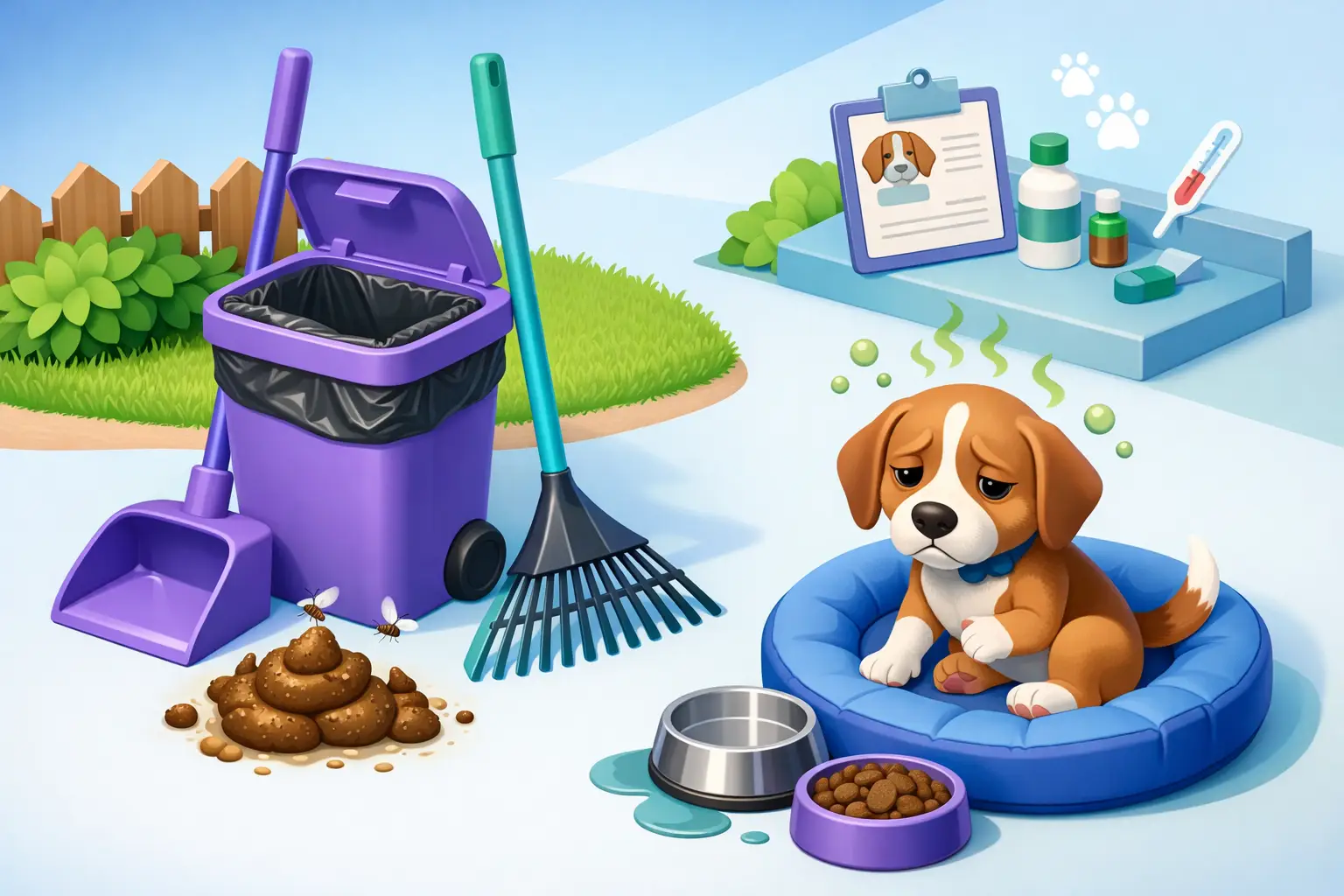
A backyard can look harmless until your dog finds an old pile before you do. They may sniff it, step in it, or, unfortunately, eat it. So, can dog poop make dogs sick? Yes. Dog waste can carry parasites, bacteria, and other germs that may spread illness to dogs, people, and other animals.
That does not mean every encounter with poop leads to a sick dog. The risk depends on what is in the waste, how old it is, your dog’s health, and whether they ingest it. Still, regular cleanup is one of the simplest ways to make your lawn safer for the dogs and people who use it.
Can Dog Poop Make Dogs Sick From a Dirty Yard?
Dog poop is not just an unpleasant mess. It can contain microscopic organisms that remain in the soil, on grass, and on paws after the pile is gone. When waste sits in the yard, rain can spread contamination across the lawn, while flies and curious dogs can carry it farther.
The biggest concern is that some parasites and bacteria are passed through feces. A dog that sniffs, licks, eats, or walks through contaminated waste can pick them up. Puppies, senior dogs, dogs with weakened immune systems, and dogs that spend time at parks, apartment dog runs, or shared yards may face a higher risk.
Fresh poop deserves quick attention, but older poop is not automatically safe. Some parasite eggs can survive in soil for a long time. That is why a yard that is cleaned only once in a while can still expose dogs even when there are no obvious piles in the grass.
What Can Be in Dog Waste?
A healthy-looking dog can sometimes shed germs without showing obvious signs of illness. That makes visual inspection unreliable. You cannot tell whether a pile contains a problem just by looking at it.
Common concerns include roundworms, hookworms, whipworms, giardia, coccidia, and bacteria such as Salmonella or Campylobacter. Not every dog carries these organisms, and not every exposure causes disease. But routine fecal testing and parasite prevention matter because they reduce the chance that one dog’s waste becomes a problem for the whole household or neighborhood.
Roundworm eggs are especially concerning because they can persist in the environment. Hookworm larvae may develop in warm, damp soil and can affect dogs that come into contact with contaminated areas. Giardia can cause digestive upset and may be easier to spread where several dogs share the same space.
Dogs that eat poop face a more direct risk. This behavior, called coprophagia, can happen out of curiosity, boredom, stress, hunger, or habit. It is common enough that owners should not feel embarrassed about it, but it is worth addressing. Picking up waste promptly removes the opportunity before it becomes a repeat behavior.
Signs Your Dog May Have Picked Up an Illness
A dog can step in poop and be completely fine. But if your dog has been around a dirty yard, dog park, kennel, or shared pet area, watch for changes in behavior or digestion. Symptoms can vary depending on the cause, but call your veterinarian if you notice:
- Diarrhea that lasts more than a day, is severe, or contains blood
- Vomiting, poor appetite, unusual tiredness, or weight loss
- Scooting, frequent licking around the rear, or visible worms in stool
- Coughing, a swollen belly in a puppy, or signs of dehydration
Do not assume an upset stomach is simply from eating something strange. Bring a fresh stool sample to your veterinarian if requested. Testing can identify parasites or bacteria that are not visible to the eye and helps your vet choose the right treatment.
If your dog is very young, elderly, pregnant, or already has a medical condition, it is better to call sooner. Puppies can become dehydrated quickly, and intestinal parasites can hit them harder than a healthy adult dog.
Why Regular Poop Pickup Makes a Real Difference
Cleaning up after your dog is not about having a picture-perfect lawn. It is basic prevention. Removing waste before it breaks down limits how much contamination has time to reach the grass and soil. It also helps prevent dogs from eating poop or tracking it inside on their paws.
For multi-dog households, the benefit is even clearer. If one dog develops a parasite or digestive infection, waste left in the yard can expose the other dogs again and again. Quick pickup supports treatment plans by reducing the chance of reinfection.
The same principle applies to apartment communities, rental properties, and parks. One missed pile may not seem like much, but repeated missed piles create a shared health and cleanliness issue. Children play on the grass, residents walk through the area, and dogs investigate everything with their noses.
There is a practical trade-off here. Daily pickup is ideal when a dog has diarrhea, known parasites, or a habit of eating waste. For many healthy households, consistent weekly service can keep the yard manageable and far cleaner than letting waste build up between occasional weekend cleanups. The best schedule depends on the number of dogs, the size of the property, and how often the space is used.
Keep Your Dog and Yard Safer
Start with a regular cleanup routine that you can actually maintain. Pick up waste as soon as possible, especially after rain or during warm weather. Use a dedicated scoop or bag, seal the waste, and wash your hands afterward. If your dog steps in poop, rinse and clean their paws before they come inside.
Stay current on veterinary-recommended parasite prevention and wellness exams. A routine fecal test can catch parasites before they cause bigger problems or spread through the yard. If your veterinarian diagnoses a parasite, ask how often to clean the yard during treatment and whether other household pets should be tested.
It also helps to discourage poop-eating behavior calmly and consistently. Keep your dog supervised during potty breaks when possible, redirect them with a cue or treat after they finish, and remove the waste right away. Avoid punishment. It can make a dog anxious without solving why the behavior started.
For busy households, recurring pet waste removal takes one more health-related chore off the list. A professional cleanup schedule means fewer forgotten piles, fewer awkward backyard surprises, and more confidence when kids and dogs are playing outside. At Poop Scoop Protocol, that is the goal: clean lawns, happy dogs, and less work waiting for you at the end of the day.
Don’t Forget About People
Some germs found in dog waste can affect people, too. Young children are particularly likely to touch grass, toys, shoes, or outdoor surfaces and then put their hands near their mouths. Good handwashing after yard time and keeping play areas free of pet waste are simple habits that make a meaningful difference.
If your family grows vegetables in the yard, keep dogs out of the garden when possible and do not use dog waste as fertilizer. Pet waste is different from properly managed livestock manure and can introduce pathogens where you grow food.
A clean yard will not replace veterinary care or parasite prevention, but it gives those protections a better chance to work. When poop is picked up consistently, your dog gets more room to run, sniff, and relax without turning every bathroom break into an unnecessary health risk.