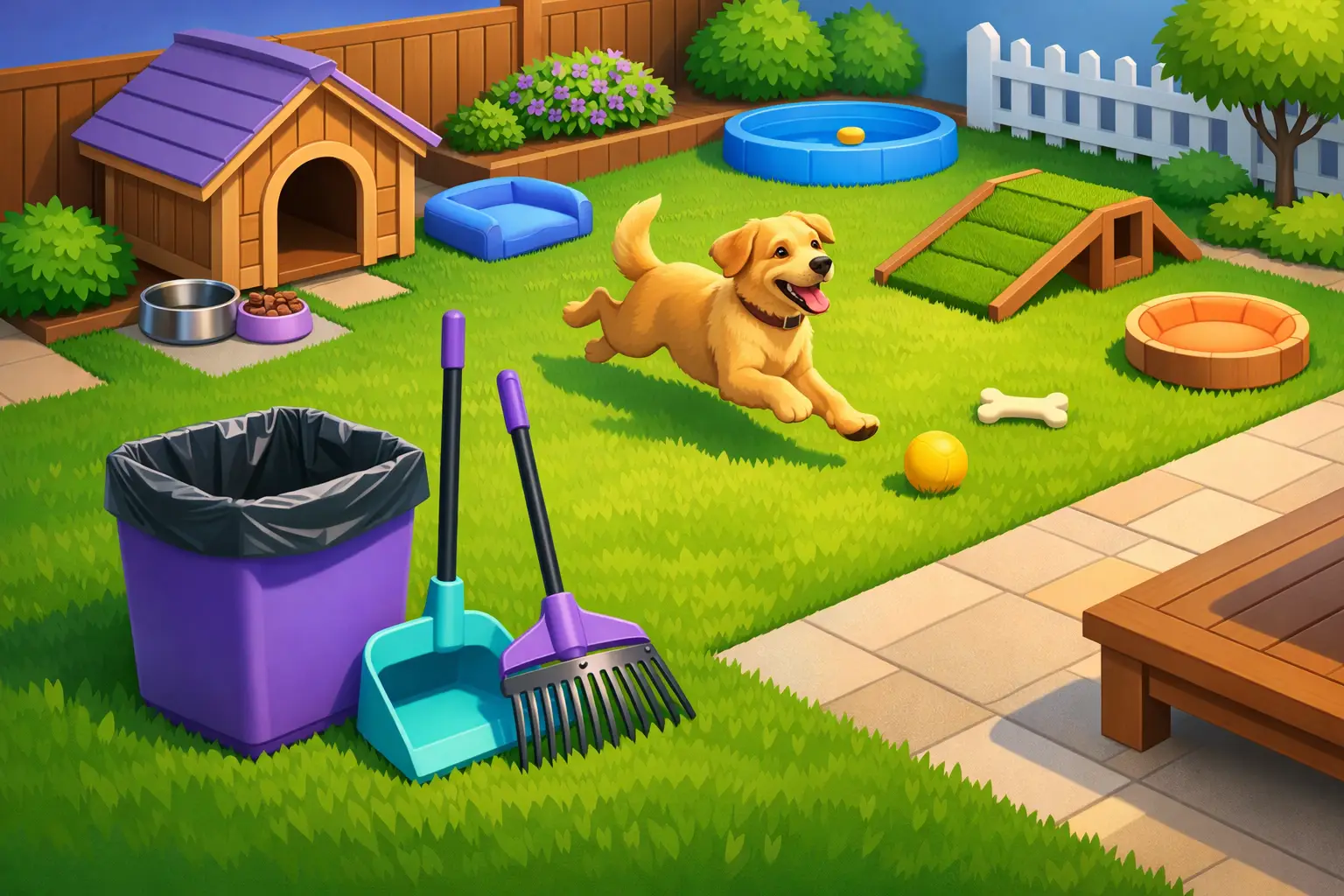
A safe backyard for dogs is more than a sturdy fence and a patch of grass. It is the place where your dog runs, sniffs, rests, and plays – often right alongside your kids, guests, and family routines. A few smart choices can prevent escapes, reduce exposure to waste and pests, and make the yard far more enjoyable for everyone.
The goal is not to create a perfect outdoor space. Dogs dig, track mud, and find interesting things to investigate. The goal is to remove the predictable hazards and build a simple maintenance routine that keeps small problems from becoming big ones.
Start With a Secure Backyard for Dogs
A fence is only useful if it works for your specific dog. A small, determined dog may slip through wide gaps. A large, athletic dog may clear a fence that seems plenty tall. A dog that likes to dig can turn one loose board or soft spot along the bottom into an exit route.
Walk the perimeter from your dog’s eye level. Look for damaged panels, gaps beneath gates, loose hardware, sharp edges, and places where landscaping gives your dog a boost toward the top of the fence. Gates deserve extra attention. A latch that looks closed but does not fully catch can become a real problem when a dog leans against it.
For dogs that dig along the fence line, consider burying wire mesh, adding pavers at frequent digging spots, or creating a designated digging area away from the perimeter. It depends on why your dog digs. Some dogs are bored, some are chasing wildlife, and some simply enjoy the activity. Addressing the behavior matters as much as reinforcing the fence.
If your yard opens onto a busy street, a privacy fence or planted visual barrier can also help reduce reactions to passing dogs, people, and vehicles. Less fence running usually means less stress for your dog and fewer chances of an injury.
Keep Pet Waste From Becoming a Yard Hazard
Dog waste is not just an unpleasant chore. When it sits in the yard, it can contain bacteria and parasites that create concerns for pets and people, especially in areas where children play. Rain can spread waste residue through the grass, while flies and other pests are drawn to an unmaintained yard.
The simplest answer is consistency. Pick up waste before it accumulates, particularly if you have multiple dogs or use the yard every day. High-traffic areas near patios, playsets, walkways, and doors should be checked often. If your dog uses one corner of the yard, that is helpful – but it still needs regular service.
A clean lawn also makes it easier to spot changes in your dog’s stool. Loose stool, blood, worms, or a sudden change in frequency can be worth a call to your veterinarian. Routine cleanup gives you a better view of your pet’s health without turning every yard trip into a guessing game.
For busy households, recurring pet waste removal can be a practical part of maintaining a safe yard. Poop Scoop Protocol helps Greater Philadelphia dog owners keep outdoor areas clean, usable, and ready for the next round of play.
Be Careful With Disinfectants and Deodorizers
Not every cleaner belongs in a dog-friendly yard. Strong chemicals may irritate paws, skin, eyes, or noses, and dogs are likely to lick surfaces after a treatment. If you use a yard deodorizer or disinfectant, choose one labeled for pet areas and follow the instructions exactly.
More product is not better. Keep dogs off treated surfaces for the recommended time, and never mix cleaning products. When sanitation is needed after illness or a heavy waste buildup, professional-grade service can take the guesswork out of what to use and where to use it.
Check Your Plants, Mulch, and Lawn Products
A beautiful yard can hide hazards in plain sight. Some common ornamental plants are toxic to dogs if chewed or swallowed, including azaleas, tulips, daffodils, sago palms, and certain lilies. Mushrooms can also appear quickly after wet weather, and it is difficult for most homeowners to identify which types are safe.
You do not need to remove every plant your dog could possibly reach. But if your dog is a known chewer, treat landscaping like you would treat a puppy-proofed room. Move risky plants behind barriers, remove fallen bulbs and seeds, and check for mushrooms before letting your dog out after rain.
Mulch is another detail worth checking. Cocoa mulch can be dangerous if eaten, and any mulch can cause stomach trouble or blockage if a dog consumes enough of it. Larger wood chips may be less tempting for some dogs, while gravel can discourage digging but may be hard on paws. The right ground cover depends on your dog’s habits, age, and activity level.
Be thoughtful with lawn treatments, too. Fertilizers, herbicides, pesticides, and rodent bait should never be treated as routine background products. Read labels, use the smallest effective amount, store containers securely, and keep your dog away until the product has been applied and dried as directed. If you are unsure whether a product is appropriate around pets, choose a safer alternative or ask a lawn care professional.
Make Play Areas Easier on Paws and Joints
A yard can be secure and clean but still uncomfortable. Hot patios, artificial turf, dark rubber surfaces, and sun-baked decks can become painful on a dog’s paws. On warm days, place the back of your hand on the surface for several seconds. If it feels too hot for your hand, it is too hot for your dog to stand on comfortably.
Natural grass offers a forgiving place to run, but it can become muddy and worn down in favorite paths. A mix of grass, shaded resting areas, and a durable path to the door often works well. For older dogs, avoid forcing them to jump down from high decks or navigate slippery steps. A ramp, non-slip tread, or a lower step can make a noticeable difference.
Shade and fresh water are non-negotiable during warm weather. A shaded spot should be available throughout the day, not only in the morning or late afternoon. Keep a heavy, tip-resistant water bowl outside and refresh it often. Standing water in old buckets, toys, or clogged planters should be emptied because it can attract mosquitoes.
Create a Calm Spot, Not Just an Open Space
Some dogs need an outdoor reset more than a wide-open race track. A quiet spot with shade, a bed or raised cot, and room away from the fence can help a nervous or easily overstimulated dog settle down. This is especially useful in active neighborhoods where delivery trucks, pedestrians, and other dogs pass by regularly.
Avoid leaving toys, chews, or damaged furniture outdoors indefinitely. Weather breaks materials down, and a once-safe toy can become a choking risk. Rotate a few sturdy toys instead, inspect them often, and bring them inside when they are worn.
Control Pests Without Creating New Risks
Fleas, ticks, mosquitoes, and rodents can affect how safe your backyard feels. Tall grass, leaf piles, cluttered storage areas, and standing water give pests places to hide or breed. Basic upkeep goes a long way: mow regularly, clear brush near the fence, secure trash, and remove water that collects after rain.
Wildlife can bring additional concerns. Keep birdseed, pet food, and unsecured trash from attracting raccoons, rodents, or other animals. If your dog encounters wildlife in the yard, do not rely on a fence alone to prevent contact. Supervision is still the best protection, especially at dawn and dusk.
Tick prevention and flea prevention should be discussed with your veterinarian based on your dog’s lifestyle. A dog that spends time in tall grass or wooded edges may need a different plan than one who mostly uses a small, maintained city yard.
Build a Routine You Can Actually Maintain
The best safe backyard for dogs is one that fits your real schedule. A detailed plan that gets ignored after two weeks will not help much. Start with a quick daily look for waste, damaged fencing, standing water, and anything new that has landed in the yard. After storms, add a more careful check for fallen branches, mushrooms, broken gates, and puddles.
Weekly maintenance can include mowing, checking outdoor toys, clearing brush, and inspecting the fence line. Seasonal tasks may include reviewing lawn products, trimming shrubs away from the fence, and preparing shaded areas for warmer months.
A clean, secure yard gives your dog freedom without making you worry about every step they take. Keep the routine simple, stay ahead of the mess, and your backyard can remain one of the best parts of your dog’s day.