A dog waste problem rarely starts with one missed pickup. It starts with a few piles near the walking path, then spreads to the lawn by the playground, around the pet station, and eventually into resident complaints. Pet waste removal for homeowners association boards is a practical way to keep shared outdoor spaces clean without asking staff, volunteers, or neighbors to police every dog owner.
For a community, the goal is not simply to make the grounds look better. Consistent service protects the experience residents expect when they pay association dues: usable lawns, cleaner common areas, safer places for kids and pets, and fewer unpleasant surprises underfoot.
Why pet waste becomes an HOA maintenance issue
Most dog owners want to do the right thing. But even in a well-managed community, busy schedules, forgotten bags, poor weather, and simple inconsideration can leave waste behind. In multifamily communities and neighborhoods with shared green space, a small number of missed pickups can affect everyone.
Dog waste is more than an eyesore. It can carry bacteria and parasites, attract flies, create odor, and make turf areas less pleasant to use. When it is left near sidewalks, mailbox clusters, dog runs, or children’s play areas, complaints tend to rise quickly. It can also get tracked into homes, hallways, vehicles, and common buildings.
Association managers already have plenty to coordinate. Landscaping, snow removal, trash, vendors, resident communication, and maintenance requests all compete for attention. Asking an onsite employee or board member to handle dog waste often means the task becomes inconsistent, especially during busy seasons. A recurring service gives the community a clear system instead of a recurring frustration.
What a professional HOA pet waste removal plan should include
A dependable plan starts with a clear service scope. The provider should know which areas are included, how often they will be cleaned, where waste should be collected, and how the community wants concerns reported. Vague expectations lead to missed areas and awkward conversations later.
Scheduled cleanup of common areas
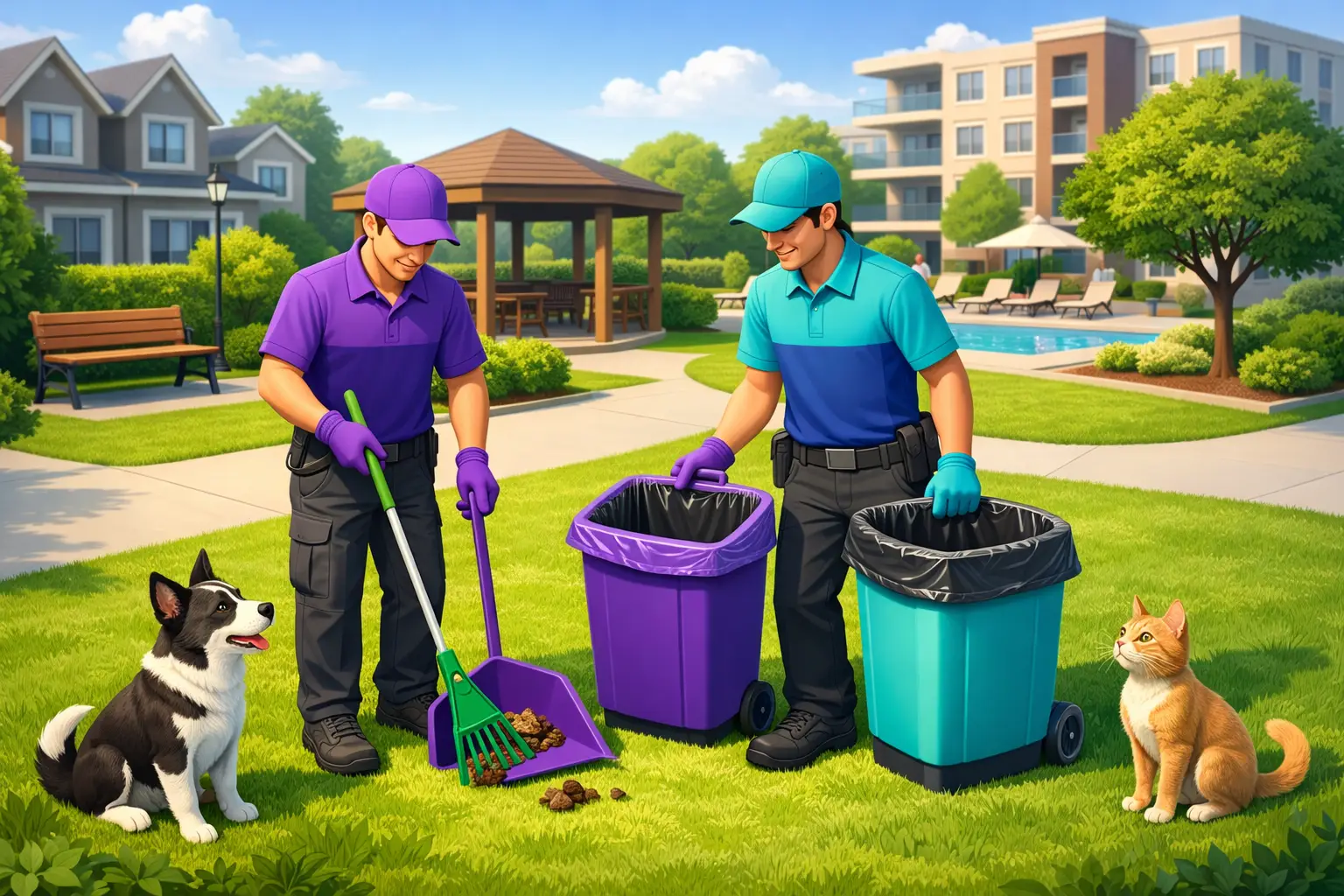
Routine cleanup is the foundation. A trained technician walks designated areas and removes visible pet waste from lawns, landscaped edges, dog relief areas, walking paths, and other approved spaces. The right frequency depends on the community, but weekly service is often a strong starting point for small and moderate-use properties.
Higher-density apartment communities, dog-friendly townhome developments, and properties with active dog parks may need two or more visits each week. If waste accumulates quickly between visits, that is usually a sign to increase frequency, not a sign that the service is failing.
Pet station service and bin maintenance
Pet stations can encourage responsible pickup, but only when they are stocked, visible, and maintained. An empty bag dispenser sends the wrong message. An overflowing waste bin creates odor and can become a complaint of its own.
A professional plan can include restocking bags, emptying bins, cleaning station surfaces, and reporting damaged equipment. This works especially well near trail entrances, community courtyards, dog runs, and high-traffic sidewalks. Stations are a helpful tool, but they work best alongside scheduled ground cleanup. Bags alone will not solve the problem when residents do not use them.
Clear reporting and accountability
HOA boards and property managers should not have to wonder whether a visit happened. A reliable provider should have a consistent process for completed visits, special observations, and service concerns. That might include reporting a damaged pet station, an unusually heavy waste area, or a location that needs more frequent attention.
This visibility matters when a resident raises a complaint. Instead of guessing, management can review the service schedule and determine whether the issue is a one-time concern, a persistent hotspot, or an opportunity to adjust the plan.
How often should an HOA schedule service?
There is no one-size-fits-all answer. The best schedule depends on the number of dogs, density of homes, size of common areas, and whether the property has a designated dog run. A 20-home community with a small shared lawn may be comfortable with weekly visits. A large apartment property with dozens of dogs may need service two or three times a week.
Season matters too. Spring and summer generally bring more outdoor activity, while rainy weather can make missed waste harder to spot and more likely to get tracked through the property. Some communities choose to increase service during peak outdoor months and reduce it slightly in winter.
A simple rule helps: schedule service often enough that residents notice clean grounds, not the mess that was there before. If complaints keep coming in between visits, the community likely needs a higher frequency or better coverage of problem areas.
Choosing the right provider for your community
Price matters, but the lowest quote is not always the lowest-cost choice. If a provider skips areas, arrives inconsistently, or cannot communicate clearly with management, the association may spend more time resolving complaints than it saves on the service fee.
Look for a provider with trained, uniformed staff, an established schedule, and a straightforward process for setting up recurring service. For shared communities, insurance coverage, professional conduct, and dependable communication are part of the service, not extras.
It also helps to work with a local company that understands the needs of Greater Philadelphia properties. Neighborhood layouts vary widely across Philadelphia, Bucks County, and Montgomery County. A small condominium courtyard needs a different approach than a large suburban HOA with trails, open lawns, and a fenced dog area.
Before starting, ask practical questions. How are service areas defined? What happens if weather delays a visit? Are pet station bags and waste bin service available? Can the schedule change as the community grows or seasonal demand changes? The answers should be simple and specific.
Pair service with clear resident expectations
Professional cleanup should support resident responsibility, not replace it. Associations still benefit from clear pet rules in welcome packets, newsletters, signage, and community reminders. Keep the message respectful and direct: pick up after your dog, use the provided stations, and report full bins or damaged equipment.
Avoid turning every reminder into a threat. Most residents respond better to a community-minded message that connects pickup to clean play areas, pleasant walks, and respect for neighbors. Enforcement may be necessary for repeat violations, but clean facilities and accessible bags make compliance easier from the start.
Some communities also identify repeat problem areas by watching where waste is consistently found. A second station, a better-placed sign, or a slight adjustment to the walking route can make a meaningful difference. The goal is to solve the behavior pattern, not just keep reacting to it.
Add-ons that can improve shared outdoor spaces
For some properties, waste removal is the first step rather than the entire plan. Dog runs and heavily used relief areas can develop lingering odors, especially in warm weather. Deodorizing and sanitizing services may help keep these spaces more comfortable for residents and safer for regular use.
Power washing can be useful around hard-surface pet areas, waste stations, sidewalks, and fenced runs when buildup becomes noticeable. Communities with multiple pet stations may also benefit from regular bin cleaning and maintenance. The right add-ons depend on the property’s layout and actual use, so there is no need to pay for services that do not solve a specific problem.
Poop Scoop Protocol helps community managers create recurring plans that fit the property, whether that means scheduled grounds cleanup, pet station support, or extra care for a busy dog area. The focus stays simple: clean lawns, happy dogs, and fewer maintenance headaches for the people managing the community.
A cleaner community is easier to manage
The best pet waste plan is one residents barely have to think about. Paths stay walkable, lawns stay usable, stations stay supplied, and property staff can focus on the work they were hired to do. When service is consistent, the community gets a cleaner outdoor environment without turning pet waste into a weekly board discussion.
Start by identifying the areas that cause the most complaints and the times of year when the problem gets worse. A schedule built around those real conditions will do more for resident satisfaction than a generic solution ever could.