A few missed piles may not seem like a big deal after a busy week, especially when the grass is long or the weather is bad. But can pet waste attract backyard pests? Yes. Left behind in a yard, dog waste can become a food source, breeding site, or scent signal for several unwelcome visitors. Regular pickup helps keep your lawn more comfortable for your dog, your family, and anyone who uses the space.
Can Pet Waste Attract Backyard Pests?
Dog waste contains organic material that insects and scavenging animals can use. It also holds moisture, bacteria, and strong odors, especially in warm or wet conditions. Those conditions do not guarantee a pest problem, but they can make an existing problem worse or give pests one more reason to stay near your home.
The risk depends on your yard, the season, the number of dogs using the area, and how quickly waste is removed. A single pile picked up promptly is different from weeks of buildup in a shaded corner. Multi-dog homes, apartment dog areas, and shared outdoor spaces need extra attention because waste accumulates faster.
Flies are the most common concern
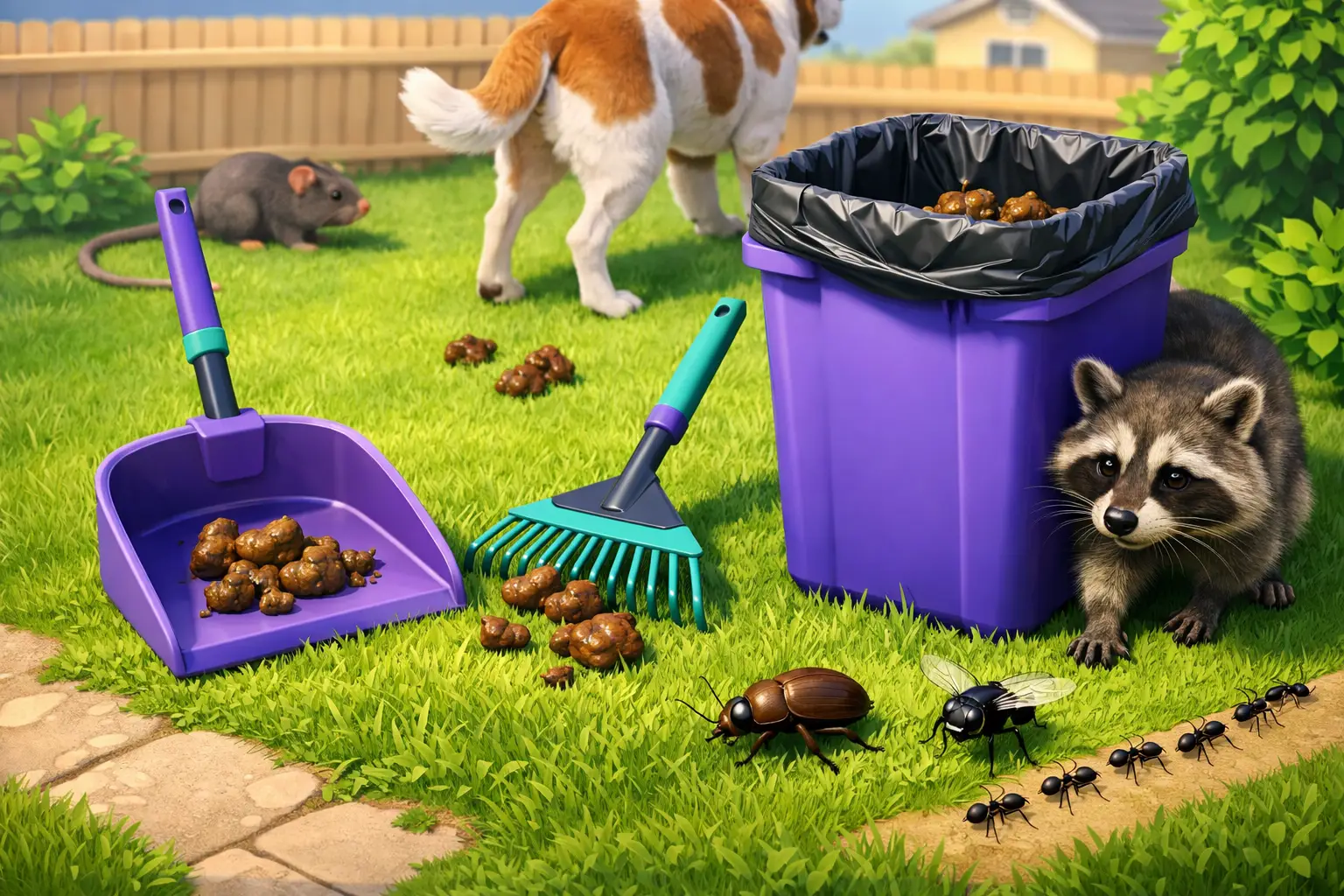
Flies are often the first pests people notice around pet waste. Fresh waste can attract adult flies, which may lay eggs in it. In warm weather, that can lead to more flies around the yard, patio, trash cans, and doorways.
Not every fly in your yard came from dog waste. Outdoor garbage, standing water, compost, and nearby properties can all contribute. Still, removing waste before flies can use it is one of the simplest ways to reduce a preventable attractant. The same goes for keeping pet waste bins closed, emptied, and cleaned on a routine schedule.
Rodents may be drawn to the area
Dog waste is not a rodent’s preferred meal, but rodents are opportunistic. Rats, mice, raccoons, and other scavengers may investigate areas with food-like odors, especially if the yard also has open trash, birdseed, fallen fruit, or accessible pet food.
Waste buildup can also tell an animal that a yard is regularly used by pets and people, which may encourage it to explore the surrounding area. If a rodent finds shelter under a shed, a water source, or an easy meal nearby, the overall property can become more appealing.
The practical point is not to panic over one pile. It is to avoid creating a yard full of small attractants. Scoop waste, secure trash, store birdseed properly, and trim overgrown vegetation near fences, sheds, and foundations.
Roaches and other insects can benefit from buildup
Cockroaches, beetles, ants, and certain other insects may feed on decaying organic material or gather in damp areas around it. Moisture is often part of the problem. A yard with pet waste, leaking spigots, clogged gutters, and dense ground cover gives pests several reasons to stick around.
Ticks and mosquitoes are different cases. Dog waste does not directly create tick or mosquito populations. Mosquitoes breed in standing water, while ticks prefer brushy, shaded areas and hosts such as deer or rodents. However, a neglected yard can have several conditions at once, which is why consistent cleanup and basic yard maintenance work well together.
Why Pet Waste Can Make a Yard Less Usable
Pests are only one reason to stay on top of cleanup. Dog waste can carry parasites and bacteria that may spread through soil, paws, shoes, or rain runoff. Children playing in the grass and dogs sniffing the same areas have more exposure when waste is left behind.
A yard also stops feeling like a place to relax when you have to watch every step. That is especially frustrating for families, older adults, busy professionals, and property managers responsible for common areas. A clean lawn is easier to enjoy, easier to mow, and far more welcoming for guests.
For landlords and apartment communities, regular pet waste removal can also help protect curb appeal and reduce resident complaints. A neglected dog area does not just look bad. It can create odors, draw flies, and make responsible pet owners feel like they are carrying the burden for everyone else.
How Often Should Dog Waste Be Removed?
For most homes, the best practice is to remove dog waste at least once or twice a week. Daily pickup is ideal when possible, particularly during hot, humid weather. In Greater Philadelphia, summer heat and humidity can speed up odors and fly activity, while wet spring weather can make waste harder to spot and easier to track through the yard.
More frequent cleanup makes sense if you have multiple dogs, a small yard, young children, frequent backyard gatherings, or a dog that uses one compact area repeatedly. Shared pet relief areas and commercial properties often need service several times a week to stay pleasant and sanitary.
Winter does not eliminate the need for cleanup. Cold temperatures may slow insect activity, but snow can hide piles until a thaw reveals a messy backlog. Keeping up with removal year-round prevents the first warm stretch of spring from turning into a cleanup project.
A Simple Pest-Prevention Routine for Dog Owners
The most effective approach is straightforward: remove waste consistently, keep disposal containers sealed, and eliminate other easy pest resources around the property. You do not need to turn your yard into a laboratory. You just need a routine that does not leave waste sitting long enough to become part of the problem.
When you pick up waste, use a sturdy bag and place it in a lidded outdoor trash container. If you use a dedicated pet waste bin, clean it periodically so residue and odor do not build up inside. A deodorizing or sanitizing service can be useful for high-use areas, but it works best alongside reliable removal, not as a substitute for it.
Walk the yard occasionally with a pest-prevention mindset. Look for standing water in toys, planters, tarps, and clogged gutters. Keep garbage lids secure. Do not leave pet food outdoors. Clear fallen fruit, and reduce dense clutter where rodents can hide. These small steps address the broader conditions that pests look for: food, water, shelter, and a quiet place to nest.
Do not rely on lawn chemicals to solve a cleanup issue
It can be tempting to reach for sprays when flies or insects appear, but chemicals alone will not remove the source. If pet waste remains in the yard, pests may keep returning. Some treatments can also be a concern for dogs, children, pollinators, and nearby gardens when used incorrectly.
Start with sanitation. If pest activity continues after you have removed waste and addressed moisture or trash issues, a qualified pest professional can help identify the cause. That may be especially worthwhile if you see rodent droppings, gnaw marks, nests, or repeated activity near your home.
When Professional Pet Waste Removal Helps
The hardest part of a good cleanup routine is not knowing what to do. It is finding time to do it every week. Rain, travel, work schedules, mobility limitations, and the simple reality of a multi-dog household can make the job easy to postpone.
Recurring removal takes that task off your list before it becomes a larger yard problem. A dependable schedule means fewer missed piles, less odor, and a cleaner space for playtime, cookouts, or letting the dog out without worrying about what is underfoot. For community spaces, it also creates a visible standard of care that residents and visitors notice.
Poop Scoop Protocol provides recurring pet waste removal for homes and shared properties throughout the Greater Philadelphia area, helping dog owners keep the hard part handled on a schedule that fits their needs.
A cleaner yard will not prevent every fly, mouse, or bug from entering your property. It does remove one easy reason for pests to linger. Pick up promptly, keep the rest of the yard tidy, and your outdoor space can stay focused on what it is for: happy dogs, cleaner lawns, and time outside you can actually enjoy.