The worst part of dog waste is not always what is left in the yard. For plenty of homeowners and property managers, the real problem starts once it is bagged and dropped into a can. A pet waste bin cleaning service fixes the part people try to ignore – the smell that hits when you lift the lid, the residue that sticks to the sides, and the bacteria that builds up fast in warm weather.
If you have ever sprayed out a bin yourself, you already know the issue. A quick rinse helps for a day or two, but it does not fully remove the grime that causes ongoing odor. And if you manage a shared property, dog park, apartment community, or pet station area, one dirty waste bin can make an otherwise clean space feel neglected.
Why pet waste bins get nasty so fast
Bagged waste sounds contained, but it rarely stays neat for long. Bags leak. Condensation builds inside the container. Heat intensifies odor. Add a few days of regular use and the inside of the bin starts collecting waste residue, liquid, and bacteria.
That is why the problem tends to come back even after the trash is emptied. Once the can itself is contaminated, every new bag dropped in picks up the smell. For residential customers, that means a backyard or garage area that never feels fully clean. For commercial properties, it can lead to resident complaints, bad first impressions, and more maintenance headaches than anyone wants.
A pet waste bin cleaning service addresses the source instead of just masking it. The goal is not to perfume the bin and hope for the best. The goal is to remove buildup, reduce odor at the surface level and below it, and leave the container sanitary enough for ongoing use.
What a pet waste bin cleaning service actually includes
This depends on the provider, and that matters. Some services do a basic rinse. Others treat bin cleaning like a real sanitation job.
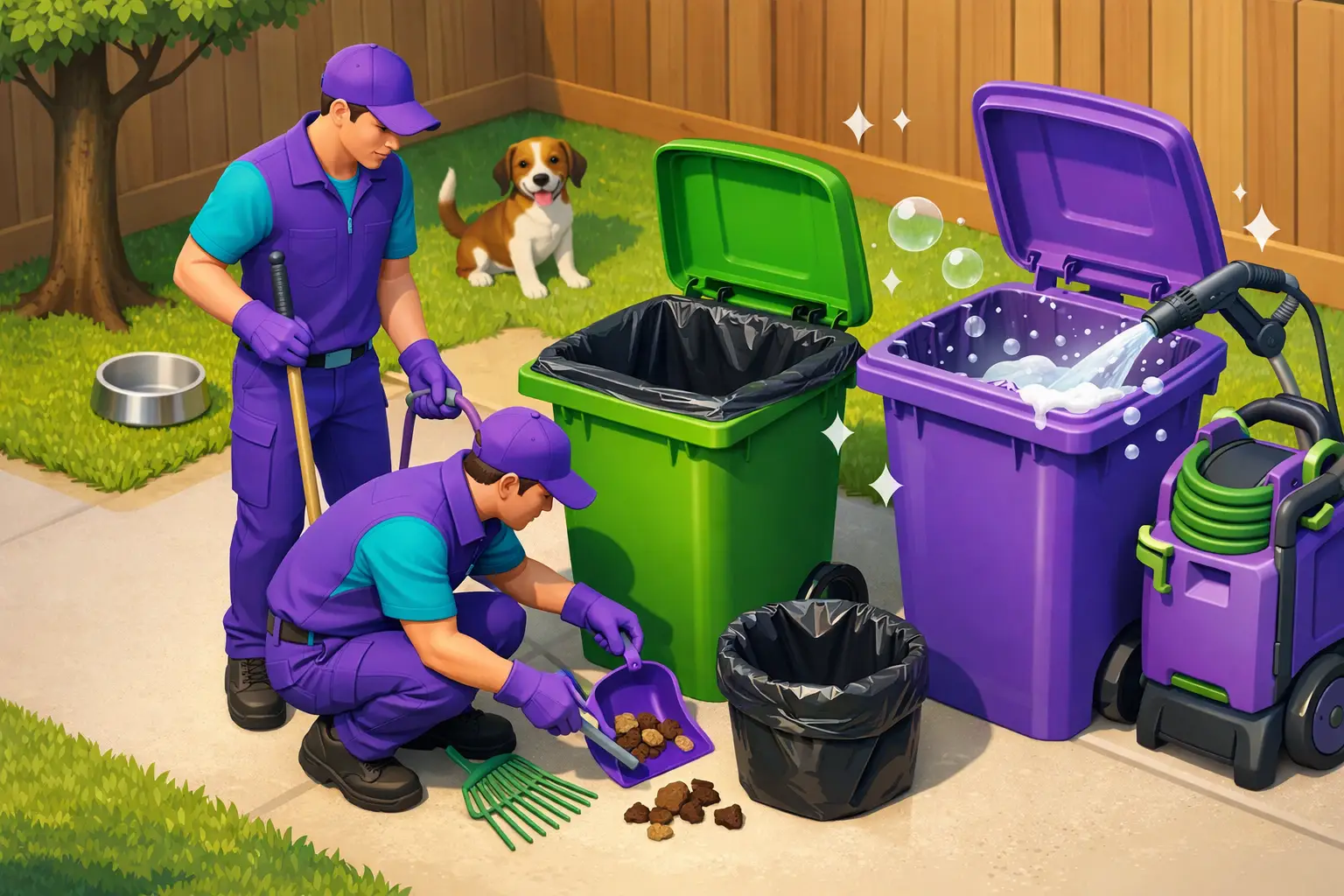
A quality service usually starts by removing loose debris and any stuck waste inside the container. From there, the bin is washed thoroughly, often with equipment strong enough to break up residue that a garden hose will not touch. The container is then treated with cleaning or sanitizing products designed to reduce bacteria and odor, not just cover them up.
In many cases, deodorizing is part of the process as well. That can be especially useful in summer, when heat turns even a lightly used bin into a serious problem. For properties with heavy traffic, recurring service often works better than one-time cleaning because it keeps buildup from getting out of control.
The best results come when bin maintenance is paired with regular pet waste pickup. That combination solves both ends of the issue – what is on the ground and what happens after it is collected.
Who benefits most from regular bin cleaning
Homeowners with one dog may be able to get by with occasional service, especially if they keep waste volume low and bins are stored outside. But even then, the smell can creep up faster than expected in humid or hot conditions.
The bigger need tends to show up in homes with multiple dogs, families with kids using the yard daily, and busy households where nobody wants to spend Saturday scrubbing out a poop can. In those situations, recurring bin cleaning is less of a luxury and more of a time-saving sanity check.
Property managers usually feel the value even faster. Shared pet waste bins get heavy use, and no resident wants to walk past an overflowing or foul-smelling station near an entrance, sidewalk, or common area. Apartment communities, HOAs, parks, and dog-friendly commercial spaces all benefit from consistent maintenance because cleanliness affects how people experience the property.
There is also the staff time factor. If your maintenance team is already handling landscaping, trash, repairs, and general upkeep, pet waste bin cleaning is easy to push down the list. Outsourcing it keeps standards up without adding another unpleasant task to someone else’s day.
The DIY option versus hiring help
Could you clean your own bin? Sure. Many people do. The question is whether you want to.
DIY bin cleaning usually means hauling the container to a spot where runoff is not a problem, spraying it out, scrubbing off stuck waste, and dealing with the dirty water afterward. It is messy, it smells bad, and it takes longer than most people think. If you do not clean it thoroughly enough, odor comes back quickly.
Hiring a pet waste bin cleaning service makes more sense when convenience matters, when odor is recurring, or when the bin serves multiple people. It also makes sense if you care about consistency. A scheduled service keeps the problem from building up instead of waiting until conditions get unbearable.
There is a trade-off, of course. Professional service costs more than doing it yourself once in a while. But for many customers, the value is not just the cleaning. It is the time saved, the better hygiene, and the relief of crossing one more dirty job off the list.
What to look for in a service provider
Not all providers handle this work with the same level of care. Since this is a sanitation-related service, reliability matters as much as the actual cleaning.
Look for a company that is clear about what is included, how often service is available, and whether bin cleaning can be added to recurring pet waste removal. Trained staff matter too. If someone is servicing your yard, common area, or commercial site, you want a team that shows up professionally and knows how to do the job without creating more mess.
Easy scheduling and billing are worth paying attention to as well. The whole point of outsourcing this kind of work is to make life easier. If managing the service becomes complicated, the convenience disappears fast.
Local accountability can also be a real advantage. In Greater Philadelphia, weather shifts, seasonal heat, and property layouts all affect how quickly outdoor bins become a problem. A local company that already handles dog waste removal and outdoor maintenance understands those patterns better than a generic one-off cleaner.
When recurring service is the better choice
One-time cleaning works well if a bin has simply gotten out of hand and needs a reset. That can happen after a hot stretch, after a tenant turnover, or when a household has fallen behind on outdoor chores.
Recurring service is better when usage stays steady week after week. That is often the case for multi-dog homes, busy families, apartment pet stations, and shared outdoor areas. Keeping a bin clean is easier and more affordable when it is maintained regularly instead of rescued after months of buildup.
This is where bundling services can make a lot of sense. If a company is already coming out for recurring poop scooping, adding bin maintenance creates a more complete solution. The yard stays cleaner, the waste storage stays under control, and the whole property feels better cared for.
For customers in Bucks County, Montgomery County, and Philadelphia, that kind of routine support can be especially useful during warmer months when odor and bacteria issues get worse fast. A dependable schedule removes the guesswork.
Clean bins make the whole property feel better
People notice when outdoor spaces smell clean. They notice when a pet station looks maintained instead of neglected. They notice when a backyard is actually usable instead of having one corner everyone avoids.
That is the real value of a pet waste bin cleaning service. It solves a small problem that has an outsized effect on comfort, hygiene, and how a space feels day to day. For homeowners, that means less stress and a yard you want to use. For property managers, it means fewer complaints and a cleaner experience for residents and visitors.
Poop Scoop Protocol understands that pet waste is not just about pickup. It is about keeping the entire system cleaner, simpler, and easier to manage.
If your bin is the part of the job you keep putting off, that is usually a sign it should not stay on your to-do list much longer.
Ready to reclaim your yard and peace of mind?
Contact Us for a free quote or visit our FAQ for more information.
Poop Scoop Protocol
Clean Lawns. Happy Dogs.
info@PoopScoopProtocol.com
(267) 667-6673