You usually know it’s time to figure out how to hire a pet waste company when the yard stops feeling like a yard. Maybe the dog keeps tracking mess back inside. Maybe the kids can’t play freely. Maybe you manage a property and complaints are starting to pile up. Whatever brought you here, the goal is simple – find a service that shows up, does the job right, and makes your life easier without adding hassle.
That sounds straightforward, but not every company runs the same way. Some are dependable and easy to work with. Some are cheap up front but inconsistent once service starts. If you want recurring cleanup that actually stays off your to-do list, it helps to know what to look for before you sign up.
How to hire a pet waste company without regrets
The best place to start is with your actual need, not the company’s sales pitch. A single-dog household with a fenced backyard may need something very different from a landlord managing a shared green space or an apartment property with multiple pet stations. Frequency, property size, dog count, gate access, and whether you want add-on services all affect what a good fit looks like.
If your main problem is basic weekly cleanup, keep the search focused on reliability and price clarity. If odor, sanitation, or shared-area appearance is the bigger issue, you may need a provider that offers deodorizing, sanitizing, pet waste station service, or bin cleaning as part of a more complete outdoor maintenance plan. A company that is perfect for a small residential yard may not be set up well for commercial routes or high-traffic common areas.
Start with reliability, not just price
Most people compare prices first. That makes sense, but it should not be the only filter. Pet waste removal is a recurring service, which means the real value comes from consistency over time. A lower rate does not help much if technicians miss visits, leave gates open, or do a rushed pass that still leaves waste behind.
Ask how scheduling works. Is service weekly, twice weekly, every other week, or one-time only? What happens if there is bad weather? Do they notify you when a technician is on the way or after the service is completed? Is billing automatic and easy to manage, or are you chasing invoices every month?
The smoother the system, the less mental energy you spend on something you were trying to outsource in the first place. That matters for busy households, but it matters just as much for property managers who need dependable service across multiple units or common areas.
Ask what’s included in the visit
This is where many customers make assumptions. “Pet waste removal” sounds obvious until you realize companies may define the service differently. One provider may simply scoop visible waste from the lawn. Another may check side yards, dog runs, and fence lines, then bag and remove the waste from the property. Others may leave bagged waste in your outdoor trash unless you pay extra.
Before hiring, ask exactly what happens during a standard visit. You want to know whether the technician removes the waste fully, whether gates are secured when they leave, and whether they sanitize tools and footwear between properties. If disease prevention and hygiene matter to you, those details are not minor.
This is also the time to ask about add-ons. If your real frustration includes smells near the patio, stained hardscapes, or a neglected dog waste bin, a basic scoop service may solve only part of the problem. A company that can handle deodorization, sanitizing, power washing, or bin maintenance may save you from hiring separate providers later.
Pay attention to staff standards
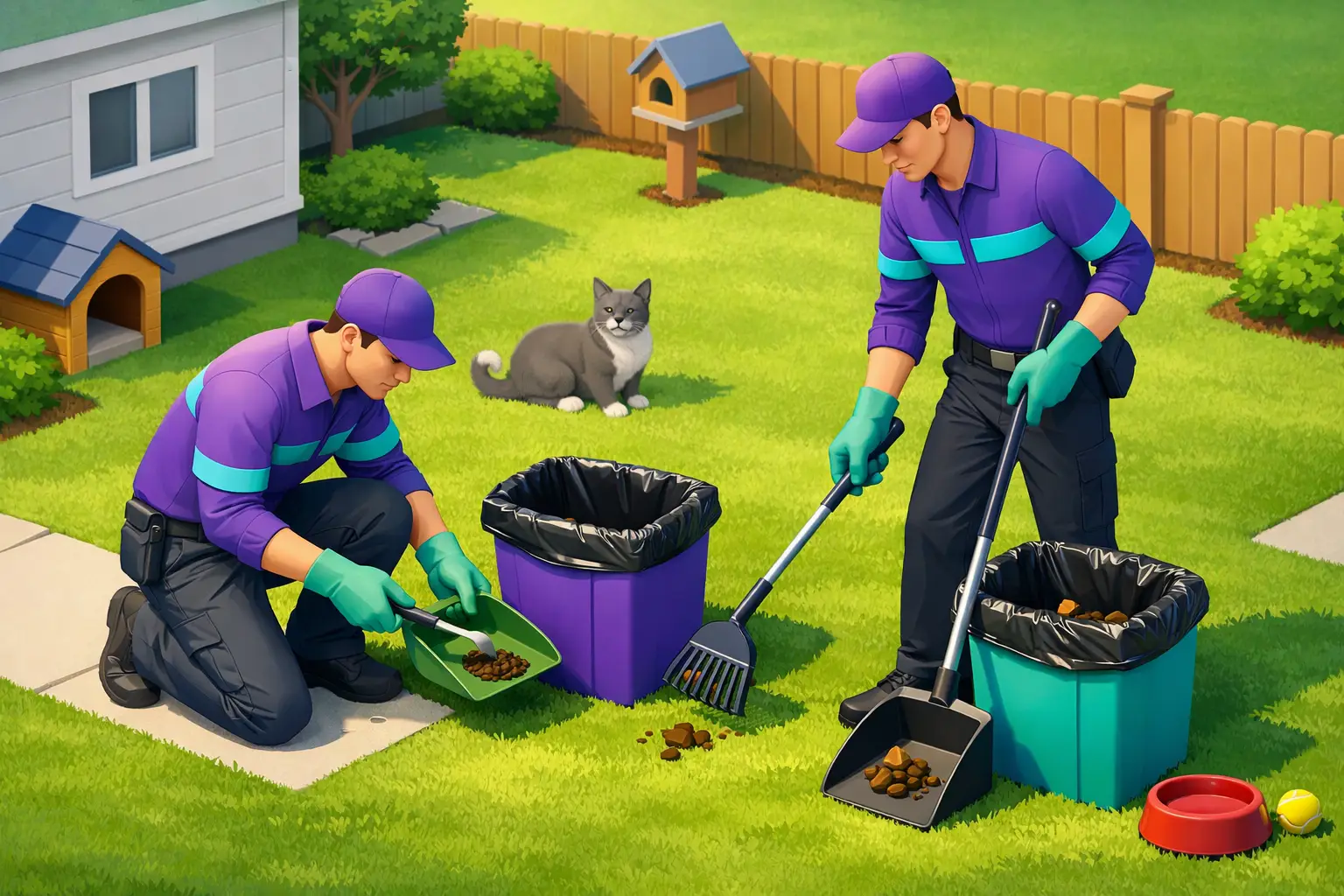
When someone is entering your yard on a recurring basis, trust matters. That is true whether you are a homeowner with kids and pets or a commercial client responsible for tenants and visitors. Ask whether technicians are trained, vetted, and clearly identifiable. Uniformed staff and standard operating procedures may not sound exciting, but they usually signal a more professional operation.
You should also ask how the company handles pets on site. Some dogs are friendly. Some are territorial. Some are escape artists. A good provider should have clear policies for entering gated yards, handling dogs safely, and avoiding situations that create risk for your family or their staff.
Local accountability matters too. A family-owned operator with a strong service reputation in the Greater Philadelphia area may be more invested in long-term customer relationships than a business treating routes like a volume game. That does not automatically mean every local company is better, but it is worth considering if responsiveness and follow-through are high priorities for you.
Read reviews the right way
Reviews are useful, but only if you know what to look for. A long list of generic five-star ratings does not tell you much. What helps is specific feedback about punctuality, communication, thoroughness, and how the company handles problems when they come up.
Look for comments that mention recurring service over time. Anyone can do a decent first visit. The real test is whether quality holds up month after month. For commercial clients, reviews that mention property appearance, tenant satisfaction, or clean common areas are especially valuable. For homeowners, look for mentions of dependable schedules, locked gates, and yards that are actually usable again.
If you notice repeated complaints about missed appointments, poor communication, or billing confusion, pay attention. In a service like this, small operational issues become big annoyances fast.
Understand pricing before you commit
A good quote should be easy to understand. If the company makes pricing feel vague or overly complicated, that is usually not a great sign. Ask what drives the rate. Common factors include number of dogs, yard size, service frequency, first-visit cleanup level, and any optional add-ons.
There is a big difference between affordable and cheap. Affordable means the price makes sense for consistent work and clear service standards. Cheap can mean rushed visits, poor communication, or surprise fees later. You want to know whether there are startup fees, one-time cleanup charges, extra costs for tall grass, and charges for locked-gate missed visits.
For many households, recurring service is the best value because it prevents the yard from getting out of hand. For property managers and municipalities, regular service also protects the overall appearance and usability of shared spaces. If the pricing model rewards consistency and keeps billing simple, that is usually a good sign.
How to hire a pet waste company for commercial properties
Commercial clients should ask a few extra questions. If you manage an apartment community, HOA, park, or multi-use property, basic scooping is only one part of the job. You may also need pet station restocking, common-area monitoring, deodorizing, and clear reporting if you are accountable to tenants, board members, or supervisors.
Ask whether the company has experience with ongoing route service for shared spaces. Residential work and commercial work overlap, but they are not identical. Commercial properties often need more documentation, more predictable scheduling, and a stronger system for handling complaints or service adjustments.
You should also ask about appearance and professionalism. Staff presentation matters when technicians are working around residents, visitors, or the public. A clean, uniformed crew helps reinforce that the property is being actively maintained.
Don’t overlook convenience
A pet waste company should remove friction, not add to it. That means easy quote requests, straightforward scheduling, clear communication, and billing that does not create extra work. If you have to call repeatedly just to get basic information, that is a preview of what ongoing service may feel like.
This is one area where modern systems really help. Online quotes, autopay, and customer portals are not just nice extras. For busy dog owners, elderly customers, and property managers juggling multiple responsibilities, those tools make service much easier to live with.
Convenience also includes flexibility. Maybe you want to pause service, change frequency, add a deodorizing visit, or update gate instructions. A good company should make those changes manageable without turning every request into a project.
The best hire is the one you stop thinking about
That is really the standard. Once service begins, you should not have to wonder whether the technician is coming, whether the yard will still be messy, or whether you will be sorting out avoidable billing issues. You should just notice that the lawn is clean, the space feels safer, and one more recurring chore is off your plate.
If you are comparing providers, trust the company that makes things feel clear from the start. Clear pricing, trained staff, dependable scheduling, and useful add-on services usually beat flashy promises every time. Around Greater Philadelphia, where weather, yard sizes, and property needs can vary quite a bit, that kind of consistency is what turns a simple cleanup service into real peace of mind.
A clean yard should feel normal, not like a weekend project you keep putting off.