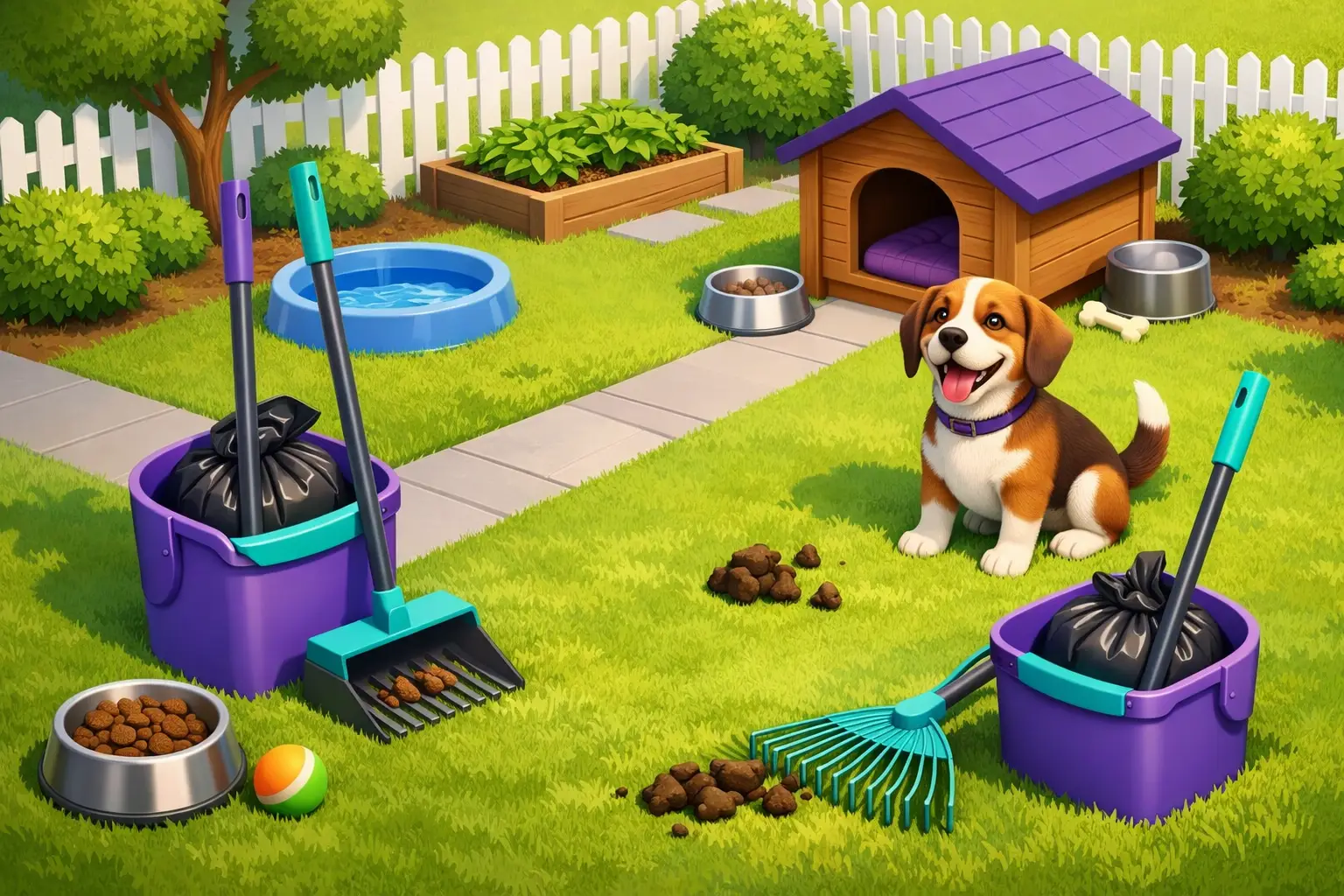
Step outside after a rainy week, and the problem shows up fast – soggy spots, lingering odor, flies, and the unpleasant surprise nobody wants to step in. If you’re wondering how to keep dog yard sanitary without turning it into a second job, the answer is consistency more than complexity. A clean yard comes down to a few practical habits done on schedule, plus a setup that makes waste, moisture, and odor easier to control.
For busy dog owners, families with kids, landlords, and property managers, the goal is the same: a yard that feels usable again. You want to let the dog out, not brace yourself for cleanup, smell, or muddy mess.
Why a sanitary dog yard matters
Dog waste is not just an eyesore. Left in the yard, it attracts insects, creates odor, and can spread bacteria and parasites. Even a small backyard can start feeling dirty fast when cleanup gets delayed for several days, especially with multiple dogs.
There is also the wear-and-tear factor. Urine can burn grass, repeated traffic can compact soil, and poor drainage can turn one corner of the yard into a permanent problem spot. If children play outside or guests use the space, sanitation becomes more than a pet issue. It becomes a household quality-of-life issue.
For shared properties and commercial spaces, the stakes are even higher. A neglected dog relief area can lead to complaints, unpleasant smells near entrances, and a space residents simply avoid.
How to keep dog yard sanitary with a simple routine
The best routine is the one you will actually stick to. In most homes, waste should be picked up at least two to three times per week. For one dog, that may be enough to stay ahead of odor and buildup. For multiple dogs, daily pickup is usually the better standard.
Waiting until the weekend sounds efficient, but it often creates a much bigger and less pleasant task. It also gives waste more time to break down into the lawn, especially in heat or rain. Frequent removal is the single biggest factor in keeping a dog yard sanitary.
After pickup, pay attention to the surface itself. If your dog uses one area repeatedly, rinse hard surfaces as needed and monitor grass or gravel for smell. You do not need to sanitize the entire yard every day, but you do need to keep the bathroom zone from becoming a concentrated mess.
Set a pickup schedule that matches your household
A realistic schedule depends on three things: how many dogs you have, how large the yard is, and how often the space is used. A small city yard with two dogs needs more attention than a large yard with one older dog that goes on walks often.
If you’re short on time, attach cleanup to something already in your routine, like taking out the trash or letting the dog out in the evening. If mobility is a challenge or you’re managing a rental or community property, recurring service can keep the yard clean without adding another task to your week.
Don’t ignore corners and fence lines
Dogs often return to the same edges of the yard, and those spots are easy to miss during a rushed cleanup. Fence lines, shrubs, and the perimeter behind sheds tend to collect waste that sits longer than it should. Those hidden areas are often the source of odor people notice before they see the cause.
Dealing with urine, odor, and worn-out grass
Poop is the obvious issue, but urine creates its own sanitation problems. Repeated urination in one area can cause strong smell, dead grass, and damp patches that never quite recover. If your dog tends to use the same spot, it helps to create a designated relief area.
Gravel, mulch made for pet areas, or a small section of artificial turf can work well depending on your yard and budget. Grass looks great, but it is harder to maintain if one section gets constant use. A dedicated spot can make cleanup faster and reduce damage to the rest of the lawn.
For odor, water helps more than people think. A light rinse of hardscapes, dog run surfaces, or heavily used pet areas can dilute urine residue and reduce smell. Just be careful not to overwater a poorly draining yard, because standing moisture creates a different sanitation problem.
Pet-safe deodorizing and sanitizing products can also help, especially in warm weather. The key is choosing products intended for outdoor pet areas and following directions carefully. More product does not always mean better results. In some cases, improving drainage and increasing pickup frequency does more than any spray ever will.
Drainage is part of sanitation
If your yard stays wet, sanitation gets harder no matter how often you clean. Moisture holds odor, softens stool into the ground, and encourages muddy paw traffic back into the house. In Southeastern Pennsylvania, where wet seasons can linger, drainage matters more than many homeowners expect.
Start by noticing where water sits after rain. If the dog relief area is always soggy, moving it to a better-draining spot may solve half the problem. For ongoing trouble, adding gravel, regrading a small section, or installing drainage support may be worth it.
This is one of those areas where it depends on the yard. A small patch issue might be solved with a surface change. A larger drainage problem may need landscape work. But either way, no sanitation plan works well in standing water.
The tools and surfaces that make cleanup easier
A sanitary yard is easier to maintain when the setup works with you, not against you. Thick ground cover, overgrown borders, and cluttered corners make waste harder to spot and remove. Clean lines and open visibility save time.
Grass is the most common surface, but it is not always the easiest for heavy dog use. Gravel drains well and makes waste easier to find. Artificial turf can work nicely in dedicated pet spaces if it is cleaned and deodorized properly. Concrete or pavers are practical for dog runs, though they need occasional rinsing and sanitizing.
No surface is perfect. Grass looks natural but stains and wears out. Gravel is low maintenance but may shift. Turf is tidy but needs regular care to avoid odor. The right choice depends on your dog, the space, and how much hands-on upkeep you want.
How to keep dog yard sanitary in shared or high-use spaces
For landlords, HOAs, apartment communities, and parks, the challenge is not just sanitation. It is consistency across a space used by many people and many dogs. One missed week can change how the entire property feels.
Shared spaces need visible waste stations, routine pickup, and scheduled sanitizing of high-traffic areas. Bin maintenance matters too. Even when the ground is clean, overflowing or foul-smelling waste bins can make the area feel neglected.
This is where predictable service matters most. A recurring schedule removes guesswork and keeps the property from cycling between clean and unacceptable. In Greater Philadelphia, where seasons swing from humid summers to icy winters, that consistency is often what keeps outdoor dog areas usable year-round.
When DIY stops being practical
There is nothing wrong with handling cleanup yourself if you have the time, mobility, and patience to stay consistent. But a lot of people reach the same point: they are tired of chasing the task, missing days, and dealing with the smell later.
That is especially true for multi-dog homes, older adults, busy parents, and anyone managing a commercial or shared property. If the yard is regularly being used but cleanup keeps slipping, the problem is not motivation. It is bandwidth.
Professional pet waste removal takes the most important part of the sanitation routine off your plate. It also tends to work better because it is done on a schedule, not when someone finally has a spare 20 minutes. Companies like Poop Scoop Protocol build that consistency into the service, which is often what turns a frustrating yard back into a clean one.
Small habits that make a big difference
Sanitation improves quickly when a few habits become automatic. Pick up often. Keep one relief zone if possible. Rinse and deodorize problem surfaces as needed. Watch drainage after storms. Trim back areas where waste hides. If you use a bin for bagged waste, keep that container clean too.
None of this has to become a full-yard project every week. The goal is to prevent buildup, not fight your way back from it every month.
A sanitary dog yard is really about making the space easy to enjoy again. When the cleanup is handled, the smell is under control, and the ground is not a mess, your yard goes back to being what it should be – a place for quick potty breaks, safe play, and one less thing to worry about.