
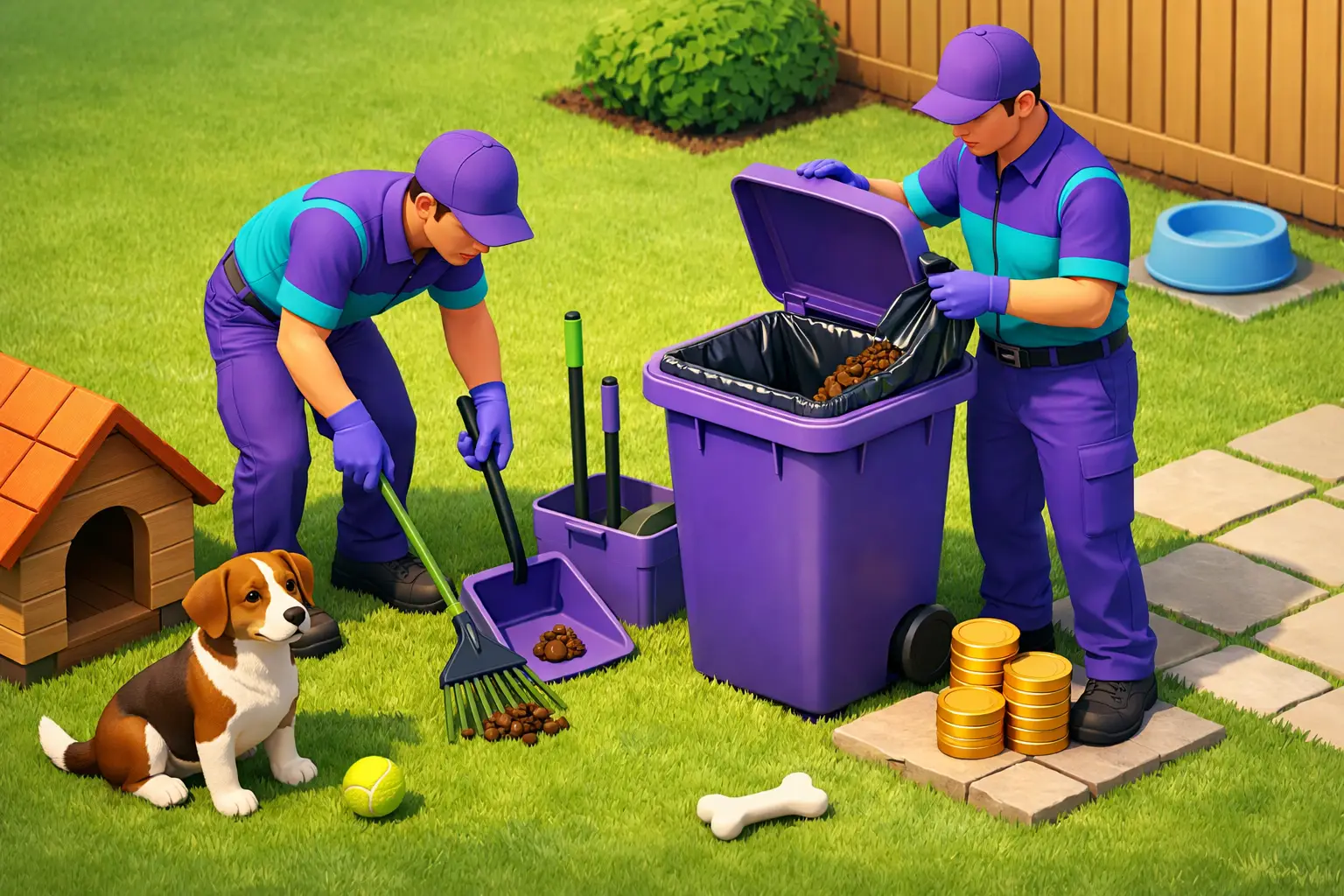
Sticker shock usually happens when people compare dog waste removal to doing it themselves. Fair enough. But once you factor in your time, the mess, and the fact that the job never really goes away, the question shifts fast from “Why would I pay for this?” to “Why didn’t I start sooner?”
If you’re wondering how much does dog waste removal cost, the short answer is that most homeowners pay based on how often service happens, how many dogs use the yard, and how large or difficult the cleanup area is. For many residential customers, recurring service is surprisingly affordable, especially compared with one-time cleanups that take longer and require more labor.
Average dog waste removal pricing
For a typical home, weekly dog waste removal often starts around the low end of the monthly home services budget, especially for one dog and a standard-sized yard. In many markets, weekly service may land somewhere between roughly $15 and $30 per visit, while twice-weekly service usually costs more overall but less per visit than booking separate one-time cleanups.
One-time cleanups are a different story. If the yard has been neglected for weeks or months, pricing usually jumps because the first visit takes more time, more bagging, and more disposal effort. A one-time cleanup can range from around $60 to well over $150 depending on the amount of waste and the condition of the property.
Commercial properties are usually priced by scope rather than a simple flat rate. An apartment community dog run, shared green space, or park area may need multiple service visits per week, pet station support, waste bin attention, and a plan built around foot traffic and tenant expectations.
What affects how much dog waste removal costs?
The biggest pricing factor is frequency. A yard that gets serviced every week is easier and faster to maintain than one that gets skipped for three weeks and then needs a major reset. Recurring service keeps costs steadier because the job stays manageable.
The number of dogs matters too. One dog creates a very different workload than three active dogs sharing the same yard. More dogs means more waste, more ground to check carefully, and more time on site.
Yard size also plays a role, but not always in the way people assume. A large yard with one dog may still be easier than a small yard used heavily by multiple dogs. What matters is the amount of waste, how spread out it is, and how accessible the yard is for the technician.
Then there’s the condition of the property. Tall grass, leaves, mud, snow, poor lighting, locked gates, and uneven terrain can all affect service time. If the waste is hard to spot or the yard is difficult to move through safely, the visit takes longer.
Location can influence price as well. Labor rates, travel time, and local demand vary by region. In and around Greater Philadelphia, pricing tends to reflect a mix of suburban and urban service conditions, along with the convenience customers expect from scheduled recurring care.
Recurring service vs one-time cleanup
If your main goal is saving money, recurring service is usually the better value. That might sound backward at first, but maintenance work is almost always cheaper than catch-up work.
With weekly or twice-weekly service, the technician is dealing with a predictable amount of waste. The visit stays short, the yard stays usable, and billing stays easy to plan for. This is why many families, especially those with kids or busy schedules, prefer a recurring plan. It removes one more chore without turning it into a surprise expense later.
A one-time cleanup makes sense if you’re preparing for guests, moving into a new home, coming back after travel, or trying the service for the first time. Just know that the first visit may be the most expensive one if the yard has built up a backlog.
How much does dog waste removal cost per month?
If you think in monthly terms, a single-dog household on weekly service may spend roughly the equivalent of a couple takeout meals each month. Homes with two or more dogs, larger yards, or more frequent service will pay more, but many customers still find it reasonable because it replaces an ongoing task they dislike and often postpone.
Monthly cost usually depends on four things working together: the number of dogs, the service schedule, the property layout, and whether you add anything beyond scooping. Add-ons can include deodorizing, sanitizing, power washing, pet waste bin maintenance, or shared-area support for multi-unit properties.
That means two neighbors can get very different quotes even if their homes look similar from the street. One may have one older dog and a flat fenced yard. The other may have three dogs, a steep lot, and a gate that’s tough to access. Same ZIP code, different workload.
Why some services seem cheaper than others
It’s tempting to choose the lowest advertised price, but dog waste removal is one of those services where cheap can get expensive fast. If the company is inconsistent, misses visits, or doesn’t communicate clearly, you end up back where you started – with a dirty yard and wasted money.
A reliable service usually builds pricing around consistency, trained staff, scheduling systems, and customer support. That matters when you’re trusting someone to enter your yard regularly and do a job that needs to be done thoroughly every time.
Local companies often stand out here. They tend to know the neighborhoods, weather patterns, and customer expectations better than a generic national operation. For many homeowners and property managers, that accountability is worth a little more if it means fewer headaches.
Residential vs commercial pricing
Residential pricing is generally straightforward. Most companies can give a quote based on dog count, yard details, and service frequency. That makes it easy for homeowners who just want a clean lawn, a safer space for kids, and one less weekend chore.
Commercial pricing is more customized because the risks and expectations are different. Apartment communities, HOAs, and public-facing properties often need dependable schedules, visible cleanliness, and support for pet stations or common-area bins. The service is less about a single cleanup and more about protecting the experience of tenants, residents, or visitors.
For property managers, the cost question is rarely just about scooping. It’s also about reducing complaints, keeping grounds more usable, and avoiding the look and smell of neglected shared space.
What’s usually included in the price?
Most standard dog waste removal visits include walking the yard, locating and removing pet waste, bagging it, and following the company’s disposal process. Some companies will also send visit notifications, offer online billing, and let customers manage service through a portal or simple scheduling system.
What may not be included is hauling away unrelated yard debris, disinfecting surfaces, deodorizing turf, or cleaning pet stations and bins. Those are often separate services, and that’s not a bad thing. It lets customers pay for what they actually need instead of bundling everything into one inflated rate.
If you’re comparing quotes, check what the company means by “service.” A lower price isn’t automatically better if it leaves out the parts that matter most to you.
How to tell if the cost is worth it
The value comes down to time, cleanliness, and peace of mind. If you’ve ever put off yard cleanup for days because of work, kids, weather, or pure dread, you already know the service solves a real problem.
It also improves how the yard gets used. Dogs have a cleaner space to roam. Kids avoid surprise messes. Guests aren’t stepping carefully through the lawn. That quality-of-life piece is hard to put on a spreadsheet, but it’s often the reason people keep the service once they try it.
For commercial customers, the value shows up in fewer complaints, better curb appeal, and more consistent outdoor maintenance. That can matter a lot in competitive rental or community environments.
Getting an accurate quote
The best quote is one based on your actual property, not a generic national average. Be ready to share the number of dogs, the size and condition of the yard, whether you want weekly or more frequent service, and whether this is a fresh start or a one-time cleanup.
If you’re in the Greater Philadelphia area, a local provider like Poop Scoop Protocol can usually make the process simple with an online quote system and clear recurring options. That’s helpful when you want straightforward pricing without phone tag or guesswork.
A good service should make the next step feel easy. Not pushy. Just clear.
The real answer to how much dog waste removal costs is that it depends on your yard, your dogs, and how often you want the problem handled. But for many homes and properties, the better question is whether a cleaner, safer outdoor space is worth handing off one of the least popular chores on your list. For a lot of people, it is.
Ready to reclaim your yard and peace of mind?
Contact Us for a free quote or visit our FAQ for more information.
Poop Scoop Protocol
Clean Lawns. Happy Dogs.
info@PoopScoopProtocol.com
(267) 667-6673