
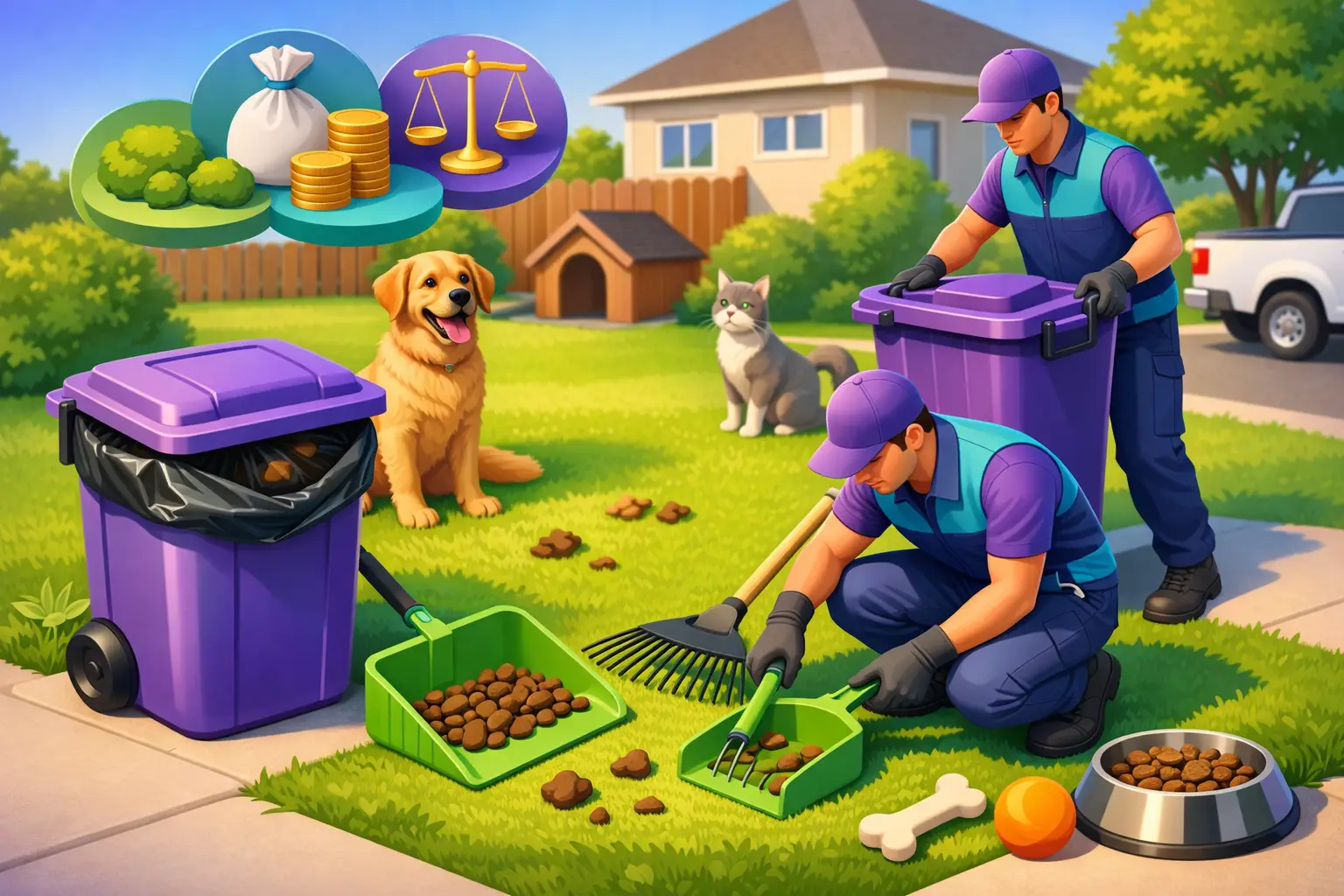
A lot of people start by asking the same thing: what is the cost of pet waste removal service, and is it really worth paying for something they could technically do themselves? Fair question. But once you factor in time, consistency, weather, and how fast a yard gets unusable, the price starts to look a lot more reasonable.
For most dog owners, this is not about luxury. It is about keeping the yard clean enough for kids to play, dogs to roam, and nobody to step into a nasty surprise on the way to the grill. For property managers, it is even simpler – clean grounds keep residents happier and common areas easier to maintain.
What affects the cost of pet waste removal service?
The biggest factor is frequency. A yard cleaned once a week usually costs less per visit than a one-time cleanup, but more overall each month because the service is recurring. That recurring model is what most customers choose, because it prevents buildup and keeps the problem from turning into a bigger, smellier mess.
Dog count matters too. One dog in a small yard creates a very different workload than three dogs using the same space every day. More dogs usually means more waste, more time on site, and a higher price.
Yard size also plays a role, but not always in the way people expect. A huge yard with one dog may be easier to service than a small yard with multiple dogs that all use the same corner. Accessibility, fencing, terrain, and how regularly the yard is maintained can all affect labor time.
Then there is the condition of the property. If a yard has gone weeks or months without cleanup, an initial visit may cost more than routine service. That first visit often takes longer because the crew is resetting the space back to a manageable baseline.
Typical pricing you can expect
In most markets, recurring residential service often starts at a relatively low weekly rate for one dog and a standard yard. As dog count increases or service becomes less frequent, the visit cost usually goes up. Biweekly service may sound cheaper at first, but it often costs more per stop because there is more to remove each time.
One-time cleanups are usually the most expensive on a per-visit basis. They are labor-heavy, especially after bad weather, vacations, or a long winter of putting the chore off. If you only need help occasionally, that may still make sense. But if you want a consistently usable yard, recurring service is usually the better value.
Commercial and shared-property pricing works a little differently. Apartments, HOAs, parks, dog relief areas, and pet stations are usually priced based on property layout, traffic, service frequency, and whether there are add-on needs like restocking stations, deodorizing, or sanitizing. In those settings, reliability matters just as much as price.
Why recurring service usually costs less over time
If you wait until the yard is a problem, cleanup takes longer and usually costs more. That is true whether you do it yourself or hire someone. Regular service spreads out the work, keeps waste from piling up, and prevents the yard from becoming a weekend project nobody wants.
There is also a quality-of-life factor that people tend to underestimate. A clean yard gets used more. Dogs spend more time outside. Kids can play without parents doing a scan of the grass first. You stop dodging landmines every time you mow.
That is why many families do not look at this as just another bill. They look at it as one less chore, one less argument about whose turn it is, and one more thing handled automatically.
Low price vs real value
It is tempting to shop only by the cheapest quote. Sometimes that works out. Sometimes it does not.
The lowest price may come with limited service windows, poor communication, inconsistent technicians, or no real process if you need to pause, reschedule, or update access details. With a service like this, reliability is part of what you are paying for. If someone skips a visit or does a rushed job, your yard tells the story pretty quickly.
That is why value usually comes down to a few practical things: how easy it is to get a quote, whether billing is straightforward, whether the team shows up consistently, and whether the company treats your property with care. Trained, vetted staff and a clear service process are not flashy features, but they matter.
Add-ons that can change the price
The base cost usually covers pet waste pickup, but many customers add related services depending on their setup. Deodorizing and sanitizing can be useful in small yards, high-traffic dog areas, or shared spaces where odor control matters. Pet waste bin cleaning is another common add-on, especially in warmer months.
Some properties also benefit from power washing, pet station service, or park-style maintenance support. These extras increase the monthly total, but they can save time and solve problems that basic scooping alone does not fix.
The right choice depends on how the space is used. A family backyard may only need recurring cleanup. An apartment community with dog stations and common areas will usually need a broader service plan.
How to tell if the price is fair
A fair quote should make sense based on your actual property and needs. If a company asks about the number of dogs, yard size, gate access, and cleanup history, that is a good sign. Accurate pricing comes from understanding the job, not guessing.
It also helps to ask what is included. Does the service cover the full yard? Is there an extra charge for first-time cleanup? What happens if weather affects the schedule? Are there monthly billing options? Clear answers usually point to a company that has done this enough times to run it well.
For local customers in Greater Philadelphia, fair pricing often means balancing affordability with dependable service. You want a team that is easy to work with and consistent enough that you never have to think about whether the job got done.
Residential vs commercial pet waste service costs
Residential customers usually care most about convenience, safety, and keeping their lawn usable. Their pricing is often simpler because the variables are easier to define: dog count, yard size, and visit frequency.
Commercial clients have more moving parts. Property managers may need multiple service areas covered, pet stations maintained, and grounds kept presentable for tenants or visitors. In those cases, the cost of pet waste removal service is tied closely to scope and accountability. A missed visit in a shared property creates complaints fast.
That is why commercial plans are often customized. The goal is not just waste removal. It is keeping the entire outdoor space cleaner, safer, and easier to manage.
When paying for service makes the most sense
Some households genuinely do fine handling it themselves. If you have one dog, a small yard, and the discipline to stay on top of it every few days, you may not need recurring service.
But plenty of people know that is not their reality. Work gets busy. Kids have activities. Weather gets ugly. The yard gets ignored for two weeks, then nobody wants to deal with it. That is where a scheduled service earns its keep.
It also makes sense for multi-dog homes, older adults, people with limited mobility, frequent travelers, and anyone who simply wants their outdoor space maintained without adding another task to the week. The same goes for property managers who need reliable upkeep without chasing vendors.
For customers comparing options, the smartest approach is simple: look beyond the sticker price and ask what problem the service is solving for you. If it saves time, keeps the yard clean, reduces stress, and actually gets done consistently, the value is easy to see.
A clean yard should not be the thing that keeps slipping to the bottom of the to-do list. Sometimes the best plan is the one that quietly handles the dirty work so you can enjoy the space again.
Ready to reclaim your yard and peace of mind?
Contact Us for a free quote or visit our FAQ for more information.
Poop Scoop Protocol
Clean Lawns. Happy Dogs.
info@PoopScoopProtocol.com
(267) 667-6673