A yard can go from “the dogs’ favorite place” to “watch your step” faster than most people expect. The best dog yard cleaning schedule is not a one-size-fits-all rule. It depends on how many dogs use the lawn, how often they go outside, whether children play there, and how much time you realistically have to keep up with it.
For most homes, frequent small cleanups beat a dreaded weekend chore. A consistent routine keeps your grass more usable, cuts down on odors, and helps make the yard a safer place for paws, shoes, and family time.
The Best Dog Yard Cleaning Schedule at a Glance
For a household with one healthy dog and a moderately sized yard, picking up waste two to three times per week is usually enough to keep things under control. If your dog uses a small patio, a side yard, or a designated potty area, daily pickup is often the better choice because waste builds up quickly in a confined space.
Homes with two or more dogs should plan on daily cleanup or every-other-day service at the absolute longest. More dogs mean more waste, more odor, and more chances for someone to step in something before you get to it.
A practical starting point looks like this:
- One dog with a larger yard: two to three pickups per week
- One dog with a small yard or designated potty area: daily or every other day
- Two dogs: every other day at minimum, preferably daily
- Three or more dogs: daily pickup
- Homes with young children or frequent backyard gatherings: daily pickup
- Rental properties, apartment dog areas, and shared outdoor spaces: daily or scheduled professional service
The goal is not perfection. It is preventing waste from sitting long enough to create a smell, attract insects, get tracked indoors, or become a surprise during playtime.
Why Weekly Cleanup Is Often Not Enough
A once-a-week yard cleanup can work for a single dog in certain situations, especially during a busy week or in a large, low-traffic yard. But it is rarely the best long-term schedule for a family that actually wants to enjoy its lawn.
Dog waste does not disappear into the grass like fertilizer. It can leave brown or yellow spots, especially when your dog returns to the same area repeatedly. It can also carry bacteria and parasites that may be passed through contaminated soil, standing water, paws, or shoes.
There is also the simple quality-of-life factor. When waste is left for several days, owners tend to avoid the yard instead of using it. Kids lose a clean place to play. Dogs have fewer safe areas to run. Hosting a cookout becomes another thing to prepare for.
Philadelphia-area weather adds another reason to stay ahead of the mess. Summer heat can intensify odors quickly. Heavy rain can break down piles and spread material through the lawn. Winter snow may hide waste for a while, but it is still there waiting for the thaw.
Build a Schedule You Can Actually Keep
The right schedule is one you will follow consistently. If daily scooping sounds unrealistic during a packed workweek, do not promise yourself a routine that will collapse after two weeks. Choose specific days and times instead.
For example, a one-dog household might clean the yard on Tuesday, Thursday, and Sunday evenings. This spreads out the work and prevents Sunday from turning into a long cleanup session. A two-dog home may do a quick five-minute pass each evening, then a more careful sweep before the weekend.
It helps to connect cleanup to something you already do. Scoop the yard after the morning dog walk, while the kids are getting ready for bed, or before taking out the trash. Leaving a dedicated scoop and waste bags in a covered outdoor container removes one more excuse to put it off.
If physical limitations, mobility concerns, travel, or a demanding schedule make yard cleanup difficult, recurring pet waste removal can be the more dependable option. You do not need to rearrange your week around the lawn, and the work does not pile up while you are away.
Adjust Your Dog Yard Cleaning Routine by Season
Your schedule should change with the weather and how your household uses the yard.
Spring: Clean Up Before the Yard Gets Busy
Spring is a reset season. Snowmelt, rain, and muddy ground can reveal waste that was missed over winter. Start with a thorough cleanup, then return to your normal pickup schedule before outdoor play, gardening, and gatherings pick up.
This is also a good time to inspect the lawn for worn-out potty areas. If one corner gets heavy use, rotate your dog’s outdoor route when possible. Spreading out foot traffic can help protect the grass.
Summer: More Frequent Pickup Pays Off
Hot weather makes waste smell stronger and can bring more flies to the yard. During summer, daily or every-other-day cleanup is a smart move for most homes, even if you can get away with less during cooler months.
If your dogs spend extra time outside, adjust accordingly. More outdoor time usually means more bathroom breaks, more waste, and a faster buildup. A quick pickup before guests arrive is helpful, but regular removal is what keeps the yard comfortable all week.
Fall: Stay Ahead of Leaves and Rain
Leaves can hide waste surprisingly well. Once it gets covered, it is easy to miss until someone steps on it or it gets matted into the lawn. Continue your regular cleanup before raking, mowing, or leaf blowing.
Fall rain can make a neglected yard especially unpleasant. Pick up first, then handle leaves and lawn care. It is simpler, cleaner, and easier on your equipment.
Winter: Do Not Wait for the Thaw
Cold temperatures reduce odor, but they do not eliminate the need for cleanup. Waste can freeze in place, become buried under snow, and turn into a large cleanup job when temperatures rise.
Try to pick up visible waste at least once or twice each week during winter. If snow cover makes that impossible, clean as thoroughly as you can before a storm and schedule a full sweep during the first thaw.
Give High-Traffic Areas Extra Attention
Not every part of your yard needs the same level of care. Focus first on the places people and pets use most: near the back door, along the path to the gate, around play sets, beside patios, and wherever your dog prefers to go.
Many owners benefit from creating a designated dog potty area. It will not eliminate cleanup, but it can make it faster and keep the rest of the lawn more enjoyable. The trade-off is that a small designated area needs more frequent attention, usually daily, because everything is concentrated in one spot.
For multi-dog homes, watch for piles hidden near fences, shrubs, and the edges of the yard. Dogs often choose these areas, and they are easy to overlook during a rushed cleanup.
Make Cleanup Safer and Less Messy
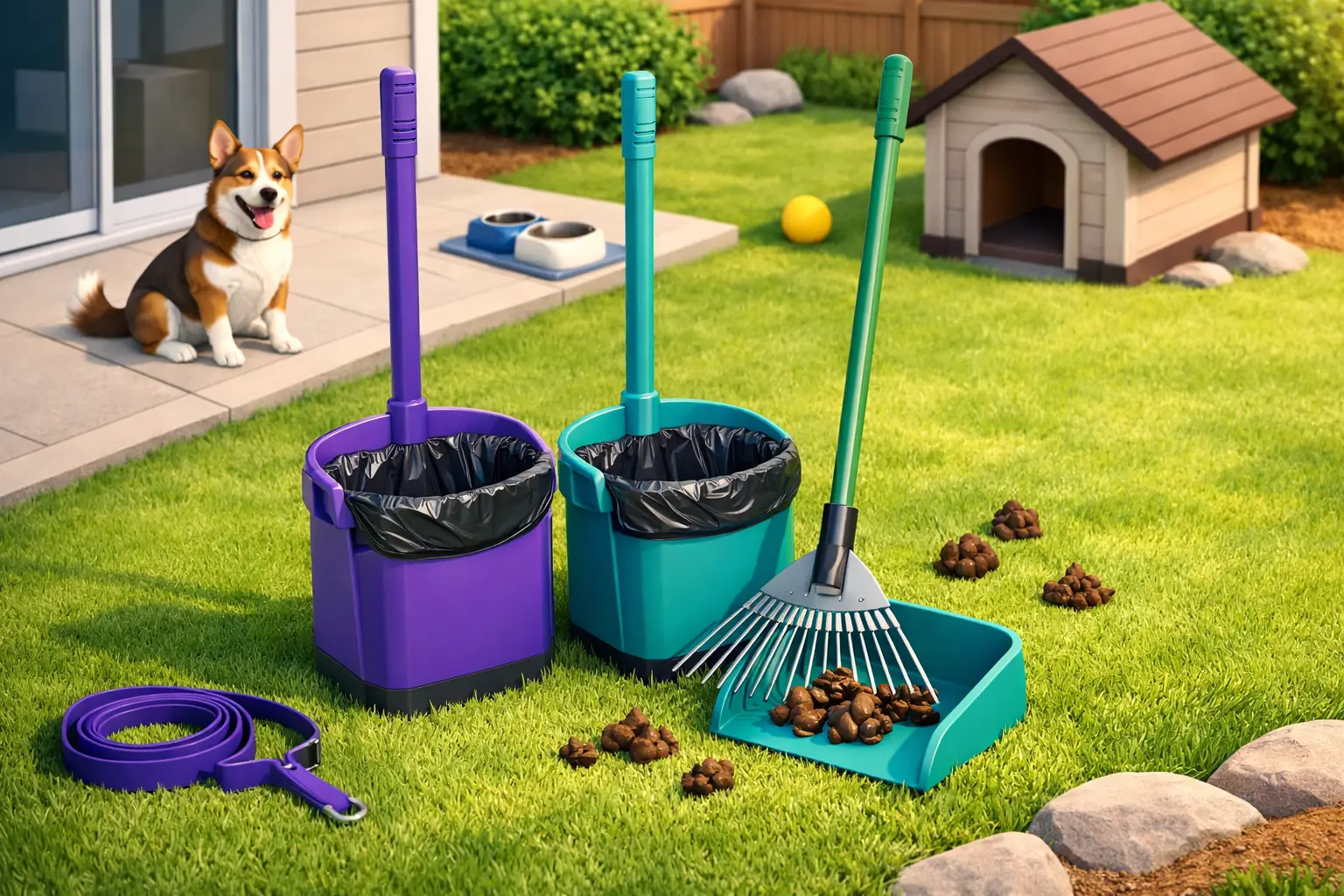
Use a dedicated scoop or rake, sturdy bags, and a sealed waste container. Avoid leaving filled bags in an open trash can where odors can build up. Wash your hands after handling equipment, and keep scooping tools away from children’s play items and gardening tools.
After a major cleanup, especially if waste has sat for a while, consider deodorizing or sanitizing hard surfaces such as patios, artificial turf, runs, and kennel areas. Regular pickup is still the foundation. Products can help with odor and surface cleanliness, but they are not a substitute for removing the source.
If you notice ongoing diarrhea, worms, blood in stool, or a sudden change in your dog’s bathroom habits, contact your veterinarian. Yard cleanup supports a cleaner space, but health concerns should be addressed at the source.
When Professional Recurring Service Makes Sense
A professional schedule is especially useful for busy families, seniors, people with limited mobility, frequent travelers, and anyone managing several dogs. It also makes sense for landlords, apartment communities, dog parks, and shared properties where consistency matters to many people at once.
The biggest benefit is not just having a cleaner yard. It is knowing the job is handled on a predictable schedule, even during a busy week, a rainy stretch, or a family vacation. Poop Scoop Protocol provides recurring yard cleanup for Greater Philadelphia dog owners who would rather spend their free time enjoying the lawn than searching it.
Start with a schedule that fits your dog count and your yard, then adjust after a few weeks. When the grass feels usable, the odor is under control, and no one is checking every step, you have found the right routine.