
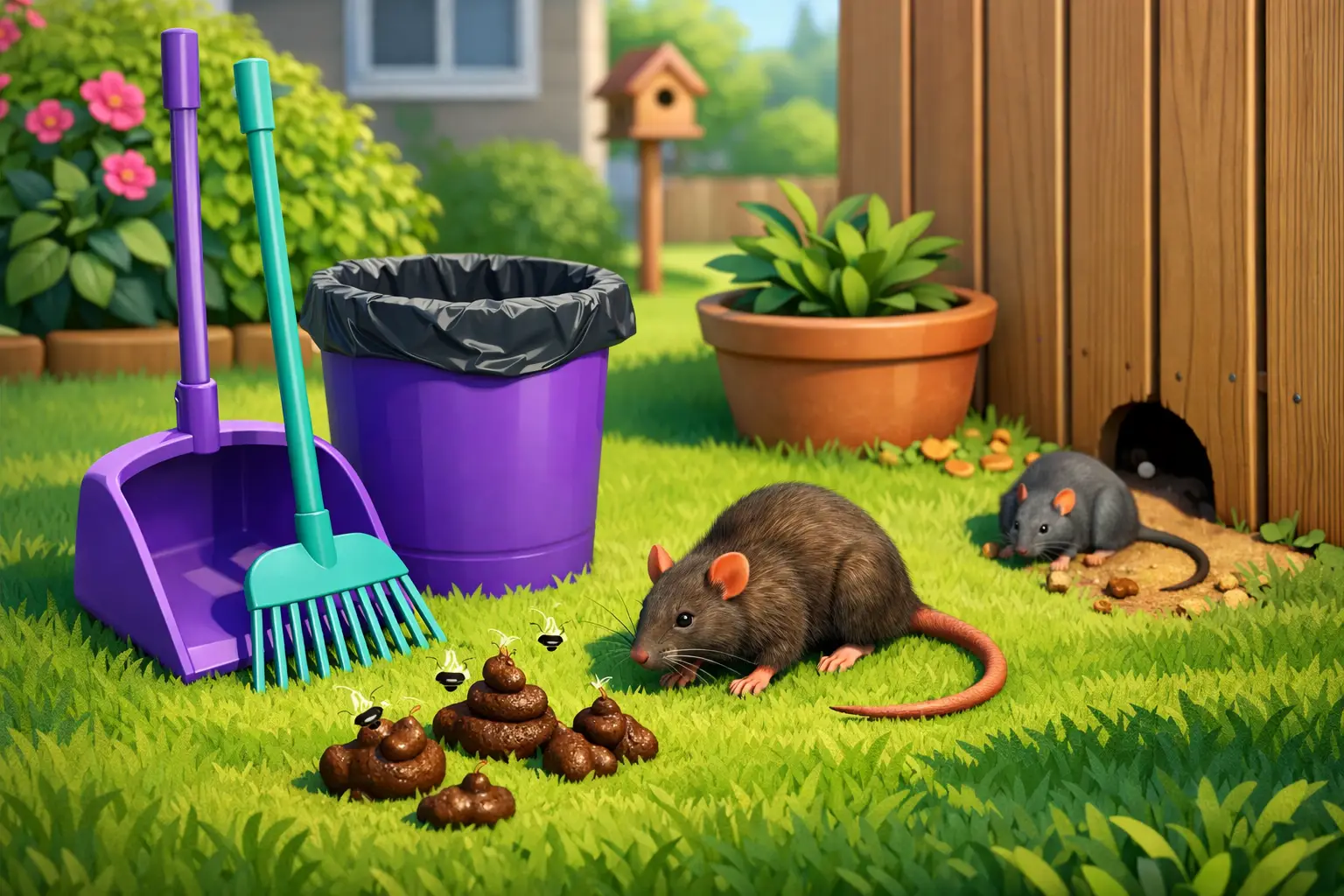
A few missed piles can turn a backyard from a place your family enjoys into a place you avoid. So, does dog waste attract rodents? It can contribute to a rodent-friendly yard, especially when it is left to build up alongside other food sources, clutter, and shelter. It is not usually the only reason rats or mice show up, but it is one more reason to stay ahead of cleanup.
For busy dog owners, the goal is simple: keep the lawn clean, safe, and ready for dogs, kids, and guests. Understanding what attracts rodents helps you focus on the fixes that actually make a difference.
Does Dog Waste Attract Rodents Directly?
Dog waste is not a rodent’s favorite meal in the same way spilled birdseed, unsecured trash, or pet food can be. Still, rats and mice are opportunistic. If food is scarce, they may investigate or feed around waste, particularly where it contains undigested material.
More often, the connection is indirect. A yard with accumulated dog waste can signal inconsistent outdoor maintenance. The same conditions that allow piles to sit for days or weeks may also include overgrown grass, open garbage, fallen fruit, standing water, or packed storage areas. Together, those conditions create a more comfortable place for rodents to travel, hide, and look for food.
In a multi-dog yard, the issue can build quickly. More waste means more odor, more flies, and more areas that need attention. Regular removal takes one potential attractant out of the equation and makes it easier to spot the real source of a rodent problem.
What Actually Draws Rats and Mice Into a Yard?
Rodents need three basic things: food, water, and shelter. Remove or limit those resources, and your property becomes much less inviting.
Food is usually the biggest factor. Outdoor pet bowls, overflowing trash cans, loose compost, bird feeders, grill drippings, and fallen berries or fruit all offer an easy meal. Dog waste may be part of the overall picture, but exposed food and garbage are often the stronger draw.
Water matters, too. A dripping hose connection, birdbath that never gets refreshed, clogged gutter, or low spot that holds rainwater can support rodent activity. Philadelphia-area summers can be humid, and shaded yards may stay damp longer after a storm. Those small wet areas are worth checking.
Shelter is the final piece. Mice and rats prefer protected routes and nesting spots, such as dense shrubs, woodpiles, cluttered sheds, stacked materials, and gaps under decks. They often move along fences and foundations where they are less exposed. A clean lawn helps, but a clean lawn alone cannot solve a rodent issue if a pile of firewood is sitting against the house.
Why Prompt Dog Waste Removal Still Matters
Picking up dog poop is about much more than appearances. Waste can carry bacteria and parasites that may affect dogs and people, especially in spaces where children play or where multiple pets share the grass. Rain can also spread waste residue into low spots, drains, and nearby soil.
From a pest-control standpoint, routine removal reduces odors and eliminates material that can attract insects or interest scavenging animals. It also makes your yard easier to inspect. When the ground is not covered with old piles, you are more likely to notice fresh digging, gnaw marks, droppings along a fence line, or a burrow opening near a shed.
There is a practical benefit, too: a consistently scooped yard is simply easier to use. You can let the dog out without worrying about a mess, enjoy a cookout without scanning the grass first, and keep up with mowing without an unpleasant surprise on every pass.
How to Make Your Yard Less Appealing to Rodents
Start with the basics and stay consistent. Scoop dog waste on a regular schedule, ideally before it has time to accumulate. For one dog, that may mean a few quick pickups each week. For multiple dogs, daily attention or a recurring service can save considerable time and keep the yard under control.
Then look beyond the lawn. Store trash in containers with tight-fitting lids, bring pet food bowls inside after meals, and clean up spills around grills and outdoor dining areas. If you feed birds, use a setup that limits spilled seed and sweep beneath it regularly.
Keep vegetation trimmed away from the house, fence lines, and outdoor structures. Rodents use thick plant growth as cover, so creating a little open space makes them feel less secure. Raise firewood off the ground and place it away from the home when possible. Clear out unused pots, boxes, tarps, and other items that create dark, quiet hiding places.
Finally, walk the property after heavy rain. Look for puddles that linger, leaking spigots, clogged drains, or water collecting around foundations. Fixing moisture problems protects your yard from more than rodents.
Signs You May Already Have Rodent Activity
Seeing one mouse outside does not always mean you have an infestation. Rodents live outdoors, and an occasional sighting can happen anywhere. Repeated signs, however, deserve attention.
Watch for small droppings near garages, sheds, trash areas, or along walls. You may notice chewed bags, damaged outdoor cushions, gnawing on wood or plastic, shallow holes near structures, or disturbed mulch. Rats can create burrows in protected areas, while mice may slip through surprisingly small openings into garages, basements, and crawl spaces.
If you suspect rodents are getting indoors, address entry points quickly. Inspect around utility lines, vents, doors, foundations, and garage openings. Outdoor cleanup reduces the reasons rodents stay nearby, while sealing gaps helps prevent them from moving inside.
Common Yard Habits That Can Make the Problem Worse
Many homeowners focus on one issue, such as dog poop, while missing the combination of habits that keeps pests around. Leaving a full pet waste bin uncovered, allowing trash to overflow, and storing a bag of dog food in the garage with no secure container can create a much bigger invitation than any one factor alone.
Compost deserves a little extra care. A well-managed compost system can be useful, but food scraps should be handled in a rodent-resistant container. Avoid adding meat, dairy, grease, or pet waste to a typical home compost pile. Dog waste should be disposed of according to local guidance rather than mixed into compost intended for gardens.
It also helps to avoid relying on strong scents or homemade deterrents as your only plan. Peppermint products, ultrasonic devices, and similar options may have mixed results. Cleanup, food storage, moisture control, and habitat reduction are the more dependable foundation.
When Recurring Yard Cleanup Is Worth It
A one-time cleanup can reset an overgrown or neglected yard. The bigger challenge is keeping it that way when work, family schedules, bad weather, or limited mobility get in the way. That is where recurring pet waste removal can be especially helpful.
A dependable schedule prevents buildup before it starts. It can be a smart fit for multi-dog homes, landlords managing shared outdoor areas, apartment communities, and anyone who wants a cleaner lawn without adding another chore to the week. In Greater Philadelphia, Poop Scoop Protocol helps local dog owners keep outdoor spaces cleaner, more usable, and easier to maintain.
A clean yard will not guarantee that you never see a mouse or rat. But regular dog waste removal, secure food storage, dry conditions, and fewer hiding places give rodents far less reason to settle in. That leaves you with what your yard should be: a clean place for happy dogs and the people who love them.