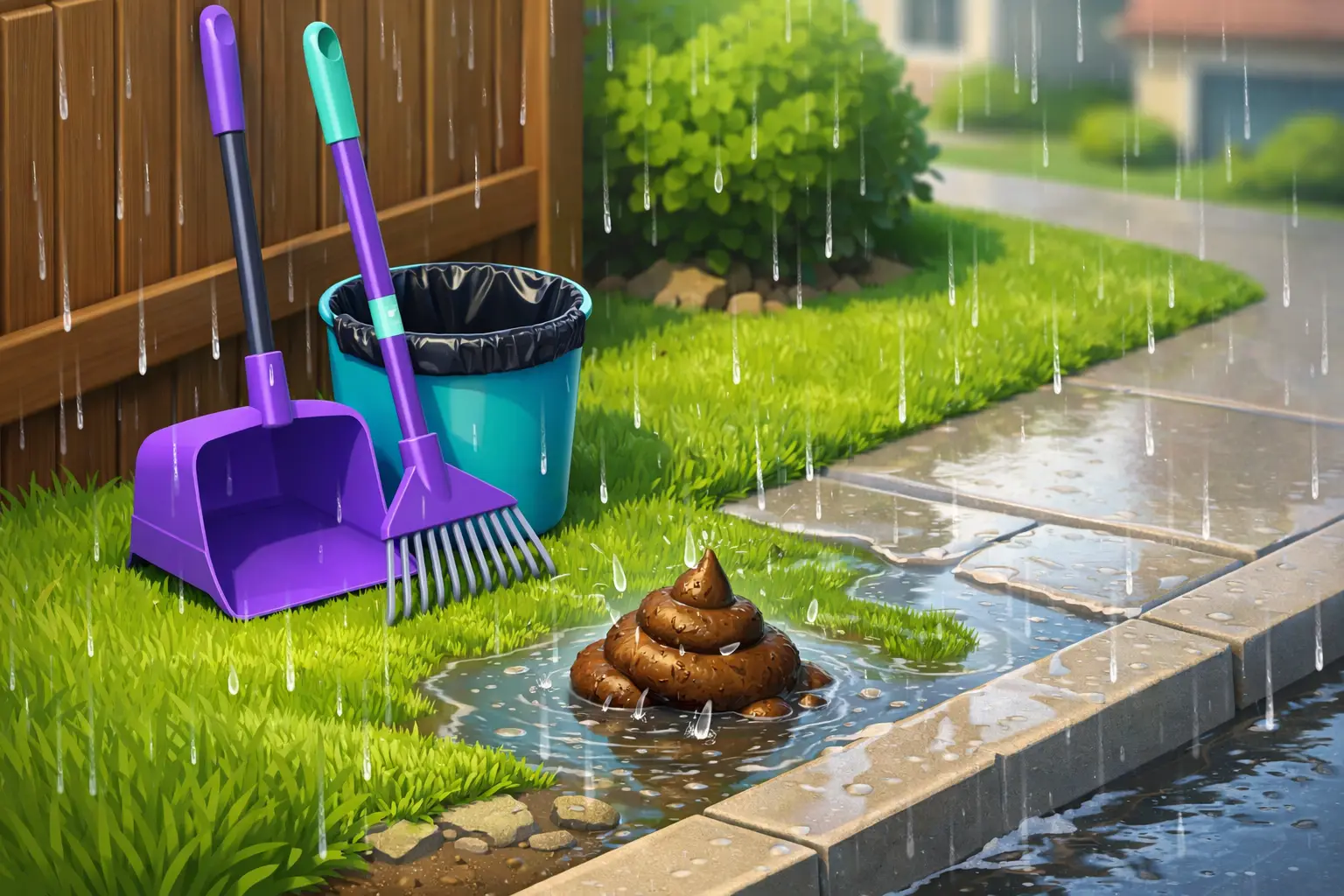
A lot of dog owners hope the next storm will handle the mess for them. It sounds reasonable at first – if rain can wash dirt down the driveway and rinse pollen off the patio, will rain wash away dog poop too? In most cases, no. Rain may break it up, spread it around, or flatten it into the grass, but it usually does not make it disappear in any clean or healthy way.
That matters more than most people think. Pet waste is not just an eyesore. It can leave bacteria, parasites, odors, and stained patches behind, even after a heavy rain. If you have kids, other dogs, or a yard you actually want to enjoy, waiting on the weather is not much of a plan.
Will rain wash away dog poop in your yard?
Rain changes dog poop, but it rarely solves the problem. A light rain might soften it. A hard rain might break it apart and push some of it into the soil, across the lawn, or toward a drain. Either way, the waste is still there.
This is the key part many people miss. Rain does not work like a cleaning service. It does not remove the waste from your property and leave the area sanitized. It just moves the material around and helps some of the mess soak into places you cannot easily see.
If the stool is fresh, rain often turns it into a smeared mess that is harder to pick up. If it is older and dried out, rain can rehydrate it and release odor again. So while it may look less obvious after a storm, your yard is not necessarily cleaner.
What rain actually does to dog waste
Dog poop does break down over time, but not quickly and not harmlessly. Rain speeds up the soggy part, not the safe part. Instead of neatly dissolving, waste tends to spread bacteria and nutrients into the ground as it decomposes.
That can create a few problems at once. The grass underneath may suffer because dog waste is too concentrated and acidic for healthy lawn growth. The smell can linger, especially in humid weather. And anything in that area – paws, shoes, toys, mower wheels – can still come into contact with residue.
Stormwater can also carry pet waste into gutters, storm drains, and nearby waterways. That is one reason dog poop is treated differently than natural fertilizers. It is not the same as manure from plant-eating animals. Dogs eat protein-rich diets, and their waste carries a different bacterial load.
Why dog poop is not a good “leave it and let nature handle it” problem
It is easy to assume dog poop will just biodegrade like leaves or grass clippings. The problem is that the timeline and the side effects are very different. Depending on weather, size, and diet, a single pile can take weeks or even months to fully break down.
During that time, it is still waste sitting where your family and pets walk. Rain can make that exposure worse by spreading microscopic particles around the yard. So even if you cannot see a full pile anymore, traces can still be there.
For households with young children, this is a bigger issue. Kids touch the ground, pick up balls, and run through wet grass without thinking twice. The same goes for dogs, who are experts at stepping in exactly the wrong spot and bringing it back inside.
Health risks rain does not remove
If you are wondering whether a heavy storm is enough to make the yard safe again, the short answer is no. Rain does not disinfect pet waste. It does not kill off everything harmful on contact.
Dog feces can carry bacteria like E. coli and salmonella, along with parasites such as roundworms and hookworms. Not every pile contains every risk, of course, but the point is simple: once waste is left out, it becomes a hygiene problem, not just a cleanup chore.
Wet conditions can make things worse because moisture helps some contaminants linger in the environment. Muddy areas, low spots, and worn patches of lawn can hold onto that mess longer than you might expect.
That is especially important for shared spaces, apartment dog runs, HOA common areas, and commercial properties. One missed cleanup is annoying. A pattern of missed cleanup turns into odor complaints, sanitation issues, and a property that looks neglected.
Does heavy rain ever wash dog poop away completely?
Sometimes a major storm can physically move dog poop out of sight. That does not mean it has been handled properly. If waste gets carried into a corner of the yard, under shrubs, onto a sidewalk edge, or into a drainage path, it has simply changed locations.
There is also a trade-off here. The stronger the rain, the more likely runoff becomes part of the problem. Waste can spread beyond the original spot and affect a larger area than if it had just been picked up right away.
So yes, a downpour might make a pile seem gone. But from a cleanup and sanitation standpoint, gone is not the same as resolved.
The lawn damage people notice after the rain
One of the clearest signs that rain did not fix the issue is what happens to the grass. Dog poop can smother blades of grass underneath and leave behind dead or thin patches. When rain pushes the waste deeper into the turf, the problem can spread a little wider.
That is why some yards end up with random yellow or brown spots even when the owner does not see piles sitting around. The waste was there. The rain just helped blend it into the lawn.
If you care about curb appeal or want a usable backyard, this matters. A clean-looking lawn is easier to maintain than one that is quietly collecting hidden mess after every storm.
The best time to pick it up
Sooner is better. Fresh waste is easier to remove fully, less likely to smear, and less likely to be stepped in or spread around. Once rain hits, cleanup usually gets messier and less complete.
That is why regular service works so well for busy households and property managers. Instead of trying to remember what was left before the last storm, you keep the yard on a schedule and stay ahead of the problem. It is simpler, cleaner, and a lot less frustrating.
For many people, this is not about whether they are capable of picking it up. It is about time, mobility, weather, and one more recurring chore that never really stops. Letting it pile up until it rains only makes the job worse.
What to do if rain already hit the yard
If there has already been a storm, the next move is still straightforward. Walk the yard once the ground is safe enough to access and remove whatever remains visible. Pay extra attention to fence lines, low spots, mulch beds, and areas where runoff tends to collect.
If the area smells bad or gets heavy pet traffic, washing hard surfaces and sanitizing problem spots can help. Grass is trickier, since you cannot truly sanitize a lawn the same way you would a patio, but removing waste quickly and keeping up with regular service reduces the buildup that causes most long-term issues.
If you manage a shared property, consistency matters even more than one-time cleanup. Tenants and visitors notice when a space feels clean and maintained. They also notice when it does not.
A cleaner yard takes more than weather
The honest answer to “will rain wash away dog poop” is that rain may hide the problem, but it does not solve it. Waste left in the yard can spread, smell, stain, and create health concerns long after the pile looks gone.
That is why the best approach is still the simple one: remove it early, remove it regularly, and do not count on the forecast to do the hard part. If your schedule is packed or the task has become one more thing you keep putting off, services like Poop Scoop Protocol exist for exactly that reason. A clean yard is easier to enjoy when it is actually clean, not just rain-soaked.