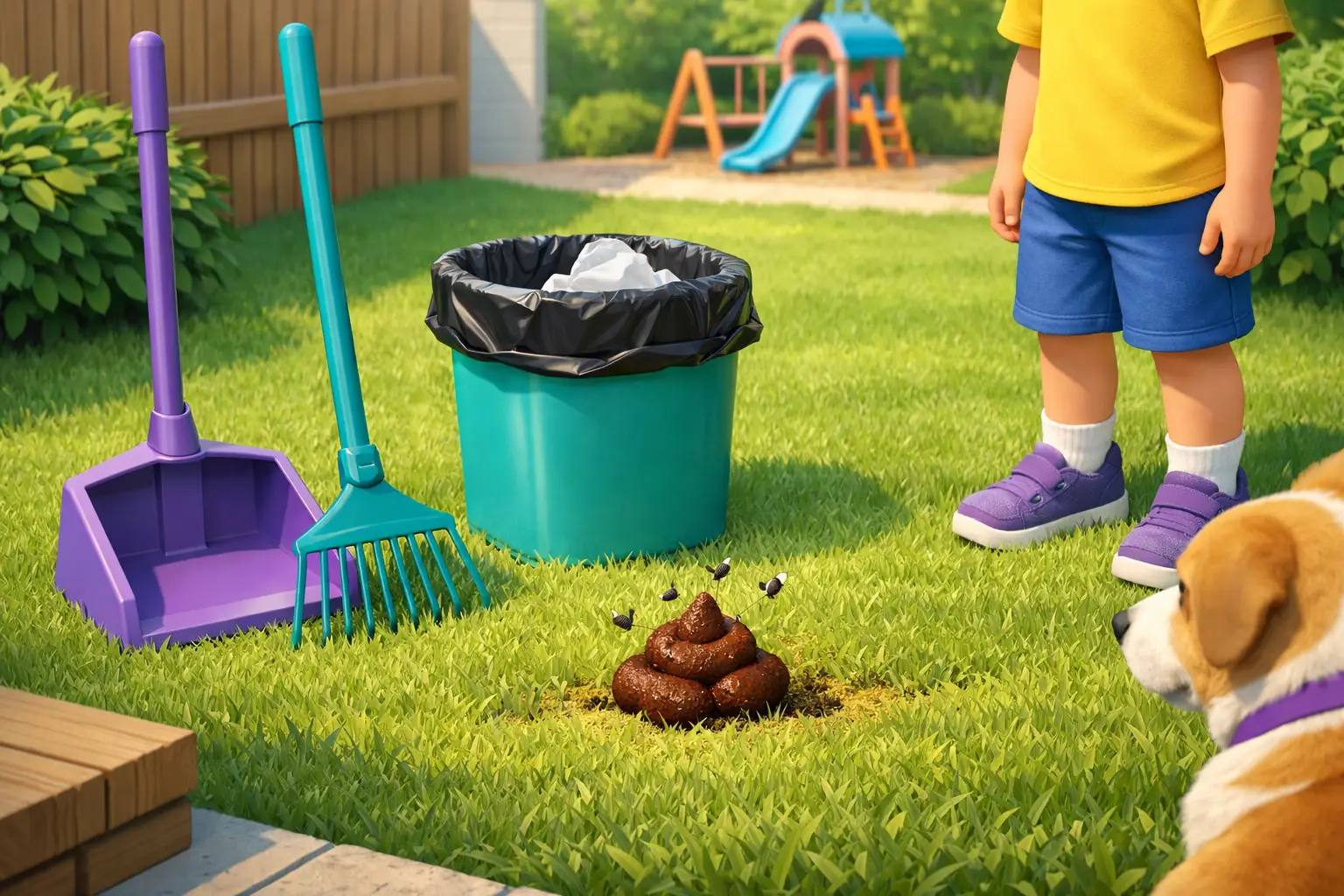
A clean yard matters a lot more when kids are the ones crawling through the grass, kicking a ball, or digging by the fence line. If you have ever wondered, is dog poop hazardous to kids, the short answer is yes. It is not just gross. Left behind in the yard, dog waste can expose children to bacteria, parasites, and contaminated soil right where they play.
That does not mean every missed pile turns into a medical emergency. But it does mean dog poop is a real hygiene and safety issue, especially for families with toddlers, young kids who put their hands in their mouths, or children who spend a lot of time barefoot outside.
Why dog poop is hazardous to kids
Dog poop can carry harmful organisms even when your dog looks healthy. Some parasites and bacteria do not cause obvious symptoms in pets, so a yard can seem fine while still holding contamination.
The biggest concern for kids is simple exposure. Children touch the ground, pick up toys, roll in the grass, and forget to wash their hands. A child does not need to directly grab dog poop for there to be a problem. Contact with contaminated soil, grass, shoes, balls, or outdoor play equipment can be enough.
Common risks tied to dog waste include roundworms, hookworms, giardia, salmonella, and E. coli. Some of these spread through tiny particles left in the environment after the visible mess is gone. Rain can move waste into other parts of the yard. Lawn mowing can also spread residue farther than most people realize.
What can kids catch from dog poop?
Not every family faces the same level of risk, but there are a few issues worth taking seriously.
Parasites
Roundworms are one of the better-known concerns. Their eggs can live in soil for a long time, and kids can be exposed by touching contaminated dirt and then touching their mouth. In some cases, roundworm infections can lead to more serious complications.
Hookworms are another concern, especially where kids walk barefoot. These parasites can be picked up from contaminated ground and may cause skin irritation or other health issues.
Giardia is a microscopic parasite that can cause stomach problems like diarrhea, cramps, and nausea. It spreads easily in environments where sanitation slips.
Bacteria
Dog waste can also carry bacteria such as E. coli and salmonella. These can cause digestive illness, and young children are usually more vulnerable because their immune systems are still developing.
Indirect contamination
This is the part many people miss. Even if a child never touches a pile directly, contamination can travel. Shoes track it indoors. Pets step in it and bring it onto patios or floors. Toys get dropped in the grass and picked right back up. The problem is often less about one dramatic moment and more about repeated low-level exposure.
Are some kids more at risk than others?
Yes. Age and habits make a big difference.
Toddlers and preschoolers are at the highest risk because they play close to the ground and are more likely to put fingers, snacks, or toys in their mouths. Kids with weaker immune systems may also have a harder time fighting off infections. If your yard gets heavy use every day, the chance of exposure goes up simply because there are more opportunities for contact.
The layout of the yard matters too. A large property where dogs use one far corner is different from a small backyard where the play set, patio, and pet area all overlap. In tighter spaces, waste builds up faster and the margin for error gets smaller.
How long does dog poop stay dangerous?
Longer than most people think. Fresh waste is obviously a problem, but older waste is not harmless just because it dried out or faded into the grass. Parasite eggs can survive in soil for weeks or even months depending on conditions.
That is why occasional cleanup is better than nothing, but regular removal is what really changes the safety of the space. Letting waste sit gives germs and parasites more time to spread into the lawn, especially after rain, foot traffic, and repeated dog use.
Signs your yard may not be as safe as it looks
A yard does not need visible piles everywhere to have a problem. Sometimes the warning signs are subtler.
If you notice frequent missed piles, strong odor near certain areas, brown patches where dogs repeatedly go, or kids constantly tracking in mud and debris from pet zones, it may be time to tighten up your routine. Shared spaces are another concern. In apartment lawns, community dog areas, and multi-unit properties, one responsible pet owner cannot control what everyone else leaves behind.
For property managers, this is where complaints often start. Residents may first mention smell or appearance, but the bigger issue is usability. Families do not want to avoid green space because they cannot trust it to be clean.
How to make your yard safer for children
The good news is this is one of the more preventable outdoor hygiene problems. You do not need a perfect lawn. You need a consistent system.
Pick up waste quickly and regularly
The faster dog poop is removed, the less time it has to contaminate the area. If you have one dog and stay on top of it daily, that may be manageable. If you have multiple dogs, a busy schedule, or a yard used by kids every afternoon, skipping a few days can add up fast.
Weekly service is often a practical middle ground for families who want the yard usable without adding one more chore to the list.
Keep dog bathroom areas separate when possible
If your space allows it, guide dogs toward one part of the yard and keep play equipment or kids’ activity zones elsewhere. This will not solve everything, but it helps reduce overlap.
Wash hands and clean outdoor items
Handwashing still matters. So does cleaning toys, balls, and anything kids drag through the grass. If your dog uses the yard heavily, it is smart to be a little more careful with picnic blankets, water tables, and toddler toys used outside.
Stay current on your dog’s vet care
Regular deworming and routine vet visits can lower the risk of parasites, though they do not replace cleanup. Healthy dogs can still leave behind waste that should not sit in the yard.
Consider sanitizing for higher-use areas
In some situations, removal alone is only part of the fix. If you have a small yard, artificial turf, a dog run, or a shared commercial space, deodorizing and sanitizing can make sense as an extra step.
Is dog poop hazardous to kids in every yard?
Technically, the risk level depends on the dog, the child, the cleanup routine, and how the yard is used. A rarely used corner of a large property is different from a compact city lawn where kids and pets share every square foot.
But the basic answer stays the same. Yes, dog poop is hazardous to kids because it can carry harmful organisms and contaminate the spaces children use most. The goal is not panic. The goal is prevention.
For many families, the issue is less about knowledge and more about bandwidth. Parents already juggle work, school schedules, meals, and everything else. Waste removal tends to slide down the list until the yard feels unpleasant or unusable. That is exactly why recurring service can be such a relief.
In Greater Philadelphia, where yards often double as play space, pet space, and hangout space, staying ahead of dog waste makes everyday life easier. It helps protect the lawn, reduces odor, and gives kids a cleaner place to run around.
When it makes sense to get help
If cleanup keeps getting pushed off, if your kids avoid parts of the yard, or if you manage a property where pet waste is becoming a tenant issue, it may be time to hand the job off. A reliable service keeps things consistent, which is what matters most for safety.
Poop Scoop Protocol helps families and properties keep outdoor spaces cleaner without turning pet waste into a weekly argument or a missed chore. When the yard stays picked up on schedule, it is easier to actually use it.
Kids should be able to play outside without you wondering what is hiding in the grass.