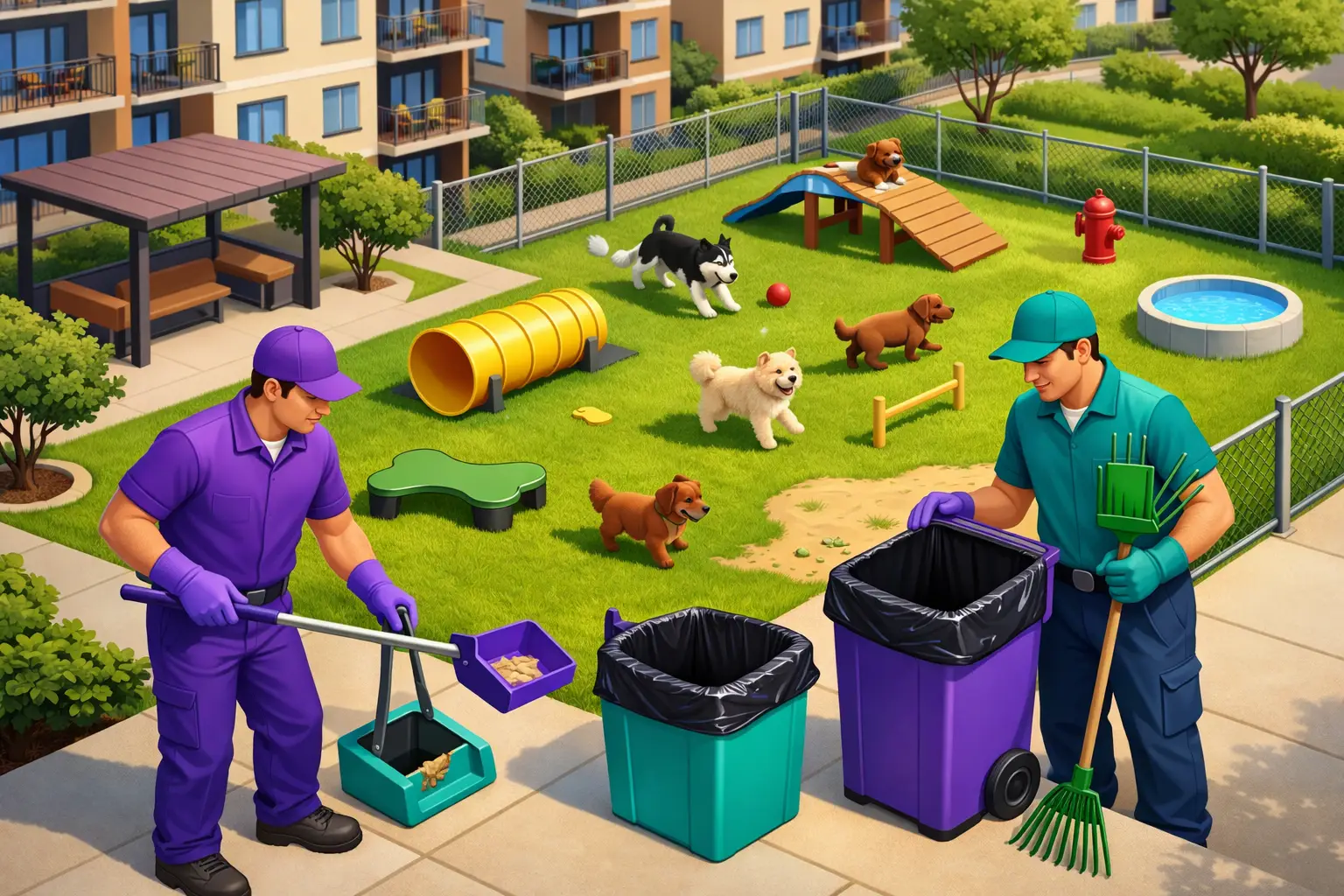
A dog area can help an apartment community feel more livable fast. It can also turn into the spot residents complain about most if waste piles up, odors linger, or the turf starts looking worn out. That is why the best services for apartment dog areas are the ones that keep the space consistently clean, easy to use, and simple for property teams to manage.
For apartment managers, this is not just about appearances. A neglected dog run affects resident satisfaction, maintenance workload, and the overall feel of the property. For residents, it is even more basic. They want a dog area that feels safe, smells decent, and does not make them second-guess letting their pet use it.
What apartment dog areas really need
Most apartment dog spaces fail for the same reason. They are treated like a one-time amenity instead of an ongoing maintenance need. A fence, some turf, and a waste station are only the starting point. Without routine service, the area quickly becomes hard to keep under control.
The best setup is usually not one single service. It is a practical combination of recurring pet waste removal, deodorizing, sanitizing, and basic site upkeep. What matters most is consistency. A dog area that gets attention once in a while can still feel dirty almost every day.
This is especially true in busy communities with high dog traffic. A small run used by dozens of pets each week needs a service plan that matches actual use, not wishful thinking.
Best services for apartment dog areas that make the biggest difference
Recurring pet waste removal
If one service sits at the center of everything, it is pet waste removal. This is the first layer of cleanliness, and if it is missed, nothing else works as well. Odor gets worse, flies become more common, and residents lose confidence in the space.
For apartment communities, recurring service matters more than occasional cleanup. Weekly, twice-weekly, or even higher-frequency visits may make sense depending on the size of the property and the number of dogs on site. It depends on traffic volume, weather, and whether the dog area is the main relief spot or just one option on the grounds.
Property managers usually benefit from a provider that can stick to a regular schedule and document service clearly. That reduces follow-up calls and avoids the familiar problem of everyone assuming someone else handled it.
Pet waste station service
A dog area can have all the signage in the world, but if the station is out of bags or the receptacle is overflowing, residents notice right away. Pet station service keeps those basics covered. That includes refilling bags, emptying bins, and checking that stations stay functional and presentable.
This may sound minor compared with cleanup itself, but it affects compliance. People are more likely to pick up after their dogs when the tools are right there and ready to use. When stations are neglected, the whole area feels unmanaged.
For apartment communities, this service works best when it is tied into a broader recurring maintenance plan rather than handled only on complaint.
Deodorizing and odor control
Even when solid waste is removed regularly, dog areas can still hold odor. Urine buildup, summer heat, and poor drainage all play a role. That is why deodorizing is one of the best services for apartment dog areas, especially in enclosed or high-use spaces.
A good deodorizing service does more than mask smells. The goal is to reduce odor at the source and improve the everyday experience for residents walking by or using the area. This matters a lot when the dog run sits near entrances, patios, sidewalks, or shared green space.
There is a trade-off here. Some communities only need periodic odor treatment, while others benefit from a recurring schedule during warmer months. Over-servicing can be unnecessary, but under-servicing leads to complaints that are hard to ignore once they start.
Sanitizing for shared-use safety
Dog areas are high-contact environments for paws, shoes, and in some cases children who wander in with parents. Sanitizing helps reduce bacteria and keeps the area more hygienic between cleanings. It is particularly useful for synthetic turf dog runs, compact urban relief zones, and other spaces where use is concentrated.
This service becomes more valuable in communities that market themselves as pet friendly. If the dog area is part of the property’s appeal, it should feel maintained at that level. Sanitizing helps support that standard.
Not every property needs the same frequency. A smaller apartment building with a lightly used dog patch may need occasional treatment. A larger community with steady traffic may need a more regular schedule to stay ahead of buildup.
Power washing hard surfaces
Some apartment dog areas include concrete pads, walkways, curbs, fences, or nearby hardscape that takes a beating. Waste residue, urine, mud, and general grime can collect fast in these zones. Power washing helps reset those surfaces and improve both appearance and sanitation.
This is especially useful around entry gates, trash enclosure areas, and any hard surface where runoff or residue becomes visible. It is not always a weekly need, but as part of periodic maintenance, it can make the entire dog area look better cared for.
In many cases, power washing works best as an add-on rather than a stand-alone service. When paired with cleanup and deodorizing, it supports a cleaner result that residents can actually see.
Turf and ground condition support
A dog area can be waste-free and still feel neglected if the ground is worn out. Mud, bare patches, poor drainage, and damaged turf all change how usable the space feels. While this falls a little outside pure waste management, light outdoor care support can make a big difference.
For natural grass, that may mean keeping an eye on areas that need rest, reseeding, or better drainage. For artificial turf, it may mean more regular sanitizing and debris management. The right approach depends on the type of surface and how heavily the area is used.
The key is noticing that dog area maintenance is not only about what gets removed. It is also about whether the space still functions well for dogs and residents.
How to choose the right service plan
The right plan starts with how your apartment dog area is actually used. A small fenced run in a dense building often needs more frequent attention than a larger open space in a lower-density community. More dogs in less space means faster buildup and less margin for delay.
It also helps to look at complaint patterns. If residents mention smell, full bins, or visible waste, you likely need more than occasional cleanup. If the area looks mostly fine but spikes during summer or rainy periods, a seasonal adjustment may be enough.
Reliability matters as much as the service menu. A provider should be consistent, easy to reach, and clear about what is included. For many property teams, simple scheduling and straightforward billing are not extras. They are part of what makes the service workable.
For communities in Greater Philadelphia, weather adds another factor. Wet weeks can make odor and ground conditions worse, while summer heat can intensify every existing issue. A flexible recurring plan often works better than trying to react after problems show up.
What residents notice first
Residents rarely think in terms of service categories. They notice whether the dog area feels clean when they open the gate. They notice whether bags are stocked, whether the smell hits them right away, and whether the space looks like management is paying attention.
That is why the best services for apartment dog areas are the ones that support the full experience, not just one task. Waste removal fixes the most obvious problem. Deodorizing and sanitizing improve comfort and hygiene. Pet station service keeps the system usable. Periodic washing and outdoor upkeep help the space keep its value as an amenity.
When those pieces work together, residents trust the area more. They use it more, complain less, and see the property as better managed overall.
A smart amenity needs real maintenance
Apartment dog areas are popular because they solve a real problem for pet owners. But they only stay popular when they stay clean. If your team is relying on occasional attention or trying to squeeze the work into an already full maintenance schedule, that is usually where standards start slipping.
A recurring service partner can take that off your plate and keep the space in usable shape week after week. For local property teams that want a cleaner, easier-to-manage dog area, companies like Poop Scoop Protocol focus on the practical work that keeps pet-friendly amenities from becoming property headaches.
A clean dog area does not need to be fancy. It just needs to feel cared for every time a resident walks in with a leash in hand.
Poop Scoop Protocol
Clean Lawns. Happy Dogs.
info@PoopScoopProtocol.com
(267) 667-6673