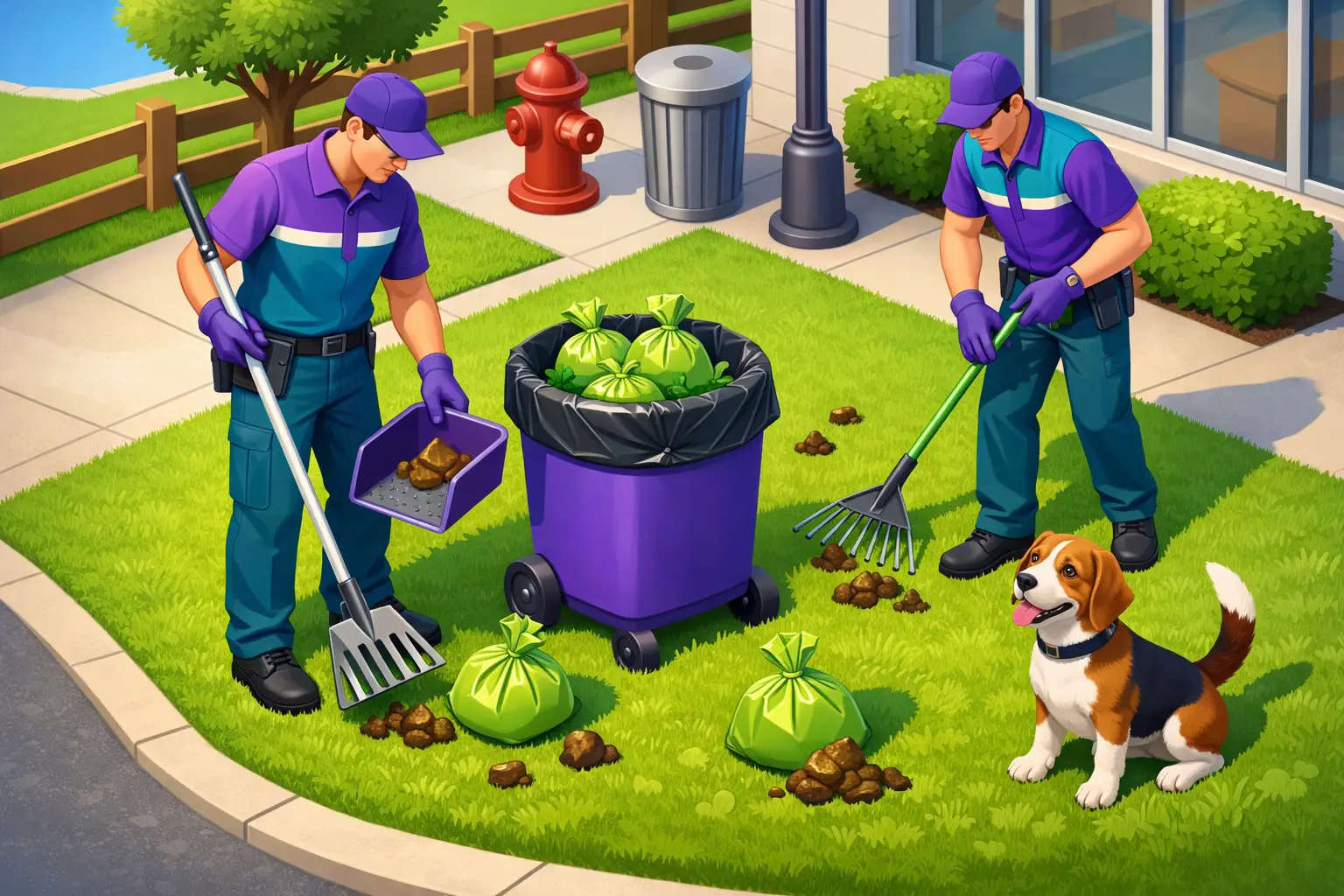
A few missed cleanups can turn a dog-friendly property into a complaint magnet fast. This commercial dog waste management guide is for property managers, HOAs, apartment communities, parks, and shared-use facilities that need clean grounds without adding more stress to the workday.
If you manage a space where dogs live, visit, or play, pet waste is not a small issue. It affects how the property looks, how it smells, how safe it feels, and how often residents or visitors speak up. The right plan keeps common areas usable, protects your reputation, and cuts down on the constant back-and-forth that happens when cleanup is inconsistent.
Why commercial dog waste management matters
Dog waste creates problems that travel well beyond appearance. People notice it right away on sidewalks, around pet stations, near entrances, and in grassy common areas. Once that happens, the property starts to feel less maintained overall, even if the landscaping and buildings are in good shape.
There is also a practical side. Pet waste can carry bacteria and parasites, create odor issues in warm weather, and make outdoor areas unpleasant for kids, residents, maintenance teams, and guests. On multi-family properties, it can easily become a resident satisfaction issue. In public-facing spaces, it can shape first impressions before anyone steps inside.
That is why a commercial dog waste management guide should focus on systems, not just cleanup. One-time attention helps for a day. A repeatable process helps all year.
Start with the property, not the product
Before choosing service frequency or equipment, look at how the space is actually used. A small apartment courtyard with heavy daily dog traffic needs a different approach than a business park with one designated relief area. The most effective plans are built around behavior patterns, not guesses.
Walk the property and identify where waste is most likely to collect. That usually includes fence lines, pet relief zones, edges of parking lots, paths between buildings, and low-visibility corners. If residents are supposed to use a specific dog area but waste keeps showing up elsewhere, that tells you the current setup is not working as intended.
Occupancy matters too. A 200-unit apartment community with many dog owners may need multiple weekly visits, while a smaller HOA may do well with a lighter schedule and occasional add-ons. Seasonality can also change the picture. Spring thaw and summer heat tend to expose weaknesses in any cleanup routine.
What a solid commercial dog waste plan should include
A good plan covers more than scooping. The cleanup itself is the foundation, but the best results come from combining removal, visibility, and maintenance support.
Regular waste removal is the obvious first piece. The key question is frequency. Too little service leads to buildup and complaints. Too much service can raise costs without much added value. The sweet spot depends on dog volume, layout, and how quickly problem areas reappear.
Pet station service is often the second piece. Stations only help if they are placed well, stocked consistently, and emptied before they overflow. A bag dispenser that is always empty teaches people not to rely on it. A full bin near a walkway creates a different kind of mess.
Then there are the supporting services that make a property feel truly maintained. Deodorizing and sanitizing can help in concentrated dog areas. Bin cleaning matters more than many managers expect, especially in summer. Power washing may be worth adding near hardscaped relief zones, breezeways, or pet-friendly common areas where odors cling.
Commercial dog waste management guide for apartments and HOAs
Apartment communities and HOAs usually deal with the same core challenge. Everyone wants a clean property, but responsibility is spread across dozens or hundreds of residents. That gap is where frustration grows.
The most effective approach is simple and visible. Designate relief areas where possible, place stations where people already walk their dogs, and back it up with recurring service. If you rely only on signage, compliance will be uneven. If you rely only on residents, cleanup standards will vary.
It also helps to think about resident experience. People do not separate pet waste issues from overall management quality. If common areas are messy, they assume other maintenance details may be slipping too. On the other hand, a consistently clean property quietly signals that management pays attention.
For HOA boards, there is often a balance between budget discipline and appearance standards. In those cases, recurring service is usually cheaper than dealing with repeated complaints, damaged turf, and time spent chasing the same issue over and over.
Parks, shared spaces, and high-traffic properties
Public and semi-public spaces have a different pressure point. The issue is not only residents. It is visitors, guests, and foot traffic that can change by the hour. Cleanliness needs to hold up even when usage is less predictable.
For these properties, placement and routine matter more than rules alone. Dog waste tends to gather where people take shortcuts, where sightlines are limited, and where bins are inconvenient. A cleanup plan should account for those habits rather than assume everyone follows the map.
High-traffic properties also benefit from faster response. If a park or shared lawn gets heavy use on weekends, Monday-only service may leave too much time for buildup. In cases like that, splitting service across the week often works better than one larger visit.
In-house staff or outsourced service?
Some properties try to handle dog waste with maintenance staff. Sometimes that works on a very small site. More often, it becomes one more task that gets pushed behind urgent repairs, turnovers, landscaping, or weather-related issues.
That does not mean in-house cleanup is always the wrong move. If the property is small, dog activity is limited, and a team member truly has time to own the task, it may be enough. But many commercial properties need consistency more than improvisation.
An outsourced service usually brings a more dependable schedule, trained technicians, and clearer accountability. That matters when residents notice missed areas or when a manager needs proof that a task was handled. It also helps keep your maintenance team focused on the jobs only they can do.
For property managers in Greater Philadelphia, that local accountability can be a real advantage. A family-owned service provider with trained, uniformed staff often feels a lot different than a loose, last-minute arrangement.
How to spot a weak setup before complaints pile up
Most dog waste problems give warning signs early. You may see recurring messes around full pet stations, worn patches in unofficial relief areas, or resident comments about odor near entrances and walkways. Those signs usually mean the current plan is underbuilt for the property’s actual use.
Another common issue is poor station placement. If bags are available only in one corner of the property, many people will not walk back for them. If bins sit too close to patios, playgrounds, or seating areas, odor becomes the next complaint. Small placement decisions can create big differences in compliance.
Service timing can also be off. If the grounds look clean for one day and rough for the next four, frequency needs adjusting. Commercial cleanup should feel steady, not cyclical.
Choosing the right service level
There is no single perfect schedule for every property. A dog-heavy apartment community may need multiple visits each week plus pet station service and occasional deodorizing. A smaller shared property may only need routine cleanup and seasonal deep attention.
The best way to choose is to match service to use patterns, complaint history, and the image you want the property to maintain. If residents expect premium upkeep, the waste management plan should reflect that. If the goal is basic compliance on a lower-traffic site, a leaner setup may be enough.
This is also where add-on services can make sense instead of feeling optional. Sanitizing, bin maintenance, and hard-surface cleaning are not necessary everywhere, but in the right setting they solve the part of the problem scooping alone does not fix.
What reliable service should feel like
Good commercial pet waste management should lower your workload, not create another thing to monitor. You should not have to wonder whether stations were serviced, whether technicians showed up, or whether residents will be dealing with the same mess tomorrow.
That is why reliability matters as much as price. Clear scheduling, easy billing, responsive communication, and trained staff make a bigger difference over time than saving a little on a plan that misses the mark. Clean grounds are the visible result, but the real value is fewer headaches and a property that stays ready for the people who use it.
If your dog-friendly space keeps generating the same complaints, the fix is usually not more reminders. It is a better system. When the plan fits the property, everything feels easier – cleaner lawns, happier residents, and one less recurring problem on your plate.
Ready to reclaim your yard and peace of mind?
Contact Us for a free quote or visit our FAQ for more information.
Poop Scoop Protocol
Clean Lawns. Happy Dogs.
info@PoopScoopProtocol.com
(267) 667-6673