That sharp, sour smell usually shows up before you see the damage. One warm afternoon, the kids head outside, the dog starts doing laps, and suddenly the yard smells more like a kennel than a place to relax. Yard deodorizing for dog urine is not just about covering up odor. It is about removing what is causing it so your outdoor space feels clean again.
If you have one dog, multiple dogs, or a shared pet area, the problem tends to build gradually. Urine soaks into grass, dry patches, mulch, gravel, artificial turf, and the soil underneath. Heat, humidity, and poor drainage make it worse. The good news is that bad yard odor is fixable. The less-fun truth is that some common solutions only mask the smell for a day or two.
Why dog urine smells so strong in the yard
Fresh dog urine is not always overpowering right away. The bigger issue starts as it breaks down. Bacteria feed on the waste compounds, and that process creates ammonia-like odors that linger close to the ground. If the same spots get used over and over, the smell concentrates fast.
That is why odor often hangs around even after the yard looks clean. Rain can dilute it for a bit, but it rarely removes the source completely. In fact, a little moisture plus warm weather can reactivate odor that seemed to disappear.
Some yards are more prone to holding smell than others. Grass with compacted soil, shaded corners with poor airflow, dog runs with heavy use, and artificial turf without proper rinsing all tend to trap urine residue. Multi-dog homes feel this faster because the same square footage gets hit again and again.
What yard deodorizing for dog urine actually means
Real yard deodorizing for dog urine is a cleanup process, not a perfume job. The goal is to reduce or break down the urine residue that is feeding odor. If a product smells lemony for an hour but leaves the source behind, it is not solving much.
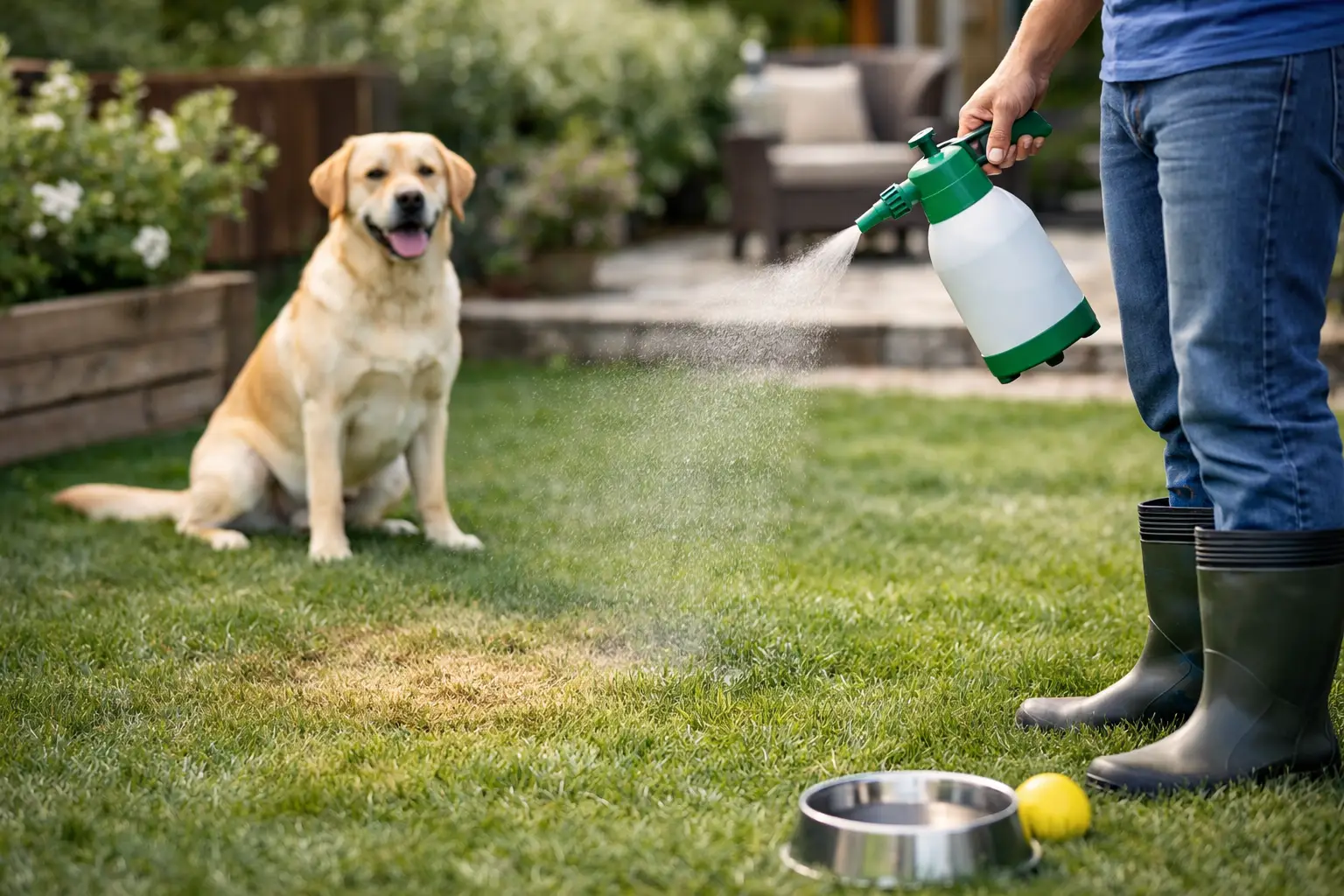
A proper approach usually includes removing solid waste first, identifying heavy-use areas, applying a deodorizing or bio-active treatment, and making sure the area can dry and breathe. In some cases, rinsing is enough for light buildup. In others, especially with repeat pet traffic, you need an enzyme-based or odor-neutralizing treatment to get meaningful results.
This is also where expectations matter. If your yard has months of buildup, one treatment may improve it a lot but not make it perfect overnight. Consistency tends to beat one-time fixes, especially during hot months.
The methods that help most
The best deodorizing method depends on the surface. A natural grass lawn behaves very differently from gravel or turf.
On grass, the first step is usually dilution. A thorough watering of the usual potty spots can help reduce concentrated urine salts and move residue deeper into the soil. But watering alone has limits. If odor is already established, it often needs a treatment made to neutralize pet waste smells rather than just spread them out.
For mulch, bare dirt, and gravel, odor can linger because there is less natural filtration and more surface-level buildup. These areas often benefit from a targeted deodorizer that can reach into the material. Sometimes the material itself has become saturated enough that partial replacement is the better move.
Artificial turf is its own category. It looks clean on top long before it is clean underneath. Urine can settle into the infill and backing, especially if the area is not rinsed often. Turf usually needs routine flushing and a pet-safe deodorizing treatment designed for synthetic surfaces. If drainage under the turf is poor, even the right product may only help temporarily.
What does not work as well as people hope
A lot of homeowners try the obvious first – hose it down, spray a scented product, maybe throw down a yard treatment from the hardware store. Sometimes that helps a little. Often, it just buys a short break.
Household cleaners are another common mistake. Bleach and similar harsh chemicals are not a good fit for pet areas. They can damage grass, irritate paws, and create stronger chemical smells on top of the original problem. Vinegar gets recommended a lot too, but in a yard setting it is hit or miss. It may change the smell briefly, but it does not always address deep odor in soil or turf, and too much can stress grass.
Over-fertilizing is not a fix either. A greener lawn can still smell awful. In some cases, trying to push damaged grass too hard just creates a different maintenance problem.
How to keep urine odor from coming back
The biggest factor is frequency. The longer waste sits and the more often the same spots get used, the stronger the odor becomes. That is why regular dog waste removal matters more than many people realize. Even though poop and urine are different issues, they often overlap in the same zones, and the overall yard hygiene affects how fresh the space feels.
If your dog has favorite bathroom spots, rinse those areas regularly, especially during dry stretches. Encourage use in a few manageable zones instead of letting the whole yard become a patchwork of hotspots. If you have multiple dogs, that habit matters even more.
It also helps to look at the yard itself. Compacted soil, poor drainage, and worn-out turf can hold odor longer. Sometimes the right answer is not just another spray. It may be improving airflow, adjusting watering, refreshing a gravel section, or adding recurring deodorizing service during the warm season.
When the smell points to a bigger problem
Sometimes a bad-smelling yard is not only about routine pet use. If odor appears suddenly or becomes unusually strong, there may be a drainage issue, a low spot collecting runoff, or old waste trapped along fences and edges. Commercial properties and apartment dog areas often run into this because the volume is higher and responsibility gets spread thin.
In those cases, a one-time treatment helps less than a full reset. That means waste removal, detailed inspection of the problem areas, deodorizing, and a maintenance plan that keeps buildup from starting over. For busy homeowners and property managers, that kind of recurring care is usually the difference between a yard that stays usable and one that people start avoiding.
Yard deodorizing for dog urine in real life
Most people are not looking for a perfect lawn magazine photo. They want to open the back door without getting hit by odor. They want the kids to play outside, guests to sit on the patio, and the dog to enjoy the yard without turning it into a problem area.
That is why practical deodorizing works best when it fits real life. If you are home late, managing work and family, or caring for multiple pets, you may not keep up with rinsing schedules and spot treatments every week. If you manage a shared property, you probably need a process that is dependable, repeatable, and easy to budget.
For many homes and pet-friendly properties in Greater Philadelphia, that means combining regular waste removal with deodorizing as needed. It is straightforward, it saves time, and it prevents the yard from reaching that point where every warm day makes the smell worse.
When professional help makes sense
A professional service is worth considering when odor keeps coming back, when you have multiple dogs, or when the yard includes surfaces that are harder to clean well, like turf, gravel, or enclosed dog runs. The value is not just in spraying a product. It is in having someone consistently remove waste, treat the right areas, and catch issues before they become a bigger cleanup.
That is especially true for recurring maintenance. A clean yard is easier to keep clean than to rescue after months of buildup. For residential customers, that means less stress and a yard you can actually enjoy. For commercial clients, it means a better experience for tenants, visitors, and staff.
At Poop Scoop Protocol, this is exactly the kind of problem we help solve – plain and simple, no fuss, just cleaner outdoor spaces that smell better and stay more usable.
If your yard smells fine in the morning but rough by late afternoon, that is your sign to deal with the source, not just the scent. A fresher yard usually starts with a simple change: clean it regularly, treat it properly, and stop letting yesterday’s buildup become tomorrow’s problem.
Ready to reclaim your yard and peace of mind?
Contact Us for a free quote or visit our FAQ for more information.
Poop Scoop Protocol
Clean Lawns. Happy Dogs.
info@PoopScoopProtocol.com
(267) 667-6673