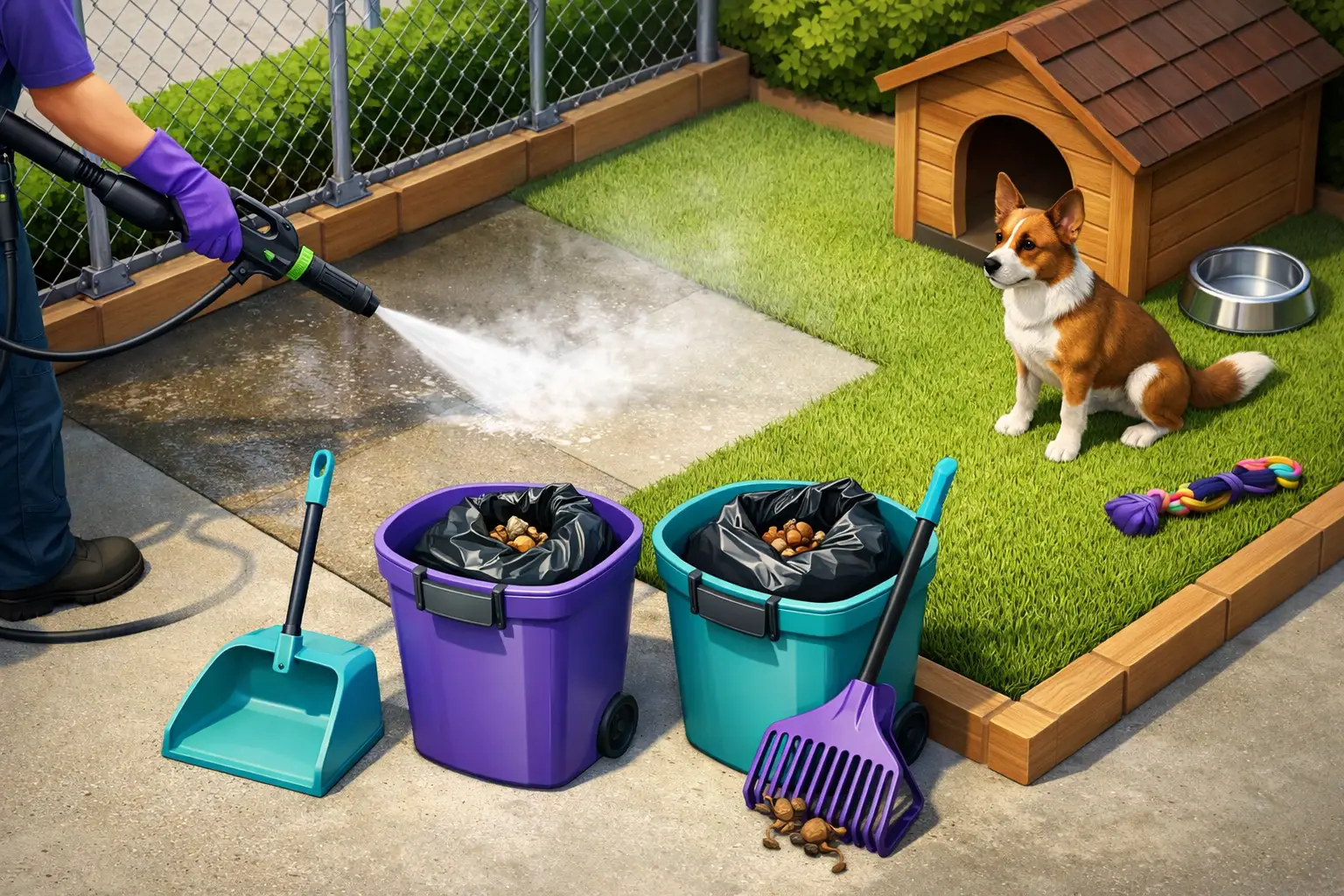
A dog run can go from convenient to gross fast. Mud gets packed in, waste residue sticks to hard surfaces, and that familiar smell tends to hang around long after the poop has been picked up. That is why power washing dog run area surfaces can make such a big difference. Done correctly, it helps restore a cleaner, safer space for dogs, kids, tenants, and anyone else using the yard.
The key phrase there is done correctly. A dog run is not the same as rinsing off a patio. You are dealing with organic waste, bacteria, odor, and surfaces that can be damaged if too much pressure is used. If you want real results, it helps to know what power washing can fix, what it cannot, and where a little caution goes a long way.
Why dog run areas get dirty so quickly
Dog runs take concentrated wear in a small space. Even in homes with a full yard, dogs often return to the same corner or fenced section over and over. In apartment communities and shared properties, the traffic is even heavier. That repeated use creates a mix of waste particles, urine salts, mud, hair, and general outdoor debris.
On hard surfaces like concrete, pavers, and sealed pads, the mess may look manageable at first. But over time, residue settles into pores and joints. On turf or kennel flooring, odors can sink deeper than a quick hose-down can reach. Add summer heat or a stretch of rainy weather, and the area can start smelling stronger and looking worse almost overnight.
That is usually when people start thinking about pressure washing. It makes sense. Water under pressure can strip away surface grime much faster than scrubbing by hand. But speed should not be the only goal.
When power washing dog run area surfaces actually helps
Power washing is most useful after the solid waste has already been removed. It is not a substitute for poop scooping. It is a reset step that clears away the film, staining, and residue left behind after routine cleanup.
On concrete and similar hard surfaces, a proper wash can remove stuck-on grime, break up old buildup, and improve the appearance of the space quickly. It can also help reduce odor sources when paired with sanitizing or deodorizing steps. That matters for homeowners who want a backyard that smells normal again, and for property managers who need shared pet areas to stay presentable.
It also helps after seasonal buildup. Winter leaves behind grime and trapped moisture. Spring often reveals stains that were hidden for months. In summer, heat intensifies odor. A periodic wash keeps the area from reaching the point where every visit to the yard comes with a smell.
That said, power washing works best as part of a system. First remove waste. Then wash. Then, if needed, apply pet-safe deodorizing or sanitizing. Skip that order, and the result is usually less impressive than people expect.
What power washing does not solve on its own
Pressure alone does not fully disinfect a dog run. It can remove visible grime and a good portion of surface residue, but odor and bacteria may still remain, especially in porous materials. If urine has soaked into concrete or settled into joints between pavers, washing may improve the smell without eliminating it entirely.
It also cannot fix drainage problems. If a dog run stays wet, pools water, or traps waste in low spots, the mess will come back quickly. The same goes for damaged turf, cracked pads, or compacted areas where runoff has nowhere to go.
There is also the issue of surface wear. Too much pressure can etch concrete, disturb joint sand, fray artificial turf, or splinter wood edges around the run. A stronger machine is not always better. In some cases, it just turns a cleaning job into a repair job.
The safest way to approach a dog run wash
If you are cleaning your own yard, start by fully removing pet waste and loose debris. That sounds obvious, but many people rush this step. Washing over leftover waste spreads contamination and makes the area harder to clean, not easier.
Next, choose the right pressure for the surface. Concrete can usually handle more force than turf, rubberized flooring, or wood-adjacent areas. Keep the spray angle controlled and avoid concentrating on one spot too long. A wide fan tip is usually safer than a narrow blast, especially around edges and seams.
You should also think about runoff. Waste residue and dirty water have to go somewhere. If the wash drains toward a patio, walkway, play area, or neighboring property line, that creates a new problem. Directing runoff properly matters just as much as removing the grime in the first place.
After the wash, let the area dry well and assess the smell honestly. If odor is still present, the issue may be deeper than the surface layer. That is where pet-safe deodorizing and sanitizing become more than just nice extras.
Surfaces that need extra caution
Concrete is usually the easiest dog run surface to power wash, but even concrete has limits. Older pads and lower-quality pours can pit or wear down with aggressive pressure. Decorative coatings and painted surfaces need even more care.
Artificial turf is trickier. It can hold pet odors well below the visible surface, and strong pressure can disturb infill or damage fibers. A rinse may help with surface mess, but deep odor control usually calls for a more specialized approach.
Pavers look durable, but the joints between them are vulnerable. Pressure washing can strip out stabilizing material and leave the area uneven if done too aggressively. Rubber mats and kennel flooring can also be damaged by heat or high pressure, depending on the material.
This is where many homeowners and property managers lose time. The job seems simple until the surface starts reacting in ways they did not expect.
How often should a dog run be power washed?
It depends on how many dogs use the space, what the surface is, and how consistent the waste removal routine is. A single-dog home with frequent scooping may only need occasional washing. A multi-dog household or a shared apartment pet area may need it much more often.
Weather matters too. Wet stretches can trap grime and make odor linger. Hot weeks can bake smells into the surface faster. If the run is used daily and sits close to patios, doors, or common areas, people usually notice the need for washing sooner.
A good rule is to think in layers of maintenance. Regular poop removal handles the ongoing mess. Power washing handles buildup. Sanitizing and deodorizing handle the leftovers that water alone does not fully address. If you wait until the area smells bad from several feet away, you are already behind.
Why professional service can save time and frustration
For busy dog owners, the biggest issue is not knowing that the run needs attention. It is finding the time to do it well. For property managers, it is consistency. Shared spaces do not stay clean through occasional effort. They stay clean when maintenance happens on schedule.
Professional service helps because the process is more targeted. The waste is removed first. The area is washed with the surface in mind. Odor control can be added where needed. That creates a better result than a quick weekend spray-down that only handles what is visible.
It also removes some guesswork. You do not have to decide whether the turf can take more pressure, whether the concrete is holding odor below the surface, or whether the runoff is going to create a mess somewhere else. A trained crew should already be thinking through those details.
For homes and properties in Greater Philadelphia, that practical side matters. The weather shifts, the ground conditions change, and outdoor dog areas take a beating across the year. Reliable upkeep is easier when it is built into a routine instead of treated like an emergency fix.
Clean looks better, but the real benefit is use
Most people ask about power washing because they want the area to look cleaner. That is fair. A fresh-looking dog run is easier to live with and easier to manage. But the bigger win is that people actually want to use the space again.
A cleaner run means fewer odors near the back door, less grime tracked indoors, and a better experience for dogs and humans alike. For commercial properties, it means a pet area that feels cared for instead of neglected. For families, it means less stress every time the dog heads outside.
If your dog run is starting to feel like the part of the yard you avoid, that is usually the sign. Not every space needs the same level of pressure, treatment, or frequency. But almost every dog run benefits from a smarter cleaning routine that goes beyond the hose and hopes for the best.
A clean outdoor pet space does not happen by accident. It happens when the dirty work gets handled before the mess becomes the whole experience.
Ready to reclaim your yard and peace of mind?
Contact Us for a free quote or visit our FAQ for more information.
Poop Scoop Protocol
Clean Lawns. Happy Dogs.
info@PoopScoopProtocol.com
(267) 667-6673